
India Legal News
Supreme Court Flags Fake AI-Generated Judgments: Calls It A Serious Threat To Justice System

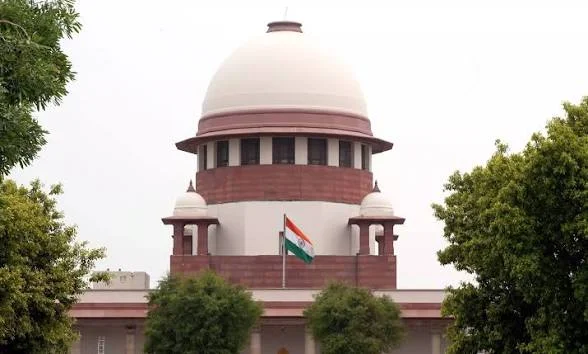
The Supreme Court of India has issued a stern warning regarding the rising misuse of artificial intelligence (AI) to generate fake judicial judgments that are being cited in court proceedings despite lacking any official record. The court highlighted that such practices pose a serious risk to the integrity of the judicial system, both in India and internationally.
AI: A Powerful Tool with Potential Risks
The issue surfaced during the hearing of a Special Leave Petition filed by a private company director seeking to remove remarks made by the Bombay High Court. The remarks had been based on a judgment that later turned out to be entirely AI-generated and non-existent. The Supreme Court expressed deep concern over the increasing reliance on AI tools to fabricate legal content and present it as authentic precedent.
The bench emphasized that while AI can serve as a useful research and analytical tool, its unverified use threatens the credibility of judicial proceedings. Presenting AI-generated content in court without rigorous verification violates professional ethics and can mislead the administration of justice.
A Global Challenge for Legal Systems
The court noted that this is not just an Indian problem but a growing global challenge. With AI technology becoming widely accessible, the creation and circulation of misleading or fabricated legal documents is becoming easier. The Supreme Court urged courts, legal professionals, and institutions to exercise heightened vigilance to prevent misuse.
Legal experts have warned that AI-driven fake judgments could result in serious institutional and legal consequences if left unchecked. Accuracy, authenticity, and careful verification remain essential in ensuring the judicial process remains credible.
Steps Toward Safeguards and Oversight
In the specific case, the Supreme Court ordered the removal of the Bombay High Court remarks tied to the AI-generated content. At the same time, the bench indicated that broader guidelines and stricter measures may be needed to address AI misuse in legal practice in the future. The court advised all stakeholders to maintain vigilance to preserve transparency, accuracy, and trust in the legal system.
As AI adoption in legal research and documentation grows, ensuring responsible usage and robust verification processes will be critical to preventing technology from undermining justice.


Police in Gujarat have registered a criminal case against directors and senior officials of Ahmedabad-based Unique Mercantile India Limited for allegedly cheating investors through fixed deposit and monthly income schemes promising high returns.
The company, operating from Popular House in Navrangpura, allegedly collected investments by assuring attractive payouts but later stopped interest payments, closed its office, and failed to repay maturity amounts totaling ₹14.83 lakh, according to the complaint filed with police.
Investor Complaint Triggers Police Investigation
The case was initiated after a complaint by Vishnubhai Bholidas Patel, a 58-year-old resident of Kalol in Gandhinagar district.
According to the FIR, Patel was introduced to Unique Mercantile India Limited in 2017 through company representatives Sanjay Patel and Rajesh Patel. The agents allegedly promoted fixed-term deposit plans and monthly income schemes with assured returns.
Patel later joined the company as an agent and helped attract additional investors after attending promotional meetings conducted by company representatives. He invested his own money and encouraged relatives and acquaintances to participate in the schemes.
Between 2017 and 2018, Patel allegedly mobilized investments worth ₹11.65 lakh, with the company’s promised maturity liability reaching ₹15.93 lakh.
The FIR names company directors Utkarsh Rai, Rahul Rai, and Raj Kumar Rai, along with managers Mukeshbhai Patel and Ghanshyambhai Patel, alleging that they misrepresented the investment plans and failed to meet repayment commitments.
Interest Payments Stopped After Initial Trust-Building
The complaint alleges that the company initially made periodic interest payments and provided commissions to agents, helping build confidence among investors.
However, payments reportedly stopped around 2020. When investors approached the company’s Navrangpura office, officials allegedly cited financial difficulties linked to the Covid-19 pandemic and assured them that pending dues would be cleared.
The company later shut down operations without fully settling investor claims. Police records indicate that only ₹1.10 lakh was repaid through installments, leaving an outstanding amount of ₹14.83 lakh.
Police Probe Financial Records
Ahmedabad Police have registered the case under relevant provisions of the Bharatiya Nyaya Sanhita (BNS) related to cheating and criminal breach of trust.
Investigators are examining financial documents, bank records, and other evidence to determine the complete scale of the alleged irregularities and identify whether additional investors were affected.
Experts Warn Against Unverified High-Return Schemes
Financial fraud experts have repeatedly warned investors about schemes offering unusually high or guaranteed returns without proper regulatory oversight.
Experts advise investors to verify whether investment companies are registered with appropriate authorities such as the Securities and Exchange Board of India (SEBI) or the Reserve Bank of India (RBI) before committing funds.
Authorities have also urged people to be cautious of investment opportunities promoted through aggressive marketing, commission-based networks, and promises of risk-free profits.
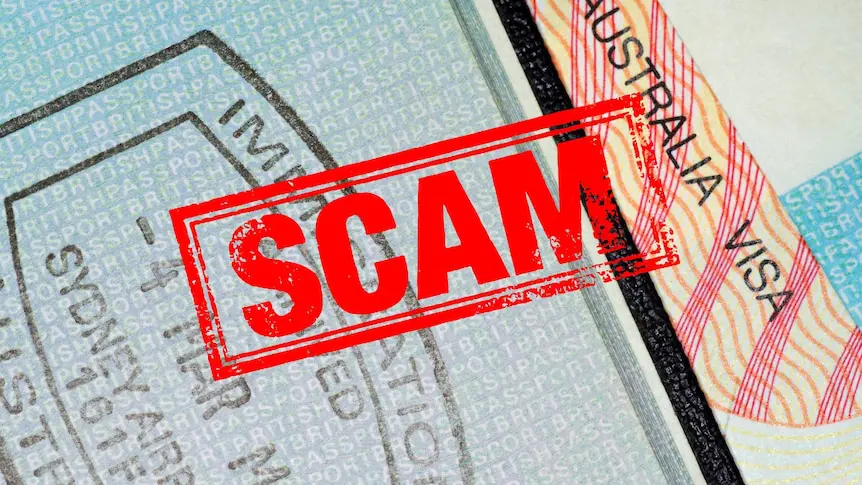
Ahmedabad Police have registered a case against the owner of an immigration consultancy firm for allegedly cheating a local entrepreneur of ₹10.49 lakh by promising to arrange a United Kingdom work permit.
The accused, identified as Dhaval Jagdishbhai Parmar, who operated Stanmore Enterprise Pvt. Ltd. in Jagatpur’s Godrej Garden City area, allegedly collected money from the complainant over several months but failed to provide the promised visa or return the funds.
Police have booked the accused under relevant sections of the Bharatiya Nyaya Sanhita (BNS) and have started an investigation into the alleged fraud.
Victim Allegedly Approached for UK Employment Opportunity
According to the complaint, 34-year-old Ankit Sureshbhai Panchal, an entrepreneur from Ghatlodia who runs an engineering unit, was introduced to Parmar through a family contact in early 2024.
During a meeting in April 2024, Parmar allegedly claimed that he could arrange a UK work permit within 10 to 15 days after receiving the required documents.
The accused initially quoted a fee of ₹22.50 lakh for the visa process but later reduced the amount to ₹18 lakh after discussions about the family’s financial situation. He allegedly assured Panchal that the money would be refunded if the application was unsuccessful.
Trusting these claims, Panchal reportedly shared personal documents, including his passport, educational certificates, IELTS score details, and caregiving certification. He selected a care worker employment option in London from the opportunities presented by the consultancy.
Multiple Payments Made Before Consultancy Allegedly Shut Down
Between April 2024 and April 2025, Panchal allegedly paid ₹10.49 lakh through digital transactions, IMPS transfers, and cheques.
The complainant told police that whenever he requested official documents, application updates, or confirmation from a UK employer, Parmar allegedly delayed responses and claimed that the process was still underway while asking for additional payments.
The situation changed when the accused allegedly stopped responding to calls and the consultancy office was closed.
Police Begin Investigation Into Financial Trail
After failing to receive the visa or a refund, Panchal approached police and submitted payment records, bank statements, and electronic communications as evidence.
Investigators are now examining the accused’s financial transactions and business records to trace the movement of funds. Authorities are also looking into whether other job seekers may have been targeted through similar overseas employment promises.
Authorities Warn Against Unverified Immigration Services
Police and cybersecurity experts frequently advise individuals seeking overseas employment to verify immigration consultants before making payments.
Applicants should confirm whether agencies are legally registered, avoid paying large amounts without official documentation, and independently verify job offers through authorized government or employer channels.
Aviation & Transport
Go First Insolvency Row: FIR Against Former Board, DGCA Official, EaseMyTrip and Cleartrip

New Delhi: The legal troubles surrounding the insolvency proceedings of now-grounded airline Go First have intensified after Ernakulam Police registered an FIR against the company’s former board of directors, an unnamed official of the Directorate General of Civil Aviation (DGCA), travel booking platforms EaseMyTrip and Cleartrip, and the airline’s Resolution Professional.
The FIR, filed on July 9, relates to allegations of cheating and criminal breach of trust connected with ticket bookings made after Go First had begun its insolvency process. The case was registered under relevant provisions of the Bharatiya Nyaya Sanhita (BNS), including sections related to breach of trust, cheating, and fraudulent conduct.
The action follows an order from the Chief Judicial Magistrate Court in Ernakulam based on a complaint filed by aviation safety activist and advocate Yeshwant Shenoy. The complaint alleged that ticket sales continued despite the airline’s decision to seek voluntary insolvency, potentially causing financial losses to passengers.
Allegations Over Ticket Sales During Insolvency Process
According to the complaint, Go First’s board approved the decision to initiate insolvency proceedings on April 28, 2023. Shareholders later approved the move during an Extraordinary General Meeting on April 30, and the airline approached the National Company Law Tribunal (NCLT) on May 2, 2023.
However, the complaint claims that ticket bookings continued until May 10, allowing passengers to purchase tickets for flights that were later cancelled after the airline suspended operations.
Those named in the FIR include former chairman Nusli Neville Wadia, director Ness Nusli Wadia, former CEO Kaushik Khona, other former board members, an unidentified DGCA official, online travel companies EaseMyTrip and Cleartrip, and Resolution Professional Shailendra Ajmera.
Passenger Claims Financial Loss
The complainant stated that he personally suffered a loss of ₹64,000 after booking Kochi-Mumbai flight tickets for family members and friends on the same day Go First filed its insolvency application.
He alleged that despite raising concerns with the aviation regulator, action to stop advance bookings was taken only on May 10 following intervention by the Kerala High Court.
The complaint further alleges that the DGCA was aware of Go First’s financial difficulties but failed to take timely steps to protect passengers. It referred to previous regulatory actions involving financially distressed airlines, including restrictions placed on advance bookings during earlier crises.
Dispute Over Scale of Passenger Losses
The complaint has also questioned the reported financial impact on passengers. Go First had stated that around 4,118 flights were cancelled in April 2023, affecting nearly 77,500 passengers.
While media reports estimated passenger-related claims at approximately ₹900 crore, the complainant argued that the actual amount collected from passengers could have been significantly higher, alleging that bookings continued for additional days despite the airline’s financial situation.
The FIR alleges that the accused parties may have caused financial harm to passengers while benefiting from continued ticket transactions despite the airline’s expected operational shutdown.
Investigation to Examine Records and Communications
The police investigation is expected to examine various documents, including board decisions, communications between Go First and regulatory authorities, booking details, payment records, and the role of online travel platforms in processing ticket sales.
The probe will also look into whether adequate disclosures and warnings were provided to passengers during the period between the insolvency decision and the suspension of bookings.
Experts Highlight Need for Stronger Consumer Protection
Cybercrime and digital fraud experts have noted that while the case primarily involves corporate and regulatory issues, online platforms handling consumer payments must maintain strict compliance standards during periods of financial uncertainty.
Experts have stressed the importance of timely coordination between regulators, airlines, payment providers, and booking platforms to ensure passengers are informed quickly and protected from avoidable losses.
The matter is currently under investigation. The allegations mentioned in the FIR remain unproven, and no court has established guilt against any of the individuals or organisations named in the case.
-

 Business3 years ago
Pot Odor Does Not Justify Probable Cause for Vehicle Searches, Minnesota Court Affirms
-

 Business3 years ago
New Mexico cannabis operator fined, loses license for alleged BioTrack fraud
-

 Business3 years ago
Alabama to make another attempt Dec. 1 to award medical cannabis licenses
-

 Business3 years ago
Washington State Pays Out $9.4 Million in Refunds Relating to Drug Convictions
-

 Business3 years ago
Marijuana companies suing US attorney general in federal prohibition challenge
-

 Business3 years ago
Legal Marijuana Handed A Nothing Burger From NY State
-

 Business3 years ago
Can Cannabis Help Seasonal Depression
-

 Blogs3 years ago
Cannabis Art Is Flourishing On Etsy