
Economic Fraud
ED Arrests Al Falah University Chairman in ₹45 Crore Land Fraud Case

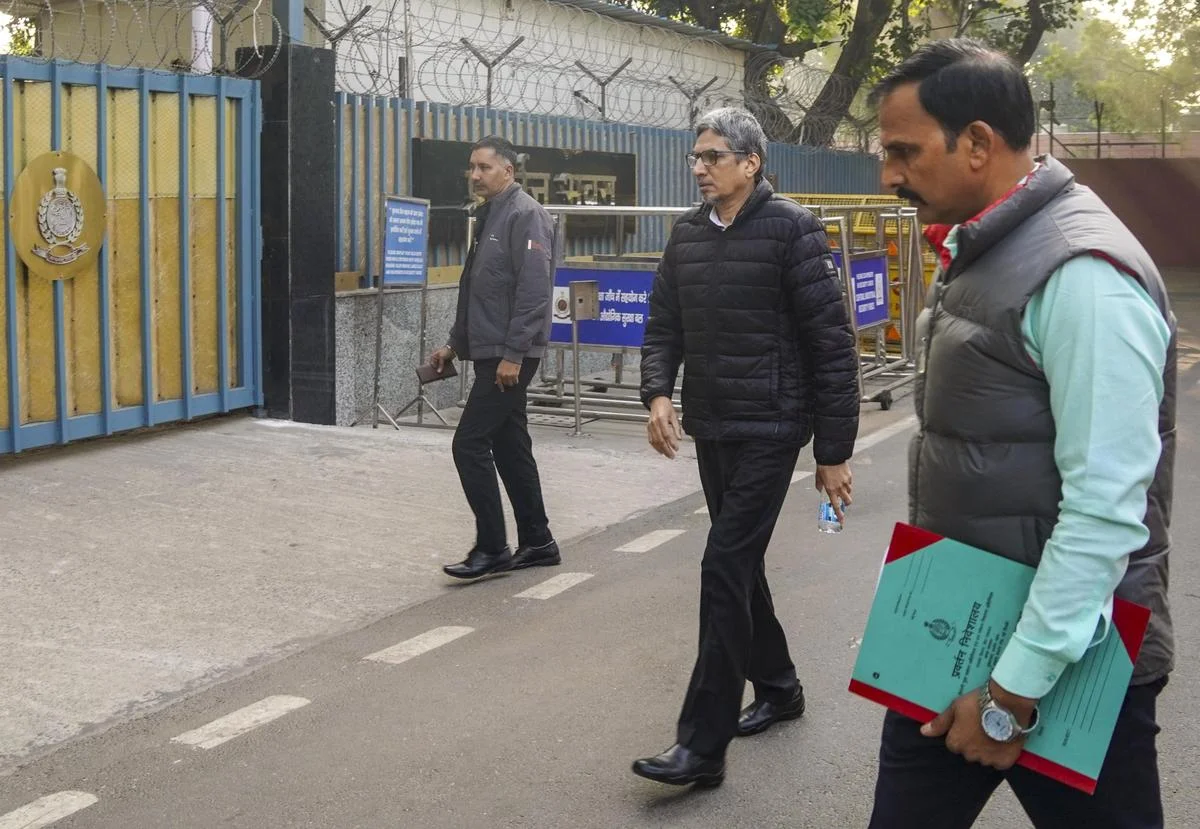
The Enforcement Directorate (ED) has arrested Jawad Ahmad Siddiqui, chairman of the Al Falah Group, in connection with an alleged ₹45 crore land fraud case in Delhi. Authorities say the case involves the acquisition of property using forged documents.
Siddiqui, who also serves as director and majority shareholder of the Tarbia Education Foundation, was taken into custody under the Prevention of Money Laundering Act (PMLA), 2002. ED investigations revealed that falsified documents were used to fraudulently acquire land in Village Madanpur Khadar, New Delhi (Khasra No. 792), covering 1.146 acres. While the documents cited a consideration amount of ₹75 lakh, the actual market value of the property is estimated at ₹45 crore.
Siddiqui was presented before a Delhi court, which remanded him to ED custody until April 4 for further questioning. Investigators are actively tracing the money trail and identifying other potential beneficiaries or properties acquired through the alleged scheme.
This arrest follows Siddiqui’s earlier detention on November 19, 2025, in a separate money laundering case linked to alleged fraudulent accreditation claims and financial irregularities at Al Falah University. Previous complaints filed by the Delhi Police Crime Branch included charges of cheating and forgery of accreditation documents.
Interim investigations have also scrutinized the university’s Dhouj campus in Faridabad, following the November 10 blast near Delhi’s Red Fort, which claimed 15 lives. One doctor associated with the university-hospital, Dr. Umar-un-Nabi, was allegedly involved in the blast as a suicide bomber, prompting the ED to examine the university’s broader connections.
Experts say cases like this highlight growing trends of money laundering, forged documents, and fraudulent land acquisitions, particularly involving senior officials in higher education. Investigators emphasize that Siddiqui’s arrest is part of a broader probe to ensure all involved parties are identified and held accountable.
The ED continues to interrogate individuals in custody to trace funds, related assets, and other potential accomplices. Authorities have stressed that strict legal action will be taken if further irregularities are discovered. The case raises pressing questions about financial transparency, governance, and regulatory oversight in educational institutions.


A 55-year-old IT engineer in Pune has allegedly lost ₹67.94 lakh after being lured into a fake stock-trading operation promoted through a WhatsApp group.
According to the complaint filed with Pune Cyber Police, scammers initially deposited ₹5,400 into the man’s bank account to make their investment scheme appear legitimate. After gaining his trust, they allegedly persuaded him to transfer tens of lakhs of rupees to accounts linked to the fraudulent trading operation.
The victim was shown supposed profits of approximately ₹8.46 crore on the fake platform. His suspicions were eventually triggered when he tried to withdraw the money and was told to first pay ₹1.17 crore in brokerage charges.
How the WhatsApp Investment Scam Started
The alleged fraud began in August after the Pune resident joined a WhatsApp group while looking for information about stock-market investments.
Members of the group reportedly discussed shares and initial public offerings (IPOs), creating the appearance of an active investment community. A woman who claimed to represent an investment company subsequently contacted the man and promoted the group’s investment recommendations.
The victim initially avoided making any investment. The fraudsters then allegedly offered him ₹5,000 to make an initial trade.
Soon afterward, ₹5,400 was actually credited to his bank account. The genuine transfer reportedly convinced him that the people behind the investment platform were legitimate.
Victim Transfers Nearly ₹68 Lakh
After gaining confidence in the scheme, the victim began following the trading recommendations provided through the WhatsApp group.
According to the police complaint, scammers directed him to transfer funds to different bank accounts through a customer-service facility associated with the purported trading platform.
His first major transfer was reportedly ₹9.70 lakh on September 2. He later made two additional transfers of ₹31 lakh and ₹27.24 lakh.
Together, the three transactions brought his alleged losses to ₹67.94 lakh.
Meanwhile, the trading application showed his account generating enormous returns. The platform reportedly displayed a balance of around ₹8.46 crore, giving him the impression that his investments had produced extraordinary profits.
₹1.17 Crore Withdrawal Demand Raises Alarm
The scam began to unravel when the victim attempted to withdraw the money shown in his account.
Instead of releasing the funds, the operators allegedly demanded another ₹1.17 crore, describing it as brokerage charges that had to be paid before the withdrawal could be processed.
The unusually large payment request made the victim suspicious. He already had experience using legitimate stock-trading platforms and questioned why such a substantial payment was required simply to access his purported profits.
Rather than transferring more money, he decided to investigate the investment company independently.
Visit to Mumbai Reveals Fake Platform
On September 15, the victim reportedly visited the Mumbai office of the company whose name had allegedly been used by the fraudsters.
During the visit, he discovered that the people who had contacted him and the trading platform he had been using had no genuine connection with the company.
The realisation led him to conclude that he had fallen victim to an online investment scam. He subsequently contacted the cybercrime helpline and approached Pune Cyber Police.
Investigators are now examining the bank accounts and financial transactions allegedly used to collect the victim’s money.
How Fake Trading Platforms Gain Victims’ Trust
The case highlights a common pattern in online investment fraud: scammers often establish credibility before asking victims for large sums.
Fraudsters may use WhatsApp groups filled with discussions about stocks, IPOs and market trends to create the impression of a professional investment community. They may also provide apparently successful trading recommendations or make a small payment to demonstrate that the system works.
Once a victim becomes comfortable, scammers can encourage increasingly larger deposits. Fake trading applications may then display substantial profits that exist only within the platform.
The final stage often involves demands for additional money under labels such as taxes, brokerage, withdrawal fees, account verification or processing charges.
Police Warn Investors About Online Trading Scams
Cybercrime investigators regularly advise investors to independently verify investment companies and trading platforms before transferring money.
Potential investors should be particularly cautious when strangers approach them through WhatsApp or social media with promises of unusually high returns. The presence of a professional-looking application, investment group or initial payment does not by itself establish that a platform is genuine.
Investors should also avoid sending additional money simply because an online platform displays large profits or claims that a withdrawal will be blocked until another payment is made.
A ₹5,400 Payment Became the First Step in a ₹67.94 Lakh Loss
The Pune case demonstrates how a relatively small transaction can be used to establish trust before a much larger financial loss occurs.
What began with an alleged ₹5,400 confidence-building payment ultimately resulted in the victim transferring ₹67.94 lakh. The fake platform’s display of ₹8.46 crore in supposed profits and the subsequent ₹1.17 crore withdrawal demand eventually exposed the alleged fraud.

The Enforcement Directorate (ED) has conducted searches at 14 locations across Chandigarh, Mohali and Panchkula as part of its money-laundering investigation into the alleged diversion of around ₹645 crore in public funds.
The operation targeted several jewellers, associated business entities and an alleged intermediary suspected of helping route and layer the funds through multiple bank accounts. Investigators examined financial records and other documents as they continued tracing the alleged money trail.
What Is the ₹645 Crore Bank Fraud Case?
The investigation stems from allegations of irregularities involving government accounts maintained with IDFC First Bank and AU Small Finance Bank.
According to the ED, the alleged embezzlement involved funds belonging to the Haryana government, the Chandigarh administration and other government entities. The agency’s money-laundering case was initiated after an FIR was registered in February 2026 concerning discrepancies in accounts associated with the Haryana Development and Panchayats Department.
The investigation has since expanded beyond the original banking transactions, with agencies examining how the allegedly diverted money was moved through different companies, accounts and business transactions.
Which Premises Were Searched?
The ED’s searches covered several jewellery businesses and entities across the Chandigarh-Mohali-Panchkula region.
Premises linked to Malik Jewellers, KLG Jewels and associated entities, M.B. Gold Traders, Sham Jewellers and Sunder Jewellers were among those searched. The agency also targeted premises connected with Gourav Kansal, who has been described by investigators as an alleged intermediary involved in routing and layering the suspected proceeds of crime.
During the operation, investigators examined documents, bank-account records and other financial material. People connected with some of the transactions were also reportedly questioned.
How Were the Alleged Funds Routed?
The ED’s investigation is focused on allegations that public money was transferred through various accounts and subsequently routed through jewellery businesses.
Investigators allege that some of these transactions were presented as ordinary commercial dealings even though they were allegedly connected to diverted government funds. The agency is examining whether such transactions were used to conceal the original source of the money and make the funds appear legitimate.
Earlier investigation has also indicated that substantial amounts were allegedly converted into cash through transactions involving gold. A separate CBI investigation had alleged that more than ₹329 crore was routed through shell entities to a Chandigarh-based jeweller and converted into cash through purported gold transactions. These are allegations made during the investigation and remain subject to judicial proceedings.
Were Government Officials Linked to the Case?
The investigation has also widened to government officials and bank personnel.
The CBI has separately investigated alleged collusion involving bank officials and Haryana government officials. Its investigation has named six Haryana-cadre IAS officers, along with other government servants, in connection with the alleged bank fraud.
The ED is examining whether allegedly diverted funds were eventually transferred to officials or other beneficiaries. The agency’s investigation is focused on establishing the complete financial trail rather than simply identifying the accounts through which the money initially moved.
The allegations against individuals named in the investigations have not been treated as convictions unless established by a court.
ED Has Already Attached Assets Worth ₹211 Crore
The latest searches follow several earlier actions in the case.
According to reports, the ED has already attached or seized assets worth approximately ₹211 crore during its investigation. The agency has also arrested several people and filed a prosecution complaint against multiple entities in connection with the money-laundering probe.
The ED had also arrested Naresh Kumar, a former superintendent in the office of the Director, Development and Panchayats, Haryana, in June 2026. The agency alleged that he received funds from a shell entity and acted as an intermediary in the alleged diversion of public money.
Real Estate Transactions Also Under Scrutiny
The ED’s activity in Mohali has also extended to the real estate sector.
The agency reportedly examined premises connected with real estate businesses and documents involving Change of Land Use (CLU) matters and suspected financial irregularities. Searches were also reported at premises associated with Mohali City Centre.
Investigators are examining whether property-related transactions have any financial connection with the alleged movement or laundering of funds in the wider case.
CBI and ED Following Separate Parts of the Investigation
The CBI and ED are investigating different aspects of the broader financial case.
While the CBI is examining the alleged bank fraud, diversion of government funds and possible involvement of officials and bank employees, the ED’s investigation under the Prevention of Money Laundering Act (PMLA) is focused on tracing and identifying the alleged proceeds of crime and how they were transferred or concealed.
The latest searches are intended to help investigators establish links between bank transactions, businesses, intermediaries and potential beneficiaries.
What Happens Next?
The ED is expected to analyse the documents, banking records and other material gathered during the searches before determining its next course of action.
The central question for investigators remains the complete trail of the allegedly diverted funds—where the money originated, through which accounts and businesses it moved, and who ultimately benefited from it.
As the CBI and ED investigations continue, further arrests, asset-attachment actions or prosecution proceedings could follow if investigators establish additional links. However, the allegations against individuals and businesses remain subject to investigation and judicial proceedings.

Fugitive businessman Mehul Choksi has withdrawn his multimillion-pound damages claim against the Government of India and other defendants in the UK High Court over his alleged abduction from Antigua in 2021.
Choksi had claimed that Indian authorities and several individuals were involved in an operation to unlawfully kidnap him and take him from Antigua to India through Dominica. He has now abandoned the London proceedings after failing to provide £677,000 in security for legal costs ordered by the court.
What Did Mehul Choksi Allege?
Choksi alleged that the Indian government conspired with five individuals to abduct and torture him before attempting to facilitate his return to India.
The alleged incident occurred on May 23, 2021, when Choksi disappeared from Antigua and was later located in Dominica. His legal case described the episode as an unlawful operation aimed at taking him back to India, where he is wanted in connection with the Punjab National Bank fraud investigation.
The Indian government denied the allegations and challenged the jurisdiction of the UK court. Choksi’s claims were allegations and were not finally determined at a full trial.
Why Did Choksi Withdraw the Case?
The London litigation came to an end after Choksi failed to meet a court order requiring him to provide security for the defendants’ legal costs.
Reports say the High Court had ordered him to provide £677,000 before the case could continue. After the required security was not paid within the specified period, parts of the claim were struck out, and Choksi subsequently withdrew the remaining proceedings.
The available reports do not establish a separate reason from Choksi for his decision to abandon the claim.
Importantly, the withdrawal does not amount to a judicial finding that the alleged kidnapping occurred or that it did not occur. The underlying allegations were not resolved through a full trial.
How Much Will Choksi Have to Pay?
The total amount connected to the court’s security-for-costs order was £677,000, or approximately ₹8.59 crore based on the exchange-rate calculation used in the original report.
The amount included security sought by different defendants involved in the litigation. The court’s proceedings considered issues surrounding the costs of the case and the defendants’ applications rather than issuing a final judgment on the kidnapping allegations themselves.
Choksi Continues to Face Extradition Proceedings
The UK case is separate from Choksi’s extradition proceedings in Belgium.
Choksi remains in custody in Antwerp while challenging efforts to extradite him to India. Indian authorities accuse him of involvement in the wider Punjab National Bank fraud case linked to his nephew, fugitive diamantaire Nirav Modi.
The PNB case has involved multiple investigations and proceedings across countries as Indian agencies seek to pursue people accused of involvement in the alleged financial fraud.
Sandeep Mistry Deported From UAE to India
The Choksi development comes as Indian investigators have secured the return of another accused person linked to the wider Nirav Modi-PNB case.
The Central Bureau of Investigation brought Sandeep Mistry to India from the United Arab Emirates after an Interpol Red Notice was issued against him in July 2026. He arrived in Mumbai late on September 28 and was subsequently taken into CBI custody.
A Mumbai court later remanded Mistry to judicial custody. The CBI has accused him of involvement in fictitious international trade transactions and of acting as an intermediary among entities allegedly connected to the fraud.
What Is Mistry Accused Of?
According to investigators, Mistry allegedly helped manage the operations of Dubai-based entities and communicated with people presented as directors of companies connected to the case.
The CBI has further alleged that he helped facilitate documents relating to fictitious trade in jewellery and used communications designed to conceal evidence. Investigators have also accused him of pressuring nominal directors of overseas companies. These are allegations contained in the criminal investigation and have not been established as convictions in the proceedings.
Two Separate Legal Developments in the PNB Case
Choksi’s withdrawal of his London damages claim and Mistry’s deportation from the UAE represent separate legal developments connected to the broader PNB fraud investigations.
For Choksi, the UK litigation has ended with a £677,000 security-for-costs consequence, while his extradition proceedings in Belgium remain separate.
For Indian investigators, Mistry’s return to India provides another opportunity to pursue allegations concerning the overseas entities and transactions examined in the PNB case.
The developments underline the international dimension of the long-running investigation, which has involved legal proceedings and law-enforcement cooperation across several countries.
-

 Business3 years ago
Pot Odor Does Not Justify Probable Cause for Vehicle Searches, Minnesota Court Affirms
-

 Business3 years ago
New Mexico cannabis operator fined, loses license for alleged BioTrack fraud
-

 Business3 years ago
Alabama to make another attempt Dec. 1 to award medical cannabis licenses
-

 Business3 years ago
Washington State Pays Out $9.4 Million in Refunds Relating to Drug Convictions
-

 Business3 years ago
Marijuana companies suing US attorney general in federal prohibition challenge
-

 Business3 years ago
Legal Marijuana Handed A Nothing Burger From NY State
-

 Business3 years ago
Can Cannabis Help Seasonal Depression
-

 Blogs3 years ago
Cannabis Art Is Flourishing On Etsy