
Education News
AIIMS Gorakhpur Reservation Controversy: FIR Alleges Fake OBC Certificate Used Despite ₹80 Lakh Income

A major controversy has emerged at AIIMS Gorakhpur after allegations surfaced that reservation benefits were misused to secure a postgraduate medical seat. A criminal case has been registered against former AIIMS Gorakhpur Executive Director Dr. G.K. Pal and his son, Dr. Oro Prakash Pal, over the alleged use of a forged Other Backward Class (OBC) Non-Creamy Layer certificate for admission to an MD course.
The case has triggered widespread debate within medical and administrative circles, raising serious questions about transparency and oversight in admissions to premier medical institutions.
FIR Filed on Court’s Direction
The First Information Report (FIR) was registered at the AIIMS police station following directions from Chief Judicial Magistrate Tvishi Srivastava. According to the complaint, the alleged offence took place on August 30, 2024, when forged documents were purportedly used to obtain an MD seat under the OBC reservation quota.
Sources indicate that the matter was subsequently brought to the attention of the Union Ministry of Health, prompting internal reviews and administrative action.
Alleged Income Far Above Eligibility Threshold
Central to the allegations is the claim that Dr. G.K. Pal and his wife Parvati Pal have a combined annual income exceeding ₹80 lakh. Under existing reservation rules, families with such income levels are not eligible for OBC Non-Creamy Layer benefits.
Following the emergence of the controversy, Dr. Pal was first removed from his position at AIIMS Gorakhpur and later relieved of responsibilities at AIIMS Patna. He is currently posted at JIPMER Puducherry. With the registration of the FIR, officials suggest that further legal and departmental action may follow, depending on the outcome of the investigation.
Complaint Highlights Systemic Concerns
The complaint was filed by Ashutosh Kumar Mishra, a resident of Divyanagar in the Cantonment area. He alleged that the events related to the case occurred between January and September 2024. The complainant argued that misuse of reservation provisions by individuals in senior positions undermines the integrity of public institutions and erodes trust in the medical education system.
The case has reignited concerns over whether verification mechanisms for reservation certificates are robust enough, particularly in high-stakes admissions.
Impact on Medical Community
The allegations have sent shockwaves through the medical fraternity. Experts believe that if the claims are substantiated, the case could prompt a broader review of admission procedures and lead to stricter scrutiny of category certificates across institutions like AIIMS.
Authorities have stated that all relevant documents will be carefully examined before taking further steps. The outcome of the investigation is expected to have far-reaching implications for accountability and compliance in medical admissions.
Questions Await Answers
As the probe continues, several key issues remain unresolved: whether reservation norms were deliberately violated, how verification processes failed, and whether similar cases may surface in the future. For now, the focus remains on the investigation and its potential consequences.

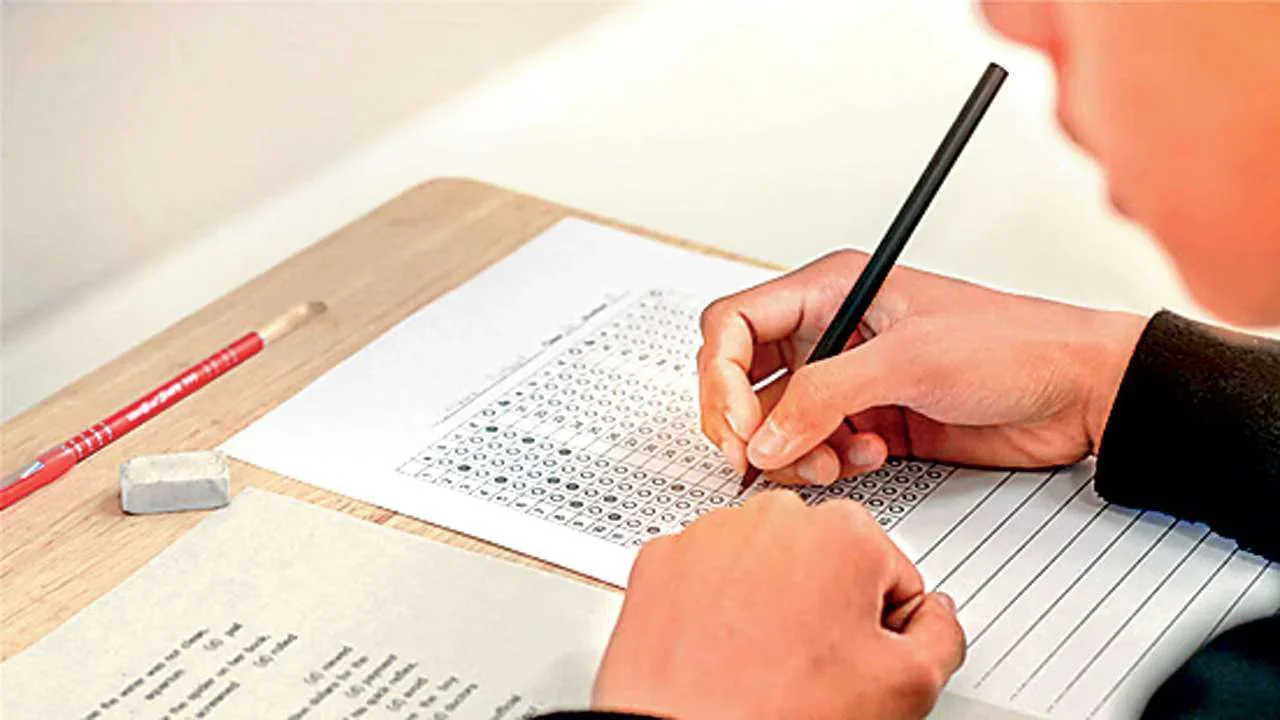
The Central Government has announced a comprehensive review of India’s examination system by setting up a high-powered reform task force headed by technology leader and Infosys co-founder Nandan Nilekani. The initiative aims to improve the security, transparency, and reliability of competitive examinations following concerns over paper leaks and other irregularities.
Prime Minister Narendra Modi announced the formation of the committee through a video message, stating that strengthening the examination framework is essential to protect the future of students and rebuild public confidence. He said strict action has already been taken against individuals involved in compromising exam integrity, with several accused facing legal proceedings.
Government Plans Technology-Driven Examination Reforms
The Prime Minister emphasized that India needs an examination system that is transparent, dependable, and capable of meeting the challenges of the digital era. He said the newly formed panel will conduct a detailed assessment of existing examination procedures and submit recommendations for improving the overall process.
The government is expected to consider the committee’s suggestions while introducing reforms aimed at preventing paper leaks, reducing administrative failures, and ensuring a fair environment for students appearing in major entrance and recruitment examinations.
Six-Member Committee Includes Technology, Education and Security Experts
The task force brings together specialists from technology, education, cybersecurity, administration, and national security fields.
The committee will be chaired by Nandan Nilekani, who has played a significant role in India’s technology ecosystem and digital infrastructure development. Other members include former ISRO Chairman S. Somanath, former Intelligence Bureau Director Tapan Deka, IIT Madras Director V. Kamakoti, former Education Secretary Anita Karwal, and management and logistics expert Amrit Lal Meena.
The diverse composition of the panel is intended to provide expertise across multiple areas involved in conducting large-scale examinations.
Panel to Examine Security, Cyber Risks and Exam Management
The committee has been assigned the responsibility of reviewing several critical aspects of the examination process, including question paper protection, digital systems, cybersecurity safeguards, examination centre management, and operational procedures.
Officials said the panel will focus on developing long-term solutions to prevent malpractice and strengthen trust in examinations conducted by government agencies and educational institutions.
The recommendations are expected to address challenges arising from increasing digitization, including data security risks, technology failures, and vulnerabilities in examination management systems.
Nandan Nilekani’s Role in India’s Digital Transformation
Nandan Nilekani is among India’s most prominent technology entrepreneurs. He co-founded Infosys in 1981 along with N. R. Narayana Murthy and other partners, helping establish the company as one of the country’s leading information technology firms.
He later served as Infosys CEO and Managing Director before taking charge as the first Chairman of the Unique Identification Authority of India (UIDAI) in 2009. During his tenure, he played a key role in the development of the Aadhaar digital identity programme, which became a major component of India’s digital public infrastructure.
Experts Welcome Focus on Examination Integrity
Education and technology experts have highlighted the importance of combining advanced technology with stronger administrative practices to protect examination systems. They believe effective implementation of the task force’s recommendations could improve fairness, accountability, and confidence among students and parents.
With millions of candidates appearing every year for competitive and government examinations, the government’s latest move is being viewed as a significant step toward creating a more secure and transparent assessment framework.

The Special Investigation Team (SIT) investigating the Maharashtra Teachers Eligibility Test (Maha TET) paper leak case has arrested the wife of the alleged mastermind as authorities continue to crack down on a suspected interstate examination fraud network.
Suman Kumari Gupta (40), a resident of Patna, Bihar, was taken into custody in connection with the ongoing investigation. She is the wife of Bijendar Kumar Baleshwar Kumar Sah, who has been identified by investigators as the alleged kingpin of the operation and remains absconding. A local court has remanded Gupta to police custody until July 6 for further questioning.
Financial Trail Under Investigation
According to the SIT, Gupta’s alleged involvement emerged during an examination of financial records and communication links between individuals suspected of participating in the paper leak network. Investigators believe she was aware of financial transactions connected to the alleged racket and had contact with several accused persons.
Police are now questioning her to determine the structure of the network, identify additional participants, and trace the movement of funds allegedly used to support the illegal operation.
Look Out Circulars Issued Against Absconding Accused
The investigation has also intensified efforts to locate two absconding suspects. Authorities have issued Look Out Circulars (LOCs) against Bijendar Kumar Baleshwar Kumar Sah and Kapil Dahiya to prevent them from leaving the country.
Investigators allege that Dahiya travelled under a false identity and was part of a group that reached Bhiwandi with the intention of distributing or selling leaked examination papers before the scheduled test. Police claim he escaped before officers could arrest him.
Interstate Network Suspected
According to investigators, Kapil Dahiya, a resident of Haryana’s Sonipat district, allegedly worked alongside Dheeraj Balraj Singh of Panipat, who was arrested earlier during a police operation targeting individuals accused of attempting to sell leaked examination papers.
The SIT believes two separate groups from Bihar and Haryana travelled independently to Maharashtra for the alleged operation. Although the teams reportedly had no direct connection with one another, investigators suspect both were coordinated by the absconding alleged mastermind.
Police further allege that Sah arranged flight bookings, local transportation, and maintained communication with members of the network throughout the operation before going into hiding after the first arrests were made.
Ten Investigation Teams Tracking Wider Conspiracy
To speed up the probe, the SIT has formed ten specialized teams to investigate different aspects of the case, including financial transactions, digital evidence, travel records, and communication networks.
Officials suspect the alleged mastermind may attempt to flee through the India-Nepal border due to his reported links to Bihar’s Samastipur district. The Look Out Circulars have been issued to prevent any international escape and assist law enforcement agencies in locating the accused.
Experts Call for Stronger Anti-Fraud Measures
Cybersecurity experts say organized examination fraud has evolved into sophisticated criminal enterprises involving encrypted communications, financial laundering, interstate coordination, and complex travel logistics.
Security analysts recommend stronger intelligence sharing between investigative agencies, advanced digital forensic capabilities, real-time financial monitoring, and coordinated interstate enforcement to dismantle such syndicates effectively. They also stress that enhanced security measures are essential to safeguard the credibility of public recruitment and competitive examinations across the country.
New Delhi: The Ministry of Education has decided to make the enhanced security system used during the NEET-UG 2026 re-examination a permanent feature of future National Eligibility cum Entrance Test (NEET) cycles.
The decision comes after officials reported improved integrity and smoother execution of the re-exam, with no major security breaches recorded. The move is aimed at strengthening exam credibility and restoring confidence in India’s largest medical entrance examination.
End-to-End Security Cover for Exam Process
According to senior officials, the upgraded framework will now be applied across every stage of the examination lifecycle—from question paper creation to final conduct at exam centres.
This includes stricter controls during paper setting, printing, packaging, transportation, and secure storage. Authorities said the system is designed to reduce vulnerabilities that previously allowed for leaks or unauthorized access.
To enhance confidentiality, personnel involved in question paper preparation were placed under strict isolation protocols prior to the exam, with all communication devices restricted during the process.
Expanded National Monitoring Network
During the re-examination, a large-scale monitoring system was deployed across the country, involving hundreds of coordinators and thousands of observers to oversee operations at exam centres.
Special flying squads, district-level control rooms, and digital monitoring teams were activated to track misinformation and prevent circulation of fake paper leak claims on social platforms.
Officials confirmed that this multi-layered surveillance structure will continue as a permanent feature of the exam system going forward.
Biometric Checks, CCTV Surveillance, and Secure Transport
More than 5,000 examination centres were placed under continuous CCTV surveillance, with live feeds monitored through a central control system managed by the National Testing Agency.
Candidates underwent biometric authentication, facial recognition checks, and physical screening before entering examination halls to ensure identity verification and prevent impersonation.
In addition, question papers were transported under armed police escort using GPS-enabled vehicles. In sensitive or remote locations, air transport was also deployed to maintain secure and timely delivery.
Framework to Be Regularly Updated
Officials said the security model will be reviewed periodically and upgraded to address emerging risks, including digital threats and organised leak attempts.
The Ministry emphasized that technology-driven monitoring and strict procedural controls will remain central to ensuring fairness and transparency in future NEET examinations.
-

 Business3 years ago
Pot Odor Does Not Justify Probable Cause for Vehicle Searches, Minnesota Court Affirms
-
 Business3 years ago
New Mexico cannabis operator fined, loses license for alleged BioTrack fraud
-
 Business3 years ago
Alabama to make another attempt Dec. 1 to award medical cannabis licenses
-

 Business3 years ago
Washington State Pays Out $9.4 Million in Refunds Relating to Drug Convictions
-

 Business3 years ago
Marijuana companies suing US attorney general in federal prohibition challenge
-

 Business3 years ago
Legal Marijuana Handed A Nothing Burger From NY State
-

 Business3 years ago
Can Cannabis Help Seasonal Depression
-

 Blogs3 years ago
Cannabis Art Is Flourishing On Etsy