
Banking & Finance News
Supreme Court Seeks Five Years of Financial Records From Private Universities Across India


The Supreme Court of India has expanded its scrutiny of private universities, seeking detailed information on their finances, fee structures, fund utilisation, admissions, examinations, staff recruitment and regulatory compliance.
The directions were issued in proceedings arising from a petition involving Amity University, Noida, before a bench comprising Justice Ahsanuddin Amanullah and Justice N.V. Anjaria. The case is registered as Ayesha Jain v. Amity University, Noida & Ors.
The Court has asked the Union government, states and Union Territories to collect information from private universities and colleges and place the relevant material before it through affidavits. The matter is scheduled for further consideration on November 19.
Five Years of Financial Records Sought
One of the major areas of the Court’s inquiry concerns the financial operations of private universities.
Institutions have been asked to provide audited financial information covering the previous five years, including details of:
- Sources of institutional income
- Utilisation of funds
- Payments made to individuals outside regular educational functions
- Investments and deployment of surplus funds
- Fees collected from students
- Financial benefits received from governments
The disclosures could provide the Court with a broader picture of how private universities generate, manage and spend their financial resources.
The inquiry also covers public benefits received by institutions, including land allotments, exemptions, concessions or other facilities provided by central or state authorities.
Student Fees and Additional Charges Under Scrutiny
The Court has also sought details of the amounts collected from students during admission and throughout their courses.
Universities may be required to explain collections made under different categories, including development-related charges and fees for special activities or events.
The issue is not simply whether an institution maintains a financial surplus. Universities may need reserves to meet expenses such as salaries, infrastructure, research and other operational requirements.
The broader question before the Court is how institutional resources are generated, managed and ultimately used in connection with the educational purpose of the institution.
Admissions and Examination Systems Examined
The Supreme Court’s inquiry extends beyond financial records.
Private universities have been asked to provide information about their admission procedures, including how students are selected for different courses and which officials are responsible for the process.
Information concerning examinations is also part of the inquiry. Institutions have been asked to identify those involved in preparing examination papers, conducting examinations, evaluating answer scripts and managing related academic functions.
The Court is also examining the role played by university management in these processes.
Faculty Recruitment and Salary Details
Another area covered by the directions is the appointment and compensation of teaching and non-teaching staff.
Universities have been asked to provide information about recruitment procedures, salaries, benefits and service conditions.
The Court has also sought information concerning teaching assignments. For faculty members, institutions may have to provide details showing the number of classes allocated and conducted, along with arrangements made when assigned teachers were unavailable.
Such information could allow the Court to examine whether staffing and academic resources correspond with the requirements of the courses being offered.
Regulatory Bodies Asked to Provide Inspection Details
The scrutiny also extends to regulatory and affiliating authorities.
The Court has sought information concerning inspections conducted during the previous five years, including details of faculty and support staff considered when institutions were granted recognition or affiliation.
The proceedings involve information from professional regulatory bodies connected with fields such as medicine, dentistry, nursing, law and pharmacy, among others.
Where educational institutions are associated with hospitals, information concerning the relationship between the college and hospital has also been sought.
This is particularly relevant for professional courses where recognition can depend on factors such as qualified faculty, infrastructure and practical training facilities.
Case Originated From a Student Dispute
The proceedings originated from a dispute involving a student and Amity University, Noida. The Supreme Court proceedings have subsequently developed into a wider examination of issues concerning the functioning and regulation of private universities.
The Court’s directions seek information from institutions and authorities rather than deciding, at this stage, that all private universities have violated financial or regulatory requirements.
The information gathered through the affidavit process is expected to help the Court examine the broader issues raised during the proceedings.
What Happens Next
The Union government, state governments and Union Territories are expected to collect the required information and place it before the Supreme Court within the timeframe directed by the Court.
The material could cover financial management, student fees, admissions, examinations, staffing, government benefits and regulatory inspections across private higher-education institutions.
The case will be taken up again on November 19, when the Supreme Court can consider the information submitted by the concerned authorities and determine the next course of proceedings.
The latest directions therefore represent a broad judicial inquiry into the functioning of private universities, with particular attention to financial transparency, academic administration and regulatory compliance.








Banking & Finance News
Written Reasons for Arrest Must Be Given at the Time of Arrest, Rule Also Applies to UAPA-PMLA Cases: Supreme Court

The Supreme Court of India has reaffirmed that arrested persons must be informed of the grounds of their arrest in writing and in a language they understand, holding that this constitutional safeguard cannot be diluted because of the seriousness of the alleged offence.
A bench comprising Justice Ujjal Bhuyan and Justice Atul S. Chandurkar delivered the ruling on September 21, 2026, emphasizing that the protections under Article 22(1) of the Constitution apply across criminal offences, including cases involving stringent laws such as the Unlawful Activities (Prevention) Act (UAPA) and the Prevention of Money Laundering Act (PMLA).
Article 22 Protection Cannot Depend on the Offence
The Court stressed that the constitutional protection surrounding personal liberty cannot be interpreted narrowly.
The nature or gravity of an allegation does not give authorities a basis to disregard the procedure prescribed by the Constitution. The requirement to communicate the grounds of arrest in writing therefore applies even when investigators are dealing with offences prosecuted under special legislation.
The ruling reinforces the principle that constitutional safeguards cannot be treated differently simply because an investigation concerns an alleged serious or anti-social offence.
Written Grounds Must Be Communicated in an Understandable Language
Under Article 22(1), an arrested person has the right to be informed of the grounds of arrest and to consult and be defended by a legal practitioner of their choice.
The Supreme Court’s latest ruling emphasizes that the grounds must be supplied in writing and in a language understood by the arrested person. Failure to comply with this constitutional requirement can make the arrest unlawful and affect the validity of subsequent detention or remand.
The judgment builds upon earlier Supreme Court decisions concerning arrest safeguards under laws including the PMLA and UAPA.
Court Places Restrictions on Re-Arrest After an Illegal Arrest
The ruling also addresses what authorities must do when an earlier arrest has been declared unconstitutional because mandatory safeguards were not followed.
The Court held that investigators cannot simply re-arrest a person at their own discretion after an illegal arrest. Any fresh arrest must follow additional procedural safeguards, including consideration by the competent Magistrate and appropriate approval within the police hierarchy.
The Court’s approach is intended to prevent the same constitutional violation from being repeated through an immediate re-arrest.
Safeguards Strengthened for Personal Liberty
The case, Jaskaran Jeet Singh Deol v. State of Punjab, involved a challenge concerning the legality of an arrest and subsequent custody proceedings. The Supreme Court ultimately set aside the Punjab and Haryana High Court’s May 29, 2026 order and related observations of the Magistrate.
The bench also made clear that it was not expressing an opinion on the merits of the allegations against the appellant.
The judgment further directed that a copy be circulated to Directors General of Police in the states and Union Territories, as well as Registrars General of High Courts and Directors of State Judicial Academies.
Supreme Court Refers to Earlier Constitutional Principles
While discussing the importance of procedural safeguards, the Court referred to the principle established in Prabhu Dayal Deorah v. District Magistrate, Kamrup, concerning personal liberty and preventive detention.
The underlying principle is that the seriousness of alleged conduct cannot, by itself, justify depriving a person of liberty without following the procedure established by the Constitution and law.
This reasoning reinforces the broader constitutional requirement that restrictions on personal liberty must remain subject to legally prescribed safeguards.
Implications for Investigating Agencies
The ruling places greater emphasis on procedural compliance during arrests.
Investigating agencies will need to ensure that:
- Grounds of arrest are provided in writing.
- The information is communicated in a language the arrested person understands.
- Constitutional requirements under Article 22 are followed regardless of the offence involved.
- Any subsequent re-arrest follows the safeguards laid down by the Supreme Court.
- Officers responsible for constitutional violations may face departmental consequences in appropriate circumstances.
The judgment therefore reinforces that investigative powers and constitutional protections must operate within the same legal framework.
Personal Liberty Remains a Constitutional Safeguard
The Supreme Court’s September 2026 ruling underscores that procedural protections surrounding arrest are not optional formalities.
Even in cases involving special criminal laws and serious allegations, authorities must comply with constitutional requirements governing personal liberty.
By extending the principle across criminal cases and setting safeguards for re-arrest following an unconstitutional detention, the judgment places renewed emphasis on the importance of lawful arrest procedures in India’s criminal justice system.
Banking & Finance
Major Shift in Digital Financial Reporting and Crypto-Asset Monitoring: Amendments Introduced in Income Tax Rules

New Delhi: The Government of India has introduced major amendments to the Income-tax Rules, 1962, aiming to improve transparency in digital financial reporting and strengthen oversight of crypto-related transactions. The changes, notified by the Ministry of Finance’s Department of Revenue on March 5, 2026, revise Rules 114F, 114G, and 114H to address the growing role of digital assets in the financial ecosystem.
The updated framework expands definitions and reporting requirements related to central bank digital currencies (CBDCs), electronic money products, and crypto-assets. Officials say the move is intended to enhance regulatory clarity while improving monitoring of emerging financial technologies.
New Definitions for CBDC and Digital Money Products
Under the amended rules, Central Bank Digital Currency (CBDC) has been formally defined as a digital version of fiat currency issued by a central bank. The introduction of this definition supports India’s broader push toward a secure and regulated digital payments ecosystem.
The notification also introduces the term “specified electronic money product.” These are digital instruments that represent a single fiat currency in electronic form and are issued in exchange for funds intended for payment transactions. Such products must be redeemable at their face value and accepted as a payment method by entities other than the issuer.
However, the rules clarify that services designed purely for facilitating fund transfers will not fall under this category. Additionally, digital money products where funds remain unused for more than 60 days will be excluded from the specified electronic money classification.
Another new category introduced is “relevant crypto-asset.” This term applies to digital assets that are neither central bank digital currencies nor specified electronic money products, or those deemed unsuitable for payment or investment by reporting service providers. These assets will be covered under the reporting framework for regulatory oversight.
Expansion of the Financial Asset Reporting Framework
The amendments also broaden the scope of financial assets that must be reported. The updated definition now includes interests linked to crypto-assets such as futures contracts, forward contracts, and options contracts involving digital assets.
Financial institutions are now required to maintain comprehensive records for accounts, including self-certification documents, details of joint account holders, and information about controlling persons.
For joint accounts, institutions must preserve the identities and the number of all account holders. Additionally, even for accounts that are not classified as U.S. reportable accounts, institutions must document whether valid self-certification has been obtained from account holders.
The rules also require identification and role details of individuals who exercise control over financial accounts, ensuring greater transparency in ownership structures.
Updated Due Diligence and Compliance Procedures
The revised regulations introduce enhanced due diligence requirements for newly opened accounts during the reporting period. If self-certification from an account holder cannot be obtained promptly, institutions must temporarily apply procedures similar to those used for pre-existing accounts until proper certification is received and verified.
For accounts maintained up to December 31, 2025, information about controlling persons or equity interest holders must only be reported if such details are available in electronically searchable records maintained by the financial institution.
The government has also updated reporting rules for gross proceeds from the sale or redemption of financial assets, ensuring that the same transaction is not reported twice if it has already been captured under the crypto-asset reporting framework.
Aligning with Global Tax Transparency Standards
Experts say the amendments align India’s regulatory approach with international tax transparency initiatives, including frameworks designed for global financial information sharing.
As digital financial instruments continue to expand, authorities are increasingly relying on advanced technology and data-driven reporting systems to strengthen tax administration.
Officials believe the updated rules will help curb tax evasion, identify suspicious financial activity, and improve the exchange of financial information across borders. The reforms are also expected to help financial institutions adopt more structured compliance systems for managing digital asset transactions.
Banking & Finance News
ED Attaches Fresh ₹1,885 Crore Assets of Anil Ambani Group; Total Seizures Near ₹12,000 Crore
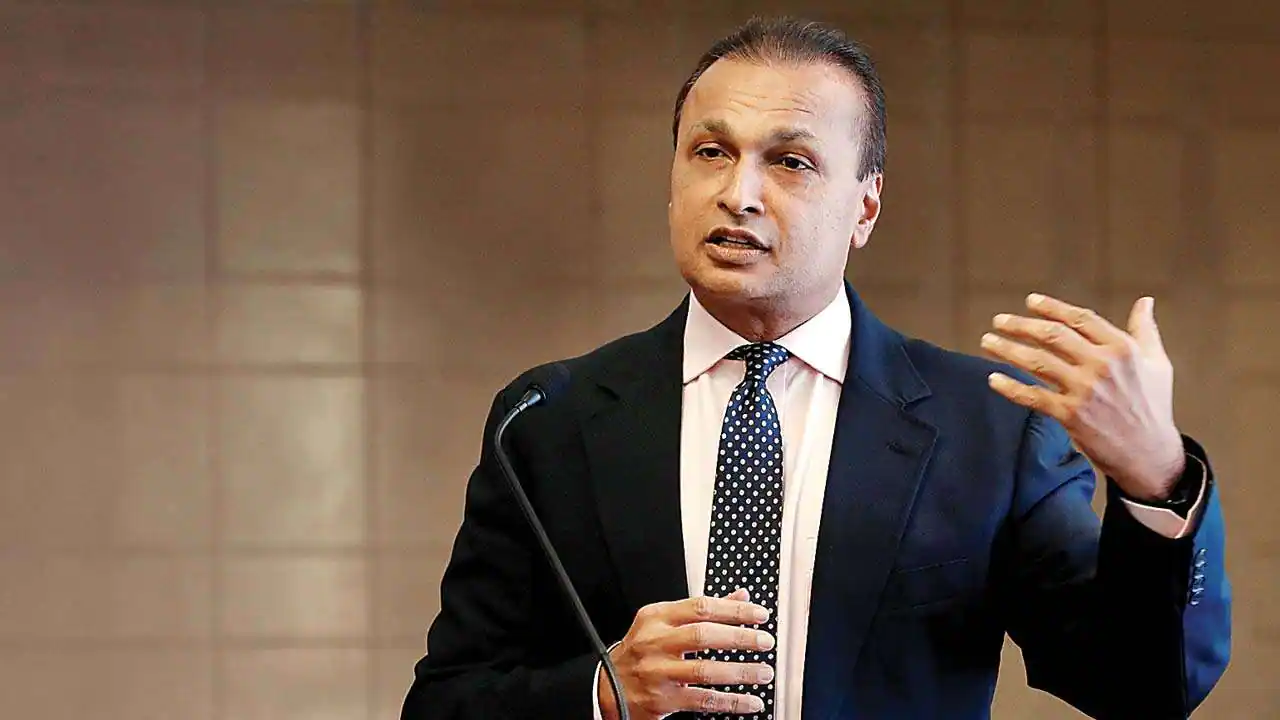
The Enforcement Directorate (ED) has provisionally attached assets worth ₹1,885 crore linked to the Anil Ambani Group, raising total seizures in ongoing investigations to nearly ₹12,000 crore. The move is part of a probe into alleged bank loan fraud, money laundering, and diversion of public funds involving multiple group companies.
Latest Attachments and Key Assets
The recent seizures were carried out through four provisional attachment orders covering Reliance Home Finance Limited (RHFL), Reliance Commercial Finance Limited (RCFL), Yes Bank-related transactions, and Reliance Communications Limited (RCom). Among the assets attached are:
- Shareholdings of Reliance Infrastructure Limited in BSES Yamuna Power Limited, BSES Rajdhani Power Limited, and Mumbai Metro One Private Limited
- Bank balances of ₹148 crore and receivables worth ₹143 crore
- Residential property and investments in shares and mutual funds of two senior group employees
These fresh attachments follow earlier seizures of ₹10,117 crore, which included immovable properties, fixed deposits, bank balances, and shareholdings across multiple group entities. In December 2025, assets worth approximately ₹1,120 crore were also attached as the investigation expanded.
Yes Bank Investments Under Scrutiny
The ED identified investments by Yes Bank between 2017 and 2019 as a key link in the alleged diversion of public funds. During this period, Yes Bank invested around ₹2,965 crore in RHFL and ₹2,045 crore in RCFL. By December 2019, these instruments had turned non-performing, with outstanding exposure at ₹1,353.50 crore for RHFL and ₹1,984 crore for RCFL.
The agency alleges that over ₹11,000 crore in public funds routed to RHFL and RCFL were redirected to other Anil Ambani group entities rather than being used for intended business purposes. Earlier flows of public money via Reliance Nippon Mutual Fund were reportedly circumvented through Yes Bank due to regulatory restrictions.
Loans, Diversion, and ‘Evergreening’
The ED flagged large-scale borrowing by RCom and its subsidiaries from domestic and international lenders starting in 2010-12. Outstanding loans are estimated at ₹40,185 crore. Investigators allege that approximately ₹13,600 crore was used for loan evergreening, while over ₹12,600 crore was diverted to related parties. Additional funds exceeding ₹1,800 crore were reportedly parked in fixed deposits, mutual funds, and other investments rather than used for legitimate business operations.
Next Steps in the Investigation
The ED clarified that these attachments are provisional and subject to approval by the adjudicating authority. The investigation into the group’s financial transactions and fund flows continues, with further scrutiny expected.
The latest action is likely to have significant implications for the Anil Ambani Group’s financial standing and has drawn attention from banking and investment circles due to the scale of the alleged irregularities and the volume of public funds involved.
-

 Business3 years ago
Pot Odor Does Not Justify Probable Cause for Vehicle Searches, Minnesota Court Affirms
-

 Business3 years ago
New Mexico cannabis operator fined, loses license for alleged BioTrack fraud
-

 Business3 years ago
Alabama to make another attempt Dec. 1 to award medical cannabis licenses
-

 Business3 years ago
Washington State Pays Out $9.4 Million in Refunds Relating to Drug Convictions
-

 Business3 years ago
Marijuana companies suing US attorney general in federal prohibition challenge
-

 Business3 years ago
Legal Marijuana Handed A Nothing Burger From NY State
-

 Business3 years ago
Can Cannabis Help Seasonal Depression
-

 Blogs3 years ago
Cannabis Art Is Flourishing On Etsy