
Cybercrime
Saharanpur Doctor Loses Lakhs to Ayushman Scam Gang: Police Seize Cash, Luxury Car After Cross-Country Chase


Authorities in Saharanpur have dismantled a cybercrime gang from Lucknow that allegedly defrauded Dr. Prabhat Kumar Verma, a surgeon, of nearly ₹90.59 lakh under the pretext of recovering pending claims from the Ayushman Bharat health scheme. Police recovered ₹7 lakh in cash and a luxury car purchased with the stolen funds following a cross-country investigation.
Details of the Scam
Dr. Verma, a resident of Janakpuri, lodged a complaint with the Cyber Crime Branch on November 11, 2024. According to police, the accused gained the doctor’s trust by offering to help recover pending payments for medical treatments conducted under the Ayushman Bharat scheme. Over time, they siphoned off nearly ₹90.59 lakh into multiple accounts using fraudulent schemes.
Key Recoveries by Authorities
The cybercrime investigation initially froze ₹2.76 lakh in the accused’s bank accounts. Acting on leads from the main suspect, authorities recovered ₹7 lakh in cash from his residence. A Skoda luxury car, purchased with part of the stolen money, was also seized from a female accomplice linked to the gang. Previously, police had arrested Ankit Jaiswal, Abhay Sharma, and Vivek Sharma, all from Lucknow, and remanded them to judicial custody. Following a court order, the recovered cash was returned to Dr. Verma.
Police Advisory on Cyber Fraud
SP City Vyom Bindal urged the public to remain vigilant when dealing with online or telecommunication-based requests for money. He warned that cybercriminals often exploit official schemes and use plausible pretexts to defraud unsuspecting victims. Authorities emphasized the importance of verifying official channels before transferring funds, particularly in cases involving health or government benefit schemes.
This case highlights the increasing sophistication of cybercriminal networks in India and underscores the need for public awareness and robust monitoring of financial transactions conducted online.


New Delhi: The Directorate of Enforcement (ED) has carried out searches at 19 locations across Tamil Nadu, Kerala and Srinagar as part of a money laundering investigation linked to alleged online investment fraud and fake work-from-home schemes.
The searches were conducted on July 10 and 11 under the provisions of the Prevention of Money Laundering Act (PMLA). According to the agency, the operation covered 16 locations in Tamil Nadu, two in Kerala and one in Srinagar. The case originated from two cybercrime complaints registered by the Tamil Nadu and Telangana Police.
Victims Allegedly Duped Through Fake Investment Platforms
According to ED officials, the accused allegedly attracted victims through fraudulent online investment platforms and work-from-home opportunities by promising unusually high returns and attractive earning opportunities.
Investigators claim that victims transferred nearly ₹14.95 crore into bank accounts allegedly linked to the accused. The agency is examining the flow of these funds and the methods allegedly used to conceal their origin.
Funds Allegedly Routed Through Mule Accounts and Crypto Channels
The ED has alleged that the suspected proceeds of crime were moved through multiple bank accounts, shell entities and cryptocurrency channels to disguise the financial trail.
Investigators have identified Roshan Fiaz as one of the individuals allegedly involved in the suspected laundering network. The allegations against him and others are part of an ongoing investigation and remain subject to judicial review.
The agency claims that several bank accounts were opened shortly before receiving fraudulent funds and later closed after transactions were completed. Officials are examining whether these accounts were allegedly used as part of a wider money laundering arrangement.
Digital Evidence and Financial Records Seized
During the searches, ED teams recovered documents, electronic devices, laptops, mobile phones, banking records, company-related documents and information connected with suspected shell companies.
Investigators also collected details related to cryptocurrency wallets and virtual digital assets to trace the movement of funds allegedly generated through cyber fraud.
According to the ED, assets worth around ₹3.35 crore in cryptocurrency and cash amounting to ₹14.50 lakh were seized during the operation. The agency also froze bank accounts containing more than ₹40 lakh.
Probe Focuses on Complete Money Trail
Officials said forensic analysis of digital devices, banking transactions and cryptocurrency records is underway to identify additional beneficiaries and determine the full extent of the alleged financial network.
Cybercrime experts have highlighted that online investment scams and fake employment frauds are increasingly using sophisticated laundering methods involving mule accounts, shell companies and digital currencies.
Former IPS officer and cybercrime expert Prof. Triveni Singh said that effective investigation of such cases requires advanced digital forensics, blockchain analysis, financial intelligence and coordination between multiple enforcement agencies.
He added that tracking the movement of illegal funds quickly is crucial for improving recovery efforts and strengthening legal action against organised cyber fraud networks.
The ED has stated that the investigation is continuing and further action will be taken based on evidence collected during the probe. The accused will be subject to due legal process, and final determination of guilt will be made by the competent court.

Faridabad cyber police have arrested a man from Ludhiana in Punjab in connection with a large-scale online investment fraud case involving alleged losses of nearly ₹73.97 lakh. The accused is suspected of facilitating the movement of fraudulent funds collected through fake stock market investment schemes operated via social media platforms.
Authorities say the arrest is part of an ongoing investigation into a wider cyber fraud network that targeted victims with promises of high returns through stock trading and pre-IPO investment opportunities.
Victim Lured Through WhatsApp Investment Group
According to police officials, the victim—a resident of Sector 86 in Faridabad—was first contacted through a WhatsApp message containing a link to an investment group. After joining the group, the victim was repeatedly persuaded by fraudsters to invest in stock market schemes promising unusually high profits.
Investigators said the scammers presented themselves as investment advisors and encouraged the victim to transfer money in multiple installments to different bank accounts.
Over time, the victim transferred a total of ₹73,97,600, but no returns were ever provided. When withdrawal attempts failed and communication stopped, the victim reported the matter to cyber police.
Investigation Traces Funds to Firm Account in Ludhiana
During the financial investigation, police traced part of the defrauded money to a business account linked to a transport firm named Janata Trans Co. in Ludhiana.
Authorities identified the account holder as Hansraj Goyal, who was arrested from the Transport Nagar area in Ludhiana. Police said approximately ₹7 lakh from the fraudulent proceeds had been routed through the firm’s bank account.
Investigators believe the account was used as a “mule account” to channel scam proceeds, a common tactic in online financial fraud cases where multiple accounts are used to obscure money trails.
Arrest and Custody for Further Investigation
Following his arrest, the accused was produced before a local court and has been remanded to police custody for further interrogation.
Cyber police officials stated that questioning will focus on identifying:
- Other individuals involved in the fraud network
- Additional bank accounts used to route stolen funds
- Possible links to larger interstate cybercrime operations
Authorities are also working to trace the remaining diverted funds and determine how they were distributed across multiple accounts.
Growing Trend of Online Investment Scams
Officials noted that the case reflects a rising pattern of cyber frauds across India involving fake investment schemes promoted through messaging apps and social media platforms.
In such scams, victims are typically added to WhatsApp or Telegram groups where fraudsters:
- Pose as financial advisors or trading experts
- Promote stock trading or pre-IPO investment opportunities
- Display fake profit screenshots to build trust
- Pressure victims into making repeated deposits
Once significant funds are collected, the scammers either disappear or block access to withdrawal channels.
Conclusion
The Faridabad case highlights the increasing use of digital platforms in financial fraud and the role of intermediary bank accounts in laundering illicit funds. As investigations continue, cyber police are expected to uncover additional links within the wider network responsible for orchestrating the scam.
Authorities have once again urged citizens to exercise caution when responding to unsolicited investment offers received through social media or messaging apps.
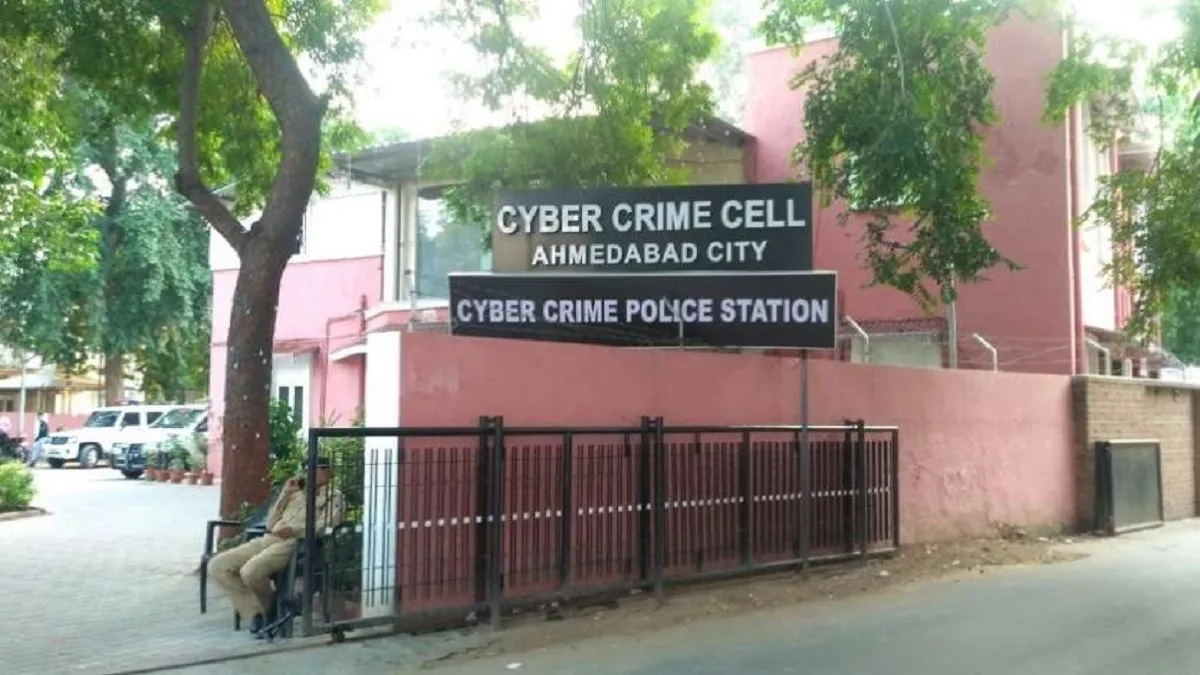
A disturbing hospital privacy breach in Gujarat has expanded into a major cybercrime investigation, after authorities uncovered an alleged interstate network involved in hacking CCTV systems, recording sensitive medical footage, and distributing it through encrypted online platforms for profit.
The case, which initially involved a viral clip from a maternity hospital in Rajkot, has now revealed a broader operation spanning multiple Indian states and international digital channels, with investigators describing it as a coordinated illegal surveillance footage marketplace.
Viral Labour Room Video Triggers Cybercrime Investigation
The incident first came to light on February 17, 2025, when a sensitive video recorded inside a labour room at a maternity hospital in Rajkot surfaced on social media. The clip reportedly showed a healthcare worker attending to a female patient, sparking immediate public concern over patient privacy violations.
Following the emergence of the footage, the Ahmedabad City Cybercrime Branch registered a case and launched a detailed investigation into how restricted CCTV recordings from a medical facility were accessed and circulated online.
Hacked Hospital CCTV System Suspected
Early findings indicated that multiple videos originating from hospital surveillance systems had been leaked. Investigators soon discovered that the breach was not limited to a single incident, but part of a wider pattern involving several clips taken from private medical environments.
Authorities believe the hospital’s CCTV network was compromised externally, allowing unauthorized access to live or stored footage. Importantly, preliminary assessments suggested that hospital staff were not involved in the breach.
Investigators also confirmed that the leaked videos were being actively traded on private Telegram groups, while promotional clips were shared through public platforms to attract buyers.
Illegal Online Market for Sensitive Surveillance Footage
As the probe deepened, police uncovered a structured digital marketplace operating through encrypted messaging platforms. The network allegedly sold CCTV footage depicting patients in vulnerable medical situations, categorizing content and offering it to subscribers for payment.
Reports indicate that:
- Short preview clips were circulated on video-sharing platforms
- Full footage was sold on private Telegram channels
- Prices reportedly ranged between ₹800 and ₹2,000 per video
- Payments were routed through digital wallets, UPI, and gift cards
Investigators identified multiple Telegram groups allegedly involved in distribution, where content was organized and marketed systematically to potential buyers.
Multi-State Arrests and International Links
Police operations soon expanded across several Indian states, including Maharashtra, Uttar Pradesh, Delhi, and Uttarakhand. Multiple arrests were made as investigators tracked digital footprints linked to YouTube channels and Telegram groups involved in distributing the footage.
Authorities also reported that some suspects used virtual phone numbers to communicate with individuals believed to be operating from outside India, including contacts traced to Romania and the United States.
The investigation further revealed alleged coordination between multiple accused individuals who shared hacking tools, CCTV access credentials, and payment instructions through encrypted messaging platforms.
Stronger Legal Charges Including Cyber Terrorism
Initially, suspects were booked under provisions dealing with privacy violations and obscene content under India’s Information Technology laws. However, as the scale and sensitivity of the operation became clear, authorities escalated the charges.
Stronger legal provisions were added, including sections related to cybercrime and cyber terrorism under Indian criminal law frameworks. Officials cited the seriousness of the breach and its long-term psychological and privacy impact on victims and their families as justification for harsher charges.
Investigators also noted evidence suggesting coordinated operations, including:
- Exchange of CCTV hacking tools
- Distribution of access credentials
- Financial transactions through digital channels
- Use of multiple online groups to organize content sales
Digital Footprints Reveal Coordinated Network
Forensic analysis of seized devices reportedly uncovered extensive communication records, financial transactions, and tools linked to unauthorized access of CCTV systems.
Police said multiple hacking applications were found on suspects’ devices, along with data indicating access to DVR systems and surveillance infrastructure from multiple locations.
The case also highlighted how encrypted platforms such as Telegram were allegedly used to organize a structured network involving content creators, distributors, and buyers.
Growing Concerns Over Surveillance Security in Healthcare Facilities
The case has raised serious concerns about the security of CCTV systems in sensitive environments such as hospitals. Experts note that healthcare institutions often store highly sensitive footage, making them attractive targets for cybercriminals.
Cybersecurity analysts warn that weak authentication, outdated firmware, and poorly secured remote access systems can expose surveillance networks to external compromise if not properly secured.
Conclusion
What began as a single viral video from a hospital labour room has evolved into one of the most significant cybercrime investigations in recent years, exposing a suspected multi-state network involved in hacking and monetizing sensitive surveillance footage.
The case highlights critical gaps in digital security infrastructure within healthcare systems and underscores the growing threat posed by cybercriminal networks exploiting private surveillance data for financial gain.
-

 Business3 years ago
Pot Odor Does Not Justify Probable Cause for Vehicle Searches, Minnesota Court Affirms
-

 Business3 years ago
New Mexico cannabis operator fined, loses license for alleged BioTrack fraud
-

 Business3 years ago
Alabama to make another attempt Dec. 1 to award medical cannabis licenses
-

 Business3 years ago
Washington State Pays Out $9.4 Million in Refunds Relating to Drug Convictions
-

 Business3 years ago
Marijuana companies suing US attorney general in federal prohibition challenge
-

 Business3 years ago
Legal Marijuana Handed A Nothing Burger From NY State
-

 Business3 years ago
Can Cannabis Help Seasonal Depression
-

 Blogs3 years ago
Cannabis Art Is Flourishing On Etsy