
Cyber & Financial Fraud
Crores Lost via Mule Accounts: Delhi Cyber Police Bust Investment Fraud Syndicate, Five Arrested

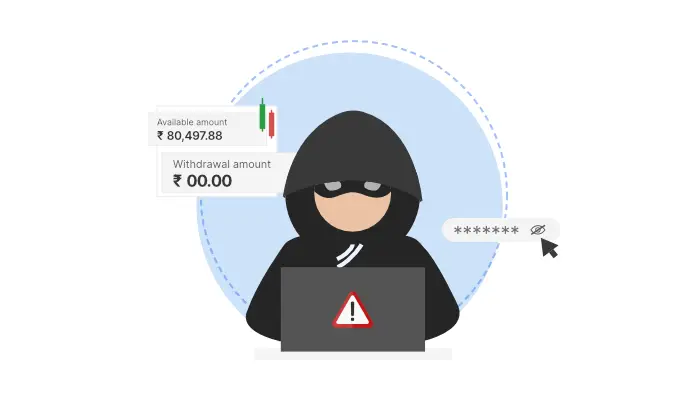
The South-West Delhi Cyber Police have dismantled a sophisticated investment fraud network that lured victims with promises of high returns, arresting five individuals involved in facilitating cyber fraud across India through mule bank accounts. The syndicate, primarily operated from Maharashtra, reportedly maintained links with Dubai-based associates.
Fraudulent Investment Scheme
The accused—Shridhar Dilip Ingle (25), Archiryan Goraksh Kamble (21), Ajij Miran Shaikh (25), Pranav Jalinder Guldagad (24), and Vishal Durgadas Bachal (25)—allegedly coordinated the use of bank accounts provided by unsuspecting individuals or coerced participants. These accounts were then used to transfer funds collected from victims across multiple states.
The case emerged after a resident of Arunachal Pradesh, currently living in Delhi, filed a complaint via the National Cyber Crime Reporting Portal (NCRP) on September 4, 2025. The complainant alleged being duped into investing ₹12,22,670 in a fake stock market company called “Next Billion Technology Pvt Ltd.” A woman identifying herself as Parineeti Jain and her associates reportedly contacted the victim, promising lucrative returns and persuading him to transfer money into accounts supplied by the accused.
Mule Accounts and Dubai Connection
Police investigations revealed that the syndicate relied on a network of mule accounts, which were provided on commission and often sourced from individuals deceived or incentivized to allow use of their bank accounts. One key associate, “Chaitanya”, based in Dubai, reportedly managed operations at an international level, coordinating funds transferred through these accounts.
Following technical analysis, surveillance, and financial tracking, authorities apprehended the main suspect, Shridhar Dilip Ingle, in Shrirampur, Maharashtra, and subsequently arrested the remaining four accused during coordinated raids.
Evidence and Ongoing Investigation
Authorities recovered six mobile phones and obtained records of 35 bank accounts connected to fraudulent transactions. Preliminary analysis indicates that crores of rupees were routed through these accounts, highlighting the scale and sophistication of the fraud.
The case underscores how cybercriminals exploit technological loopholes and banking systems to defraud unsuspecting investors. Investigators are now tracing additional links in the network, including the Dubai connection, which may uncover further international collaborations.
Authorities have cautioned the public to verify the legitimacy of investment opportunities and avoid transferring money to unknown platforms or individuals. Experts emphasize the importance of due diligence to prevent falling victim to such scams.




Japan is preparing to use generative artificial intelligence to detect investment fraud earlier, with the country’s Consumer Affairs Agency planning to analyse thousands of complaints for warning signs of suspicious schemes promising high returns.
How will Japan use AI to fight investment fraud?
The Consumer Affairs Agency said it will strengthen efforts against investment and other fraud promising lucrative returns by using generative AI to improve information analysis.
A new group established within the agency will use the technology to identify schemes that share patterns with previous fraud cases and malicious business operators. The aim is to spot potentially harmful operations earlier and allow authorities to intervene before losses grow.
What types of investment schemes will be targeted?
The agency announced measures against schemes that attract large amounts of money by promising high returns before eventually collapsing.
The AI-based approach will examine similarities between newly reported cases and past fraudulent schemes. By identifying recurring characteristics, authorities hope to recognise suspicious operations before they cause wider financial damage.
Why does Japan want to detect these schemes earlier?
Consumer Affairs Minister Hitoshi Kikawada stressed that recovering money can become difficult after victims have already suffered losses.
“Once damage occurs, it will be difficult to recover, so it is important to respond quickly,” Kikawada told a press conference.
The initiative is therefore focused on identifying warning signs at an earlier stage rather than relying only on action after consumers have already lost money.
How many consumer cases will the AI analyse?
The new group will operate a generative AI system to analyse cases reported to the National Consumer Affairs Center’s information system for consultation.
The system receives around 900,000 cases annually, giving authorities a large pool of consumer reports that can be examined for recurring fraud patterns and suspicious activity.
What warning signs will the system look for?
The AI system is designed to identify suspicious schemes and detect early signs that a business could fail.
It will analyse distinctive solicitation phrases and other characteristics extracted from previously reported cases. These indicators can then be compared with newer complaints to help authorities identify possible risks.
What could the AI system change for consumers?
The initiative is intended to help authorities move faster when similar fraud patterns begin appearing in consumer complaints. Earlier identification could give officials an opportunity to examine suspicious schemes before they expand and cause larger losses.
For consumers, the development also highlights the importance of caution when approached with investment opportunities promising unusually attractive returns. Suspicious offers should be examined carefully, particularly when they resemble schemes built around promises of high returns before eventually collapsing.
About the author — Ayesha Aayat writes on cybercrime, digital safety, and emerging online threats. Her work focuses on public awareness, legal clarity, and technology-driven risks.

In a major crackdown on cyber-enabled financial crime, the East Kutch Police have uncovered an extensive fraud network involving more than 100 suspected mule bank accounts linked to transactions worth approximately ₹44 crore. The operation, carried out under the Gujarat government’s “Operation Mule Hunt 2.0” initiative, has resulted in the arrest of four alleged members of an interstate cybercrime syndicate.
Authorities said investigations are ongoing to apprehend four additional suspects believed to be connected to the network.
Intelligence-Led Operation Targets Organized Cybercrime
The investigation began after the Cyber Crime Police Station in East Kutch received actionable intelligence regarding suspicious financial activities. Law enforcement teams combined technical surveillance with human intelligence to identify individuals allegedly involved in facilitating cyber fraud transactions.
East Kutch Superintendent of Police Sagar Bagmar stated that the operation forms part of a broader statewide effort to dismantle criminal networks that use banking channels to move illicit funds generated through online scams.
Based on the gathered intelligence, police teams conducted targeted raids that led to multiple arrests and the seizure of crucial digital evidence.
Financial Records Reveal Large-Scale Fraud Activity
During the investigation, officials reportedly recovered extensive financial data that exposed the scale of the alleged operation.
According to preliminary findings, the network controlled or had access to nearly 105 mule accounts used to receive and transfer money obtained through cyber fraud schemes. Transaction records examined by investigators indicate that approximately ₹44 crore moved through these accounts over a period of time.
Police suspect the accounts were used to conceal the origins of illegally obtained funds and distribute proceeds among members of the criminal network.
Authorities believe victims of the fraud may be spread across several Indian states, suggesting that the operation had a nationwide reach.
Possible International Links Under Examination
Investigators have also identified indications of possible cross-border connections linked to the network. Early analysis of digital evidence suggests that certain activities and transaction trails may have connections to Sri Lanka.
Officials clarified that these international links are still being verified and remain part of the ongoing investigation. Cybercrime experts are examining financial and communication records to determine whether foreign actors were involved in the operation.
Four Arrested, Search Continues for Others
Police have registered a case under relevant provisions of the Bharatiya Nyaya Sanhita (BNS) and the Information Technology Act.
While four suspects have been taken into custody, authorities are actively searching for four additional accused who are believed to have played key roles in the fraud network. Investigators are also analyzing seized electronic devices, bank records, and transaction histories to identify more individuals connected to the operation.
Operation Mule Hunt 2.0 Gains Momentum
The latest action highlights the growing focus of law enforcement agencies on dismantling mule account networks, which have become a critical component of modern cybercrime operations. Such accounts are frequently used to transfer, disguise, and withdraw funds generated through phishing scams, investment frauds, online impersonation schemes, and other digital crimes.
Officials said further arrests and financial recoveries are possible as the investigation progresses. The operation is expected to provide valuable intelligence on how organized cybercriminal groups exploit banking systems to facilitate large-scale fraud.
The case marks one of the most significant cybercrime crackdowns in Gujarat this year and underscores the increasing efforts by authorities to combat financial crimes in the digital era.
Bengaluru News
Matrimonial Profile Exploited for Extortion: Bengaluru Woman Swindled of ₹23.5 Lakh in Fake ‘Doctor’ Airport Detention Scam

BENGALURU — A 42-year-old woman from Bengaluru has allegedly been cheated out of ₹23.5 lakh in a sophisticated online matrimonial scam after a fraudster posing as a doctor working in the United Kingdom gained her trust through a marriage proposal and later fabricated an airport detention story to extract money.
Police have launched an investigation into the case and are attempting to trace the individuals behind the fraud as cyber-enabled relationship scams continue to rise across India.
Marriage Proposal Used to Gain Victim’s Trust
According to the complaint filed with police, the victim had created a profile on a matrimonial platform in search of a life partner. Soon afterward, she was contacted by a man who introduced himself as “Dr. Vihan Mishra,” claiming to be a surgeon employed in Scotland.
Over several weeks, the suspect allegedly maintained regular communication with the woman, expressing serious intentions of marriage and gradually building a personal relationship. During this period, he reportedly gathered information about her family, profession, and personal circumstances, helping establish credibility and trust.
The accused later informed the woman that he planned to visit India so they could meet and discuss their future together.
Fake Airport Crisis Leads to Financial Loss
Shortly after claiming to have arrived in Delhi, the suspect allegedly contacted the woman and stated that he had encountered difficulties with authorities at the airport.
According to investigators, the fraudster claimed he had been detained due to documentation and procedural issues. The situation escalated when the woman received a call from another individual who identified herself as an immigration official.
The caller allegedly informed the victim that the supposed doctor was carrying gold and a large quantity of foreign currency that required official clearance before his release.
The woman was then instructed to pay various charges, including registration fees, customs clearances, documentation expenses, and currency conversion costs.
Believing she was helping her prospective spouse resolve legal formalities, the victim reportedly transferred money on multiple occasions.
₹23.5 Lakh Transferred Within Days
Police said the woman transferred a total of ₹23.5 lakh from two separate bank accounts between May 4 and May 6.
Authorities believe the payments were made in several installments after the fraudsters repeatedly created new reasons requiring urgent financial assistance.
The victim reportedly realized she had been deceived only after communication with both individuals abruptly stopped. Attempts to contact them thereafter were unsuccessful.
Investigation Underway
Following the discovery of the fraud, the woman approached law enforcement authorities and filed a formal complaint.
Investigators are currently examining bank account details, transaction records, digital communications, and other evidence to identify the suspects and trace the flow of funds.
Police suspect the fraud may be linked to organized cybercriminal networks that specifically target individuals through matrimonial and dating platforms.
Rising Threat of Matrimonial Fraud
Cybercrime experts have warned that matrimonial scams have become increasingly common, with fraudsters creating fake professional identities to gain the trust of victims before fabricating emergencies requiring financial assistance.
Common tactics include impersonating doctors, military officers, engineers, or foreign-based professionals and then inventing situations involving customs authorities, airport detentions, medical emergencies, or legal complications.
Authorities advise users of matrimonial websites to independently verify identities, avoid sending money to online contacts, and report suspicious requests immediately.
The case serves as another reminder of the growing sophistication of online relationship scams and the financial risks posed by fraudsters who exploit trust for personal gain.
-

 Business3 years ago
Pot Odor Does Not Justify Probable Cause for Vehicle Searches, Minnesota Court Affirms
-

 Business3 years ago
New Mexico cannabis operator fined, loses license for alleged BioTrack fraud
-

 Business3 years ago
Alabama to make another attempt Dec. 1 to award medical cannabis licenses
-

 Business3 years ago
Washington State Pays Out $9.4 Million in Refunds Relating to Drug Convictions
-

 Business3 years ago
Marijuana companies suing US attorney general in federal prohibition challenge
-

 Business3 years ago
Legal Marijuana Handed A Nothing Burger From NY State
-

 Business3 years ago
Can Cannabis Help Seasonal Depression
-

 Blogs3 years ago
Cannabis Art Is Flourishing On Etsy