
Business
Justice Department could help marijuana industry via Cole Memo 2.0 – or hurt reform

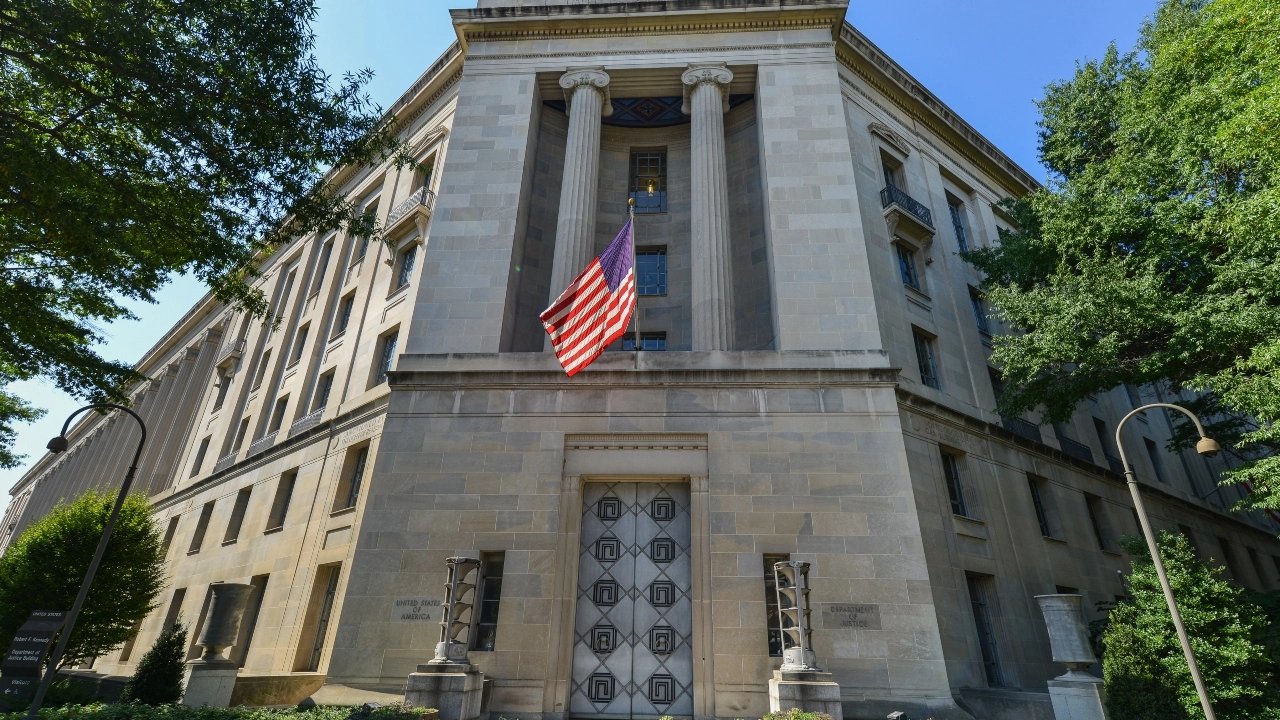
As federal marijuana reform inches forward in a Congress paralyzed by partisan gridlock, more immediate “progress” might have to come from the Biden administration.
U.S. Attorney General Merrick Garland’s Department of Justice might address the thorny issue of cannabis banking when his office revisits its approach toward the state-legal but federally prohibited marijuana industry, Washington insiders believe.
A friendly – or at least hands-off – Justice Department would be welcome news to marijuana businesses frustrated and exhausted with inaction in Congress, where bipartisan reform bills such as the SAFE Banking Act remain stalled.
However, a policy memo by itself, much like the landmark 2013 “Cole Memo,” is unlikely to convince more banks to offer basic services to marijuana businesses, several observers said.
And such a document – dubbed by some insiders as a Cole Memo 2.0 – could even backfire.
Pro-cannabis GOP lawmakers and the lobbyists attempting to win necessary conservative support for marijuana reform in Congress fear that unilateral action – though consistent with President Joe Biden’s MJ rescheduling review and low-level federal pardons – could turn off Congressional Republicans.
That, in turn, would make it more difficult to pass major reform legislation such as cannabis banking and removing marijuana from Schedule 1 of the Controlled Substances Act.
“I’m happy that both Congress and the administration are beginning to look more seriously at the need for federal cannabis reform,” U.S. Rep. Dave Joyce, an Ohio Republican and a lead sponsor of marijuana reform, told MJBizDaily.
“However, it would be most helpful if both branches worked in coordination as opposed to unilaterally.”
He added that lawmakers need “answers from the agencies and the agencies need more direction from” Congress.
Cole Memo 2.0
In 2013, a deputy attorney general in the Obama Justice Department named James Cole released a four-page policy advisory that’s been credited with allowing the state-legal marijuana industry as we know it to exist.
Crafted after voters approved adult-use legalization in Colorado and Washington but before the beginning of retail sales in those markets, the Cole Memo gave U.S. attorneys guidance for deciding how to deal with state-legal marijuana businesses in their districts.
Jeff Sessions, the first attorney general in the Trump Administration, rescinded the Cole Memo in January 2018.
But the Justice Department has not strayed from the memo’s general guidelines.
The Biden administration’s DOJ has been “examining marijuana policy” since at least last year, Garland said during a March 1 congressional oversight hearing.
“Within the department, we are still working on a marijuana policy” that “will be very close to what was done with the Cole Memorandum,” Garland told U.S. Sen. Cory Booker, a New Jersey Democrat who is a leading progressive voice for marijuana legalization in Washington DC.
Neither Booker nor the DOJ responded to MJBizDaily requests for comment.
It’s unclear when the DOJ might reevaluate its stance on the continuing conflict between federal drug laws and the legal medical and adult-use marijuana businesses operating in 39 states.
But several sources said they expect the Justice Department to move this year on so-called Cole Memo 2.0.
“We expect to see informal policy guidance in the form of a Cole 2.0 in the very near future here,” said Christian Sederberg, founding partner of Denver-based cannabis law firm Vicente.
The original Cole Memorandum identified eight tenets that state-legal marijuana businesses could follow in order to not become “priorities” for federal prosecution.
These included keeping cannabis away from minors, keeping marijuana sales revenue “from going to criminal enterprises, gangs and cartels” and stopping state-legal MJ from illegally crossing into other states.
At the time, the memo’s impact was profound.
States became confident they could legalize, regulate and tax adult-use marijuana without federal interference.
And entrepreneurs and investors could open and fund state-legal businesses with more clearly defined (and less) risk.
However, much has changed since then.
Friendlier White House
Adult-use marijuana is now legal in 21 states. Sales have begun in 19 of those states.
Companies operating in multiple states are listed on public stock exchanges in Canada and attracting investment from Fortune 500 legacy players such as tobacco giant Altria and garden-supply titan Scotts Miracle-Gro.
States continue to open individual marijuana markets – sales in Missouri began in January, while Maryland could follow this summer – as the DOJ stands by and watches.
Businesses once fearful of federal raids are now considering more complex questions around institutional investment and even exploring interstate commerce.
And at the same time federal drug enforcement seems uninterested in stymieing legal marijuana, a friendlier-than-ever White House is emerging.
In December, President Joe Biden signed a cannabis research bill into law after triggering an administrative review of marijuana’s status under the Controlled Substances Act.
The president also pardoned certain low-level marijuana offenders, and in a near-complete reversal, Biden, the lead sponsor of the 1994 Crime Bill, called the country’s war on marijuana a “failed approach.”
An updated Cole Memo would fit neatly into that pattern.
“The cannabis industry is mindful that now is the time to better describe how the industry works,” said David Mangone, director of policy at the National Cannabis Roundtable, a Washington DC-based lobbying shop.
“I think when the Cole Memo was written, you’d be hard-pressed to find someone in the Justice Department who had contemplated MSOs or companies listing on Canadian exchanges.”
“I would be shocked if the DOJ just reupped the language word for word from the Cole Memo,” Mangone added.
“We’re in a different place now.”
For those reasons, it’s likely that Garland’s directions will do more than merely restate the decade-old Cole Memo’s eight tenets.
And there is existing federal policy that addresses cannabis banking that could easily be rolled into any policy document.
In February 2014, the U.S. Treasury Department’s Financial Crimes Enforcement Network (FinCEN) issued its own guidelines for marijuana businesses.
The FinCEN guidelines told banks what “red flags” would trigger “suspicious activity report” filings to federal regulators.
Also in 2014, the DOJ’s Cole released another memo.
While it restated the August 2013 memo’s caveat that it was advisory and not binding, it also gave banks clear direction – noting “it is essential that financial institutions adhere to FinCEN’s guidance.”
The FinCEN guidelines’ provisions inform the SAFE Banking Act that passed the House of Representatives seven times before stalling out in the Senate, most recently in December when Senate leadership blocked the language from inclusion in two larger bills.
Thus, it would be an easy win for the Biden DOJ to fold both into an updated policy document, observers said.
“I think it would definitely be helpful to give even more clarity to banks that are considering” working with cannabis businesses, Vicente’s Sederberg said. “It could help them get around some of the concerns around risk.”
“It definitely would not hurt, and it would help.”
Unsafe behavior
Though some marijuana business interests would welcome a “new Cole Memo,” its long-term value is debatable.
It would not reschedule cannabis, and so it would not fix the marijuana industry’s ongoing headache over Section 280E of the IRS code, which prohibits businesses from deducting typical business expenses on their federal tax returns.
It’s also unlikely such a document would encourage more banks to serve cannabis businesses, according to Washington lobbies for both banks and marijuana interests.
“Banks, being much more risk averse than folks in the cannabis industry – or even state governments – are going to need much more than just a regurgitation of guidance from either (the) Treasury (Department) or DOJ,” said Morgan Fox, political director for NORML.
“They’re going to need to see something in law before they really start getting involved.”
Also, an “activist” Biden Justice Department could fuel more investigations from a GOP-controlled House of Representatives while also giving Republican senators pause if and when SAFE Banking is again introduced in the Senate.
It could also create what would amount to a false dawn.
Andrew Freedman, the executive director of the Coalition for Cannabis Policy, Education, and Regulation – a Washington DC-based lobby whose members include cannabis-involved liquor and tobacco conglomerates – called a new Cole Memo “a double-edged sword” that “could do more harm than good.”
It’s possible that some cannabis business interests overstated to their investors or to other interests when federal legalization might be coming.
For them, a DOJ memo might offer brief cover, Freedman said – but only in the short term.
“This is ultimately now just a question for Congress,” he said. “Everything else we do around the rescheduling debate just gives a lot of false hope.
“No matter what, that’s going to be a long haul.
“And I think things that detract from the sense of urgency that Congress has to act is not helpful.”
Source: https://mjbizdaily.com/justice-department-could-help-marijuana-industry-via-new-cole-memo/







Reliance Jio has crossed a significant milestone in its space connectivity ambitions after its proposal to deploy a Low Earth Orbit (LEO) satellite constellation of around 1,600 satellites received a positive technical assessment from the Indian National Space Promotion and Authorisation Centre (IN-SPACe).
The evaluation, conducted jointly by IN-SPACe, the Indian Space Research Organisation (ISRO), and the Wireless Planning and Coordination (WPC) wing of the Department of Telecommunications, reportedly concluded that Jio’s proposed system meets the required technical standards and is comparable to leading global satellite broadband networks.
India’s Indigenous LEO Satellite Vision
Under the proposal, Reliance Jio plans to deploy between 1,600 and 1,650 satellites in Low Earth Orbit at an altitude of around 650 kilometres.
The planned constellation is expected to provide high-speed satellite connectivity across India, with approximately 32 satellites visible from any location at a given time. The company aims to roll out the network within the next two to three years, subject to regulatory approvals.
According to industry estimates, the satellite system could deliver 4.5 to 5 terabits per second (Tbps) of total data capacity, making it one of the largest satellite broadband projects proposed in India.
The project is expected to require an investment of $10–15 billion (approximately ₹95,000 crore to ₹1.42 lakh crore), reflecting the scale of infrastructure needed for satellite manufacturing, launches, ground stations, and user terminals.
Regulatory Process Moves Forward
Following the successful technical review, the proposal is expected to move into the next phase of regulatory approvals.
The government may now assist Jio in securing orbital slots, coordinating spectrum usage, and filing applications with the International Telecommunication Union (ITU), the global body responsible for managing satellite orbit and frequency allocations.
Obtaining orbital rights remains a critical step, as Low Earth Orbit has become increasingly competitive due to the growing number of satellite broadband projects being planned worldwide.
Officials also indicated that the proposed satellite architecture has been designed to coexist with future Indian LEO constellations, allowing multiple domestic operators to share orbital resources efficiently.
Broadband, Mobile Connectivity, and Strategic Applications
Jio plans to use the satellite network to provide a range of communication services, including satellite broadband, mobile backhaul, enterprise connectivity, and direct-to-device (D2D) satellite communication, particularly in remote and underserved regions where conventional telecom infrastructure is limited.
The company also intends to establish 20 to 22 ground stations across India to support network operations.
Apart from commercial telecommunications, officials have highlighted the project’s potential strategic importance. A domestically developed satellite constellation could strengthen India’s communication infrastructure, reduce dependence on foreign satellite operators, and support national security requirements.
Reports suggest preliminary discussions are underway regarding the possibility of integrating defence-related payloads into some satellites, enabling both civilian and strategic use.
Major Step for India’s Space and Telecom Sectors
Industry analysts view the technical clearance as an important milestone in India’s expanding private space ecosystem. If Jio secures the remaining regulatory approvals and international orbital clearances, the project could become the country’s first large-scale indigenous LEO satellite broadband network.
The initiative also aligns with India’s broader efforts to expand digital connectivity while strengthening its presence in the global satellite communications market.

After evading law enforcement for nearly 13 years, an accused linked to a large-scale pharmaceutical fraud case has been arrested by Delhi Police from Surat, Gujarat. The suspect is alleged to have orchestrated a series of financial scams involving fake identities, forged documents, and dishonoured cheques used to procure high-value pharmaceutical raw materials.
Authorities say the accused, identified as Himmat Singh Lodha, is believed to have defrauded multiple pharmaceutical companies in Delhi of goods worth approximately ₹98 lakh before disappearing and remaining underground for years.
Fake Business Deals and Dishonoured Cheques Used in Fraud
Investigators claim the accused posed as a legitimate pharmaceutical trader and placed bulk orders for expensive drug ingredients, offering post-dated cheques as payment security.
In one documented case from 2013, he allegedly obtained around 550 kilograms of Gliclazide, a diabetes-related pharmaceutical ingredient, valued at over ₹26 lakh. When suppliers attempted to encash the cheques, they were reportedly returned with the remark “account closed.”
Following the transaction, the accused allegedly vacated his office and rented residence and disappeared without settling payments. He was later declared a proclaimed offender in 2016 after repeatedly failing to appear before court proceedings. Authorities had also issued a reward for information leading to his arrest.
Multiple Identities and Repeated Fraud Pattern
Police investigations further link the accused to another cheating case dating back to 2012, where he allegedly used a fake identity, “Kailash Jain,” to obtain a large consignment of Ambroxol HCL, a pharmaceutical compound used in cough medications. The value of that consignment was estimated at around ₹72 lakh.
Officials believe the accused followed a consistent modus operandi—posing as a credible businessman, securing high-value goods on deferred payment terms, and then disappearing after delivery while shutting down business operations.
Investigators suspect that forged business records, fake company credentials, and fabricated financial histories were used to build trust with suppliers and gain access to expensive raw materials.
Multi-State Surveillance Leads to Arrest in Surat
A special Crime Branch team tracked the accused through coordinated surveillance efforts across multiple cities, including Mumbai, Ahmedabad, and Surat. After nearly a month of technical monitoring and intelligence gathering, officials located and arrested him from a residential area in Surat.
Authorities also revealed that the accused had been involved in property-related activities while staying under the radar to avoid detection.
Growing Threat of Corporate Identity Fraud
The case highlights a rising trend of organised financial fraud targeting industries that rely heavily on trust-based transactions and deferred payments. Experts note that criminals increasingly exploit gaps in corporate verification systems by using fake GST registrations, temporary offices, and forged documentation to appear legitimate.
Cybercrime and financial fraud specialists warn that such schemes are becoming more complex with the widespread availability of digital business tools, making it easier to create convincing but fraudulent corporate identities.
Experts Urge Stronger Due Diligence in High-Value Transactions
Experts, including former IPS officer and cybercrime specialist Prof. Triveni Singh, emphasize the need for stricter verification procedures in commercial dealings. He noted that relying solely on paperwork or digital business profiles can expose companies to significant financial risk.
Authorities and industry experts recommend physical verification of business operations, bank account validation, and detailed background checks before engaging in high-value or deferred-payment transactions—particularly in sectors like pharmaceuticals, where single consignments can involve transactions worth crores.
Business
EU Pressure Builds on Google as Regulators Face Calls for Massive Fine Over Search Practices


A growing coalition of European industry groups is intensifying pressure on regulators to take decisive action against Google over allegations of unfair search practices that could reshape competition rules across the region’s digital economy.
Investigation Under Digital Markets Act Gains Momentum
The case is being examined by the European Commission under the European Union’s landmark Digital Markets Act (DMA), introduced to curb the dominance of major technology platforms and ensure fair competition.
Launched in March 2024, the investigation focuses on whether Google has been prioritising its own services in search results, potentially disadvantaging rival businesses that rely on online visibility to reach customers.
Industry Groups Demand Swift Action
Several prominent European organizations have jointly urged regulators to conclude the probe without further delay. They argue that prolonged investigations allow alleged anti-competitive practices to continue, putting European companies—especially startups—at a disadvantage.
Signatories include the European Publishers Council, the European Magazine Media Association, the European Tech Alliance, and EU Travel Tech.
In a joint statement, these groups warned that delays in enforcement are affecting innovation, profitability, and growth prospects for regional businesses competing in digital markets.
Google Denies Allegations
Google has rejected claims of bias, stating that its search algorithms are designed to deliver the most relevant and useful results to users. The company has also proposed adjustments to address regulatory concerns.
However, critics argue that these changes are insufficient and fail to address the core issue of market dominance.
Potential Billion-Euro Penalties
If found in violation of the DMA, Google could face significant financial penalties. Under EU rules, fines can reach a substantial percentage of a company’s global turnover, potentially amounting to billions of euros.
Regulators may also impose corrective measures requiring changes to business practices, which could have long-term implications for how digital platforms operate in Europe.
Wider Implications for Big Tech
The case highlights ongoing tensions between European regulators and major U.S. technology firms. In recent years, the EU has taken a more aggressive stance in enforcing competition laws, aiming to create a level playing field for local businesses.
A final ruling against Google could set a major precedent, influencing future enforcement actions and shaping the regulatory landscape for global tech companies operating within Europe.
As scrutiny intensifies, the outcome of the investigation is expected to play a critical role in defining the future of digital competition across the European Union.
-

 Business3 years ago
Pot Odor Does Not Justify Probable Cause for Vehicle Searches, Minnesota Court Affirms
-

 Business3 years ago
New Mexico cannabis operator fined, loses license for alleged BioTrack fraud
-

 Business3 years ago
Alabama to make another attempt Dec. 1 to award medical cannabis licenses
-

 Business3 years ago
Washington State Pays Out $9.4 Million in Refunds Relating to Drug Convictions
-

 Business3 years ago
Marijuana companies suing US attorney general in federal prohibition challenge
-

 Business3 years ago
Legal Marijuana Handed A Nothing Burger From NY State
-

 Business3 years ago
Can Cannabis Help Seasonal Depression
-

 Blogs3 years ago
Cannabis Art Is Flourishing On Etsy