
Cybercrime
ED Traces Alleged ₹5,000 Crore OctaFX Forex Fraud Across Continents, Interpol Silver Notice Issued


Indian investigators have uncovered what they describe as a massive ₹5,000 crore online trading fraud linked to OctaFX, an online forex and cryptocurrency platform marketed to Indian investors as a gateway to global markets. Authorities allege that instead of providing legitimate trading services, the platform operated as a highly engineered system of financial loss, routing funds through shell companies, foreign servers, and cryptocurrency wallets spanning Europe and Asia.
Manipulated Trading Platform
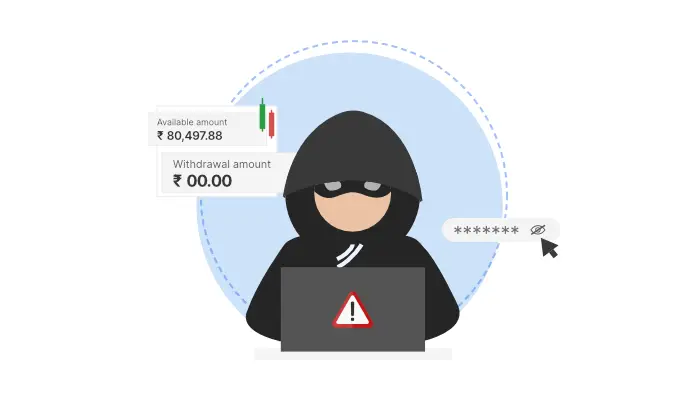
According to the Enforcement Directorate (ED), OctaFX manipulated core trading functions, including candlestick charts, slippage, and algorithmic execution, ensuring users consistently lost money. The platform relied on an Introducing Brokers (IB) model, rewarding individuals for bringing clients onboard, incentivizing recruitment over responsible trading. Small early profits and withdrawals were allowed to build trust, a strategy investigators say mirrored Ponzi-like schemes.
The ED emphasized that all operations targeting Indian residents were conducted without Reserve Bank of India approval, which regulates forex trading involving domestic investors.
Money Trails Across Accounts and Countries
Indian investors reportedly funneled funds through UPI payments and bank transfers, which were then fragmented across dummy accounts and mule networks. Many transfers were disguised as payments for software imports or research services. A significant portion of the funds was traced to companies controlled by Pavel Prozorov, a Russian national allegedly coordinating the scheme. Some proceeds were reinvested in India as foreign direct investment, while others were used to purchase luxury assets, including yachts and real estate.
Cryptocurrency wallets under Prozorov’s control added further opacity, allowing funds to move across borders without easy detection.
A Global, Fragmented Network
Investigators describe OctaFX as operating through a distributed international structure:
- Marketing: British Virgin Islands
- Servers and back-office operations: Spain
- Payment gateways: Estonia
- Technical support: Georgia
- Holding company for Indian operations: Cyprus
- Strategic oversight: Dubai, coordinated by Russian promoters
- Support staff: Indian nationals based in Russia and Spain
Singapore-based entities were reportedly used to facilitate exports of bogus services, providing a cover for laundering proceeds abroad.
International Cooperation and Asset Recovery
The ED has issued an Interpol Silver Notice to share intelligence on overseas assets and is collaborating with the FBI and Europol to trace funds, particularly cryptocurrencies. Spanish authorities have been pivotal: Prozorov was arrested in October by the Guardia Civil, and property records have helped identify linked assets. Estonia has also provided key details regarding companies and residential addresses connected to the network.
The ED estimates that ₹1,875 crore was siphoned from Indian investors between July 2022 and April 2023, while total illicit profits from India between 2019 and 2024 may exceed ₹5,000 crore. Assets worth ₹2,681 crore have been attached so far, including cryptocurrencies and luxury properties in Spain. Multiple charge sheets have been filed against OctaFX and numerous associated individuals and entities.
The investigation is ongoing, as authorities piece together how a platform promising access to global markets allegedly became a conduit for one of the largest cross-border online trading frauds faced by Indian regulators

Cyber & Financial Fraud
Crores Lost via Mule Accounts: Delhi Cyber Police Bust Investment Fraud Syndicate, Five Arrested
The South-West Delhi Cyber Police have dismantled a sophisticated investment fraud network that lured victims with promises of high returns, arresting five individuals involved in facilitating cyber fraud across India through mule bank accounts. The syndicate, primarily operated from Maharashtra, reportedly maintained links with Dubai-based associates.
Fraudulent Investment Scheme
The accused—Shridhar Dilip Ingle (25), Archiryan Goraksh Kamble (21), Ajij Miran Shaikh (25), Pranav Jalinder Guldagad (24), and Vishal Durgadas Bachal (25)—allegedly coordinated the use of bank accounts provided by unsuspecting individuals or coerced participants. These accounts were then used to transfer funds collected from victims across multiple states.
The case emerged after a resident of Arunachal Pradesh, currently living in Delhi, filed a complaint via the National Cyber Crime Reporting Portal (NCRP) on September 4, 2025. The complainant alleged being duped into investing ₹12,22,670 in a fake stock market company called “Next Billion Technology Pvt Ltd.” A woman identifying herself as Parineeti Jain and her associates reportedly contacted the victim, promising lucrative returns and persuading him to transfer money into accounts supplied by the accused.
Mule Accounts and Dubai Connection
Police investigations revealed that the syndicate relied on a network of mule accounts, which were provided on commission and often sourced from individuals deceived or incentivized to allow use of their bank accounts. One key associate, “Chaitanya”, based in Dubai, reportedly managed operations at an international level, coordinating funds transferred through these accounts.
Following technical analysis, surveillance, and financial tracking, authorities apprehended the main suspect, Shridhar Dilip Ingle, in Shrirampur, Maharashtra, and subsequently arrested the remaining four accused during coordinated raids.
Evidence and Ongoing Investigation
Authorities recovered six mobile phones and obtained records of 35 bank accounts connected to fraudulent transactions. Preliminary analysis indicates that crores of rupees were routed through these accounts, highlighting the scale and sophistication of the fraud.
The case underscores how cybercriminals exploit technological loopholes and banking systems to defraud unsuspecting investors. Investigators are now tracing additional links in the network, including the Dubai connection, which may uncover further international collaborations.
Authorities have cautioned the public to verify the legitimacy of investment opportunities and avoid transferring money to unknown platforms or individuals. Experts emphasize the importance of due diligence to prevent falling victim to such scams.

In a significant cybercrime bust, the Central Bureau of Investigation (CBI) has dismantled an organized SIM Box fraud network targeting unsuspecting victims. Two company directors have been arrested for allegedly creating a shell company to procure bulk SIM cards, which were then exploited in large-scale cyber fraud operations.
How the Fraud Operated
The accused, identified as Mohammed Vival and Mohammed Dilshad, were apprehended in Meerut. Investigations revealed that the duo registered a company in January 2025, ostensibly to supply SIM cards for employee use. However, the cards were diverted for fraudulent activities via SIM Box systems, allowing the perpetrators to manipulate call routing and conceal the true origin of calls.
A total of 108 SIM cards linked to the company were flagged on the Chakshu portal, following multiple complaints from victims reporting suspicious calls. SIM Box technology enables criminals to impersonate authorities, banks, or government officials, coercing victims into sharing sensitive information or transferring money through psychological manipulation.
Coordinated Raids and Evidence Seized
The CBI executed coordinated raids across six locations in Meerut and Noida, including the accused’s offices, SIM Box infrastructure sites, a telecom operator’s zonal office, and a private SIM verification facility. Officials recovered laptops, mobile phones, hard disks, and a cache of SIM cards, including one foreign SIM from Nepal, suggesting potential international links.
Authorities believe the network may involve additional actors, indicating a well-coordinated and organized syndicate. The scale of SIM procurement and technical sophistication of routing mechanisms underscores the level of planning involved.
Rising Threat of SIM Box Fraud
Cybercrime experts highlight SIM Box fraud as one of the most dangerous emerging cyber threats. Prof. Triveni Singh, former IPS officer and cybersecurity expert, commented, “Criminals combine technical manipulation with social engineering to impersonate trusted authorities, pressuring victims into financial transactions. Awareness and immediate reporting are critical defenses.”
The anonymity provided by SIM Box technology makes detection and prosecution challenging, emphasizing the need for stricter SIM verification processes and closer coordination between telecom operators and law enforcement agencies.
The CBI continues to probe the full extent of the network, with investigators examining potential international connections and other individuals involved. Further updates are expected in the coming days, shedding light on the broader implications for telecom security and cyber fraud prevention.

In a chilling reminder of the growing sophistication of online fraud, a retired Army officer from Chandigarh reportedly lost more than ₹12 lakh after falling victim to a cyber scam disguised as a courier service transaction. Authorities say the incident involved a malicious APK file that compromised his banking credentials, enabling cybercriminals to siphon off funds through unauthorized transactions.
Routine Courier Booking Turns Into Costly Trap
Colonel Rajbir Singh Duggal, 82, was attempting to send a parcel from Chandigarh to Pune when the scam unfolded. While searching online for the contact number of a well-known courier company, he reportedly called a number that appeared legitimate. The person on the other end claimed to be a company executive and guided him through the booking process.
During the conversation, he was instructed to make a small online payment of ₹10 to confirm the pickup. After initially encountering a failed transaction on his SBI account, he completed the payment via his HDFC credit card.
Shortly afterward, the caller directed him to download a mobile application via a link shared on WhatsApp, claiming it was necessary to complete the courier request. Trusting the instructions, the retired officer installed the APK file on his smartphone.
How Malicious APK Files Exploit Mobile Devices
Cybersecurity investigators revealed that the APK file was malware engineered to access sensitive information on the victim’s device. Once installed, the software obtained permissions that allowed it to monitor SMS messages, notifications, and on-screen activity.
Experts note that malicious applications often exploit Android’s accessibility settings. Once granted, these permissions let attackers intercept one-time passwords (OTPs), capture banking credentials, and even conduct financial transactions without the user’s knowledge. In this case, the fraudsters reportedly used stolen OTPs and account details to transfer over ₹12 lakh across multiple accounts.
Expert Warnings: Verify Contacts and Avoid Unknown Apps
Cybercrime specialists stress that scams of this nature combine technical tricks with social engineering. Prof. Triveni Singh, former IPS officer and cybercrime expert, warns that APK files circulated via messaging apps under the guise of courier services or delivery updates can be extremely dangerous.
Experts advise verifying all service contacts directly through official websites or verified mobile apps. They also emphasize that APK files from unknown sources should never be installed, as they can provide attackers full access to personal and financial information stored on smartphones.
Staying Safe in the Digital Age
The incident serves as a stark reminder of the importance of vigilance in online interactions. Avoiding suspicious links, confirming official contacts, and refusing to download unfamiliar applications remain the most effective defenses against cyber fraud.
As mobile banking and digital transactions become increasingly common, experts urge users of all ages to exercise caution and educate themselves about potential online threats.
-

 Business3 years ago
Pot Odor Does Not Justify Probable Cause for Vehicle Searches, Minnesota Court Affirms
-

 Business3 years ago
New Mexico cannabis operator fined, loses license for alleged BioTrack fraud
-

 Business3 years ago
Alabama to make another attempt Dec. 1 to award medical cannabis licenses
-

 Business3 years ago
Washington State Pays Out $9.4 Million in Refunds Relating to Drug Convictions
-

 Business3 years ago
Marijuana companies suing US attorney general in federal prohibition challenge
-

 Business3 years ago
Legal Marijuana Handed A Nothing Burger From NY State
-

 Business3 years ago
Can Cannabis Help Seasonal Depression
-

 Blogs3 years ago
Cannabis Art Is Flourishing On Etsy