
AICybercrime
Centre Directs States to Crack Down on Overseas Job Scams Linked to Cyber Slavery


The Indian government has stepped up efforts to tackle overseas job scams in which people are allegedly recruited through fake employment offers and later trafficked into cyber-fraud operations abroad.
The Ministry of Home Affairs has been strengthening coordination between states, Union Territories and law-enforcement agencies to address human trafficking, including cases involving online recruitment and cyber-enabled fraud. The ministry’s Anti-Trafficking Cell works with state authorities and other government departments on enforcement and coordination.
The issue has gained greater attention as Indian nationals have been targeted with promises of lucrative employment overseas before allegedly being forced to work in scam compounds in parts of Southeast Asia.
Fake Overseas Job Offers Under Greater Scrutiny
Recruitment is increasingly beginning online, with fraudsters using social media, messaging platforms and websites to advertise apparently attractive foreign employment opportunities.
Job seekers may be promised positions in areas such as customer service, data entry, sales or technology. In trafficking cases, however, the promised employment can turn out to be fraudulent, with victims allegedly transported to locations where they are forced to participate in online scams.
Authorities are therefore examining the recruitment stage more closely, including suspicious advertisements, recruiters and digital communications.
Investigators can also use messages, payment records, advertisements and other electronic evidence to establish links between local recruiters and wider trafficking networks.
Unregistered Recruitment Agents Pose a Major Risk
Indian nationals seeking employment abroad are advised to verify recruitment agencies and employers before travelling or making payments.
Fraudulent operators may create convincing websites, employment contracts, appointment letters and social-media profiles to make fake job opportunities appear legitimate.
Applicants should independently verify the identity of the recruiter, the employer, the job location, employment conditions and required visa arrangements.
Government advisories have also warned about fake overseas employment networks and encouraged Indians abroad or planning to travel for work to use official channels for assistance.
What Is Cyber Slavery?
The term cyber slavery is increasingly used for cases in which people are trafficked or coerced into working for cybercrime operations.
Victims can initially believe they are accepting legitimate jobs. After reaching another country, they may allegedly face restrictions on movement and be forced to participate in activities such as investment fraud, romance scams, fake customer-support operations or other online schemes.
Such cases can involve two interconnected crimes: human trafficking and cybercrime.
India’s Home Ministry has specifically included cyber slavery in its national cybercrime-awareness efforts, reflecting the overlap between fraudulent recruitment and online criminal networks.
Anti-Trafficking Units Strengthened Across India
The government’s response also involves Anti-Human Trafficking Units (AHTUs) operating at the state and district levels.
The Ministry of Home Affairs says it has provided financial assistance to states and Union Territories to strengthen existing AHTUs and establish units covering districts across the country. The ministry’s Anti-Trafficking Cell also coordinates with other departments and provides guidance to state authorities.
The government has additionally issued a new August 2026 advisory on countering human trafficking that emphasizes the use of technology and stronger state-level leadership in tackling the crime.
Local Authorities Can Help Identify Suspicious Recruitment
Trafficking operations do not always begin in major cities. Recruiters can target people in smaller towns and rural communities with promises of high-paying foreign jobs.
Local administrations and community-level institutions can therefore help identify suspicious recruitment activity and alert law-enforcement agencies.
Coordination between police, cybercrime teams, anti-trafficking units and other government authorities can also help investigators connect online recruitment activity with financial transactions and travel arrangements.
Government Awareness Campaigns Target Cyber Slavery
The Centre has previously launched public-awareness initiatives specifically addressing cyber slavery and fake job rackets.
According to Ministry of Home Affairs material submitted to Parliament, awareness measures have included television and newspaper advertisements, billboards at airports, railway stations and metro stations, social-media campaigns and other public-information efforts.
The government has also highlighted assistance channels available to Indian nationals abroad through Indian missions, including emergency contacts and grievance mechanisms.
Job Seekers Urged to Verify Offers Before Travelling
The latest enforcement focus highlights the risks associated with accepting overseas employment without independently checking the recruiter and employer.
Applicants should be particularly cautious when a job offer promises unusually high salaries, requires urgent travel or asks for significant payments or personal documents before the employer’s identity can be independently verified.
Official government channels should be used wherever possible to verify overseas employment arrangements and seek assistance when an offer appears suspicious.
The crackdown reflects the changing nature of human trafficking, where recruitment can begin with a seemingly ordinary online job advertisement but ultimately lead to exploitation inside an international cybercrime operation.


Kerala Police have arrested a man at Hyderabad’s Rajiv Gandhi International Airport in connection with an alleged digital arrest scam in which an 80-year-old doctor from Kasaragod was reportedly defrauded of ₹1.19 crore.
The accused has been identified as Shamsad Choorakuth, a resident of Malattur in Malappuram. Police had issued a lookout circular after discovering that he had travelled abroad for employment.
Investigators allege that Choorakuth and his associates impersonated Mumbai Crime Branch officials and used threats of criminal action to pressure the elderly doctor into transferring large amounts of money.
Doctor Targeted Through Fake Mumbai Crime Branch Calls
According to investigators, the fraud took place between November 24 and December 17, 2025.
The victim, who lives in Nileswaram in Kasaragod, allegedly received repeated phone calls and WhatsApp video calls from people claiming to be Mumbai Crime Branch officers.
The callers reportedly told the doctor that his name had surfaced in a money-laundering investigation. They then falsely informed him that he was under “digital arrest” and instructed him to follow their directions.
The scammers allegedly maintained pressure on the victim by threatening him with legal consequences and claiming that transferring money to designated bank accounts would help establish his innocence.
Under the pressure, the doctor reportedly transferred a total of ₹1,19,35,000 from multiple bank accounts to accounts allegedly controlled by the fraudsters.
Suspect Intercepted at Hyderabad Airport
After receiving the doctor’s complaint, Kasaragod Cyber Police began investigating the financial transactions and communication records connected to the case.
During the investigation, police learned that Choorakuth had travelled outside India for work. Authorities subsequently issued a lookout circular covering immigration checkpoints.
On September 17, immigration officials at Rajiv Gandhi International Airport in Hyderabad reportedly intercepted Choorakuth after he arrived in the country and informed Kerala Police.
A cyber police team from Kasaragod travelled to Hyderabad and took custody of the suspect. Following his formal arrest, he was produced before the Kasaragod Chief Judicial Magistrate Court, which remanded him to 14 days of judicial custody.
Police Trace Money Trail and Other Suspects
Investigators are now examining the movement of the ₹1.19 crore allegedly transferred by the victim.
Police are scrutinising the bank accounts that received the funds and analysing communication records believed to connect the accused with other members of the suspected cybercrime network.
The investigation is aimed at determining Choorakuth’s specific role and identifying additional individuals who may have participated in the operation.
How Digital Arrest Scams Work
Digital arrest frauds typically rely on impersonation, intimidation and prolonged online interactions.
Scammers may pose as police officers, investigators, judges or other government officials and falsely accuse victims of involvement in serious crimes such as money laundering or financial fraud.
Victims are often told that they are under investigation or “digital arrest” and are instructed to remain connected through phone or video calls. The criminals then use threats of arrest, prosecution or account freezing to pressure victims into transferring money.
The Kasaragod case follows this pattern, with the elderly doctor allegedly being kept under sustained psychological pressure before transferring his savings.
Investigation Continues
The arrest at Hyderabad airport has provided investigators with an opportunity to examine the suspected financial and communication network behind the alleged fraud.
Authorities are expected to continue analysing bank transactions, digital communications and other evidence to identify the wider network and determine whether additional victims or financial accounts are connected to the case.

Kerala Police have arrested a man at Hyderabad’s Rajiv Gandhi International Airport over an alleged digital arrest scam in which an 80-year-old doctor from Kasaragod was reportedly cheated of ₹1.19 crore.
The accused, identified as Shamsad Choorakuth, a resident of Malattur in Malappuram, was intercepted by immigration officials after police issued a lookout circular against him. Investigators allege that he was part of a group that impersonated Mumbai Crime Branch officers to intimidate the elderly victim and extract money from him.
Fraudsters Claimed Doctor Was Linked to Money Laundering Case
The alleged fraud occurred between November 24 and December 17, 2025.
The doctor, who lives in Nileswaram, Kasaragod, reportedly received repeated phone calls and WhatsApp video calls from individuals claiming to represent the Mumbai Crime Branch.
The callers allegedly told him that his name had been connected to a money-laundering investigation. They then claimed that he had been placed under “digital arrest” and warned him of serious legal consequences.
Using these threats, the fraudsters allegedly instructed the victim to transfer money into several bank accounts as part of a supposed process to clear his name.
The doctor ultimately transferred ₹1,19,35,000 from multiple bank accounts to accounts allegedly controlled by the suspects.
Lookout Circular Leads to Airport Interception
After the victim reported the incident, Kasaragod Cyber Police began investigating the financial transactions and communications associated with the alleged fraud.
During the investigation, police reportedly discovered that Choorakuth had travelled overseas for employment. Authorities subsequently issued a lookout circular to immigration checkpoints.
On September 17, immigration officials at Hyderabad airport reportedly intercepted him after his arrival and notified Kerala Police.
A cybercrime team from Kasaragod then travelled to Hyderabad and took custody of the suspect. Following his arrest, Choorakuth was produced before the Kasaragod Chief Judicial Magistrate Court, which remanded him to 14 days of judicial custody.
Police Investigate Financial Trail
Investigators are now examining the movement of the ₹1.19 crore allegedly transferred by the victim.
Police are checking the bank accounts used in the transactions and analysing communication records to determine Choorakuth’s alleged links with other members of the suspected fraud network.
The investigation is also focused on establishing the accused’s precise role and identifying other people who may have been involved in the operation.
What Is a Digital Arrest Scam?
Digital arrest scams are a form of cyber fraud in which criminals impersonate police officers, government officials, investigators or judicial authorities.
Fraudsters typically tell victims that they are involved in a criminal investigation and use threats of arrest, prosecution or account restrictions to create fear.
Victims may be kept on prolonged phone or video calls while being instructed to transfer money to accounts controlled by the scammers.
In this case, investigators allege that the same tactic was used to convince the elderly doctor that he needed to transfer money to avoid criminal proceedings.
Investigation Into Wider Network Continues
The arrest at Hyderabad airport is now part of a wider investigation into the alleged cyber fraud network.
Police are expected to follow the financial trail and examine digital communications to identify additional suspects and determine whether other people were targeted using similar methods.
The case also highlights the growing use of impersonation and intimidation in online financial scams targeting elderly victims.
AICybercrime
ED Accuses IAS Officer Gyanendra Kumar Gangwar of Taking ₹1.30 Crore Bribe in KPSC Paper Leak
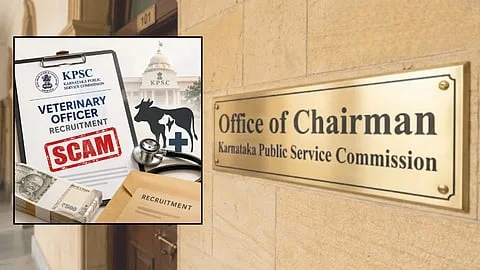
The Enforcement Directorate has alleged that suspended IAS officer Gyanendra Kumar Gangwar received ₹1.30 crore in cash from an alleged middleman in connection with the leakage of a Karnataka Public Service Commission (KPSC) Veterinary Officer recruitment examination paper.
The allegations were presented before a Bengaluru special court as the ED sought custody of Gangwar in a money-laundering investigation under the Prevention of Money Laundering Act (PMLA).
The court subsequently remanded Gangwar to six days of ED custody, until September 26, according to court reporting. The allegations remain subject to investigation and judicial proceedings.
ED Claims ₹1.50 Crore Was Collected From Candidates
According to the ED’s remand application, alleged middleman Basavaraj Kannale collected around ₹1.50 crore from candidates who were seeking access to the leaked examination material.
The agency alleges that approximately ₹1.30 crore of that amount was subsequently handed over to Gangwar in cash.
The ED is investigating the alleged flow of funds as part of its money-laundering probe and has sought to determine how the proceeds were collected, transferred and potentially converted into other assets.
Question Paper Allegedly Handed Over Before Examination
The ED has alleged that Gangwar provided the Veterinary Officer recruitment examination question paper, along with its answers, to Kannale through an HP pen drive on January 7, 2026.
The examination was scheduled for January 9.
Investigators allege that candidates who had paid money were subsequently given access to the examination material before the test. Earlier CID investigations have also examined allegations that selected candidates were taken to a resort and coached using leaked questions.
The recruitment examination was conducted for 400 Veterinary Officer posts in Karnataka.
Jewellery and Other Financial Transactions Under Investigation
The alleged financial trail also includes purchases of jewellery.
The ED told the court that approximately ₹23 lakh was spent on gold jewellery using funds connected to the alleged recruitment racket. Separate CID proceedings have examined additional jewellery purchases and other expenditures allegedly linked to the money collected from candidates.
Investigators are also examining financial transactions and other records to establish the full extent of the alleged money trail.
Gangwar Served as KPSC Examination Controller
Gangwar served as the Controller of Examinations at KPSC from 2024 until March 2026.
His role has brought particular attention to the alleged paper leak because investigators are examining how examination material could have been accessed and transferred before the test.
The ED is also investigating whether alleged proceeds from other recruitment examinations conducted during his tenure could be connected to the wider financial network.
Investigation Expands to Other KPSC Officials
The investigation is not limited to Gangwar and Kannale.
Authorities are examining the possible involvement of other individuals associated with the recruitment process, including suspended KPSC chairman Sahukar S. Shivashankarappa.
Investigators are looking into alleged communications, financial transactions and relationships between individuals involved in the recruitment process. The allegations against other officials remain under investigation and should not be treated as established findings.
Recruitment Process Came Under Scrutiny After Complaints
The alleged irregularities emerged after concerns were raised over the Veterinary Officer recruitment examination and selection process.
The CID investigation has examined allegations involving question-paper leakage, payments by candidates and the use of leaked material to prepare candidates before the examination. Earlier reporting said 329 candidates were selected from the recruitment process, while investigators were examining allegations involving candidates who allegedly paid money for selection.
The financial investigation by the ED is now focused on identifying the alleged proceeds of crime and tracing their movement.
High Court Orders Fresh Investigation
The wider KPSC controversy has also resulted in judicial intervention.
Recent reporting indicates that the Karnataka High Court constituted a Special Investigation Team (SIT) to conduct a fresh investigation into alleged irregularities connected with KPSC recruitment, including the Veterinary Officer examination.
The developments have expanded the case beyond the alleged paper leak to broader questions about recruitment procedures, financial transactions and the functioning of the commission.
ED Probe Continues
The six-day ED custody of Gangwar is intended to allow investigators to question him about the alleged financial transactions, identify other participants and trace the suspected proceeds of crime.
The case remains at the investigation stage. Allegations made by the ED or CID will ultimately have to be tested through the judicial process.
The KPSC controversy has meanwhile triggered wider scrutiny of recruitment examinations in Karnataka, with investigators continuing to examine whether the alleged network extended beyond the Veterinary Officer recruitment test.
-

 Business3 years ago
Pot Odor Does Not Justify Probable Cause for Vehicle Searches, Minnesota Court Affirms
-

 Business3 years ago
New Mexico cannabis operator fined, loses license for alleged BioTrack fraud
-

 Business3 years ago
Alabama to make another attempt Dec. 1 to award medical cannabis licenses
-

 Business3 years ago
Washington State Pays Out $9.4 Million in Refunds Relating to Drug Convictions
-

 Business3 years ago
Marijuana companies suing US attorney general in federal prohibition challenge
-

 Business3 years ago
Legal Marijuana Handed A Nothing Burger From NY State
-

 Business3 years ago
Can Cannabis Help Seasonal Depression
-

 Blogs3 years ago
Cannabis Art Is Flourishing On Etsy