
Canada News
Advocate Pushes Immediate Cannabis Sale Shift


More than seven years after Canada legalized recreational cannabis, the debate over retail access is resurfacing in parts of Manitoba. Several municipalities—including Winkler and Steinbach—still prohibit cannabis stores, even as the rest of the province embraces regulated sales. Now, with updated national data and shifting community attitudes, advocates are urging local leaders to reconsider long-standing bans.
Communities That Opted Out Face Renewed Pressure
When nationwide legalization arrived in 2018, Manitoba allowed municipalities to hold binding votes on whether to permit cannabis retailers. Winkler and Steinbach both rejected retail access at the time, with strong majorities voting to keep dispensaries out of their communities.
Those votes reflected concerns about public safety, youth exposure, and uncertainty over how legalization might unfold. But advocates argue those decisions were made without the benefit of real-world evidence.
Advocate Says It’s Time for a Second Look
Cannabis advocate Jesse Lavoy has emerged as a leading voice calling for reassessment. Lavoy recently presented to the City of Winkler, highlighting research showing that regulated cannabis stores reduce illegal market activity, ensure safer products for consumers, and generate local tax revenue.
He stressed that communities now have access to years of national data—information that wasn’t available in 2018—and believes residents deserve a chance to vote again.
Winkler Considers Vote, Steinbach Faces Petition Effort
City officials in Winkler confirmed they may schedule a new plebiscite this October, pending council approval. The move would give residents an opportunity to revisit the question with updated knowledge and clearer expectations about industry regulation.
Steinbach, however, rejected a similar proposal earlier this year. In response, Lavoy and supporters are preparing a formal petition that—if approved and successful—would force another municipal vote. The petition process requires authorization from the Liquor, Gaming and Cannabis Authority of Manitoba (LGCA), after which organizers will have 90 days to gather signatures. Lavoy expects to begin canvassing in March.
Economic and Public Safety Arguments Take Center Stage
Advocates say allowing licensed cannabis stores in these communities would:
- bring local buying habits into a regulated environment
- reduce reliance on untested black-market products
- generate tax revenue for municipal services
- keep economic activity closer to home instead of directing sales to neighboring cities
Residents who travel outside their municipalities to purchase legal cannabis increasingly question whether existing bans still reflect local values or modern realities.
A Debate That Continues to Evolve
As Manitoba communities revisit past decisions, the conversation around cannabis access is shifting from speculation to evidence-based evaluation. Whether Winkler, Steinbach, or other municipalities ultimately change course remains uncertain, but one thing is clear: the discussion is active, informed, and far from settled.

Banking & Finance News
Written Reasons for Arrest Must Be Given at the Time of Arrest, Rule Also Applies to UAPA-PMLA Cases: Supreme Court
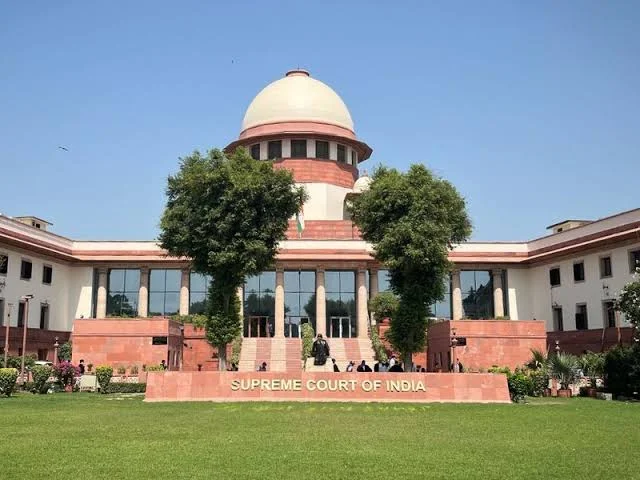
The Supreme Court of India has reaffirmed that arrested persons must be informed of the grounds of their arrest in writing and in a language they understand, holding that this constitutional safeguard cannot be diluted because of the seriousness of the alleged offence.
A bench comprising Justice Ujjal Bhuyan and Justice Atul S. Chandurkar delivered the ruling on September 21, 2026, emphasizing that the protections under Article 22(1) of the Constitution apply across criminal offences, including cases involving stringent laws such as the Unlawful Activities (Prevention) Act (UAPA) and the Prevention of Money Laundering Act (PMLA).
Article 22 Protection Cannot Depend on the Offence
The Court stressed that the constitutional protection surrounding personal liberty cannot be interpreted narrowly.
The nature or gravity of an allegation does not give authorities a basis to disregard the procedure prescribed by the Constitution. The requirement to communicate the grounds of arrest in writing therefore applies even when investigators are dealing with offences prosecuted under special legislation.
The ruling reinforces the principle that constitutional safeguards cannot be treated differently simply because an investigation concerns an alleged serious or anti-social offence.
Written Grounds Must Be Communicated in an Understandable Language
Under Article 22(1), an arrested person has the right to be informed of the grounds of arrest and to consult and be defended by a legal practitioner of their choice.
The Supreme Court’s latest ruling emphasizes that the grounds must be supplied in writing and in a language understood by the arrested person. Failure to comply with this constitutional requirement can make the arrest unlawful and affect the validity of subsequent detention or remand.
The judgment builds upon earlier Supreme Court decisions concerning arrest safeguards under laws including the PMLA and UAPA.
Court Places Restrictions on Re-Arrest After an Illegal Arrest
The ruling also addresses what authorities must do when an earlier arrest has been declared unconstitutional because mandatory safeguards were not followed.
The Court held that investigators cannot simply re-arrest a person at their own discretion after an illegal arrest. Any fresh arrest must follow additional procedural safeguards, including consideration by the competent Magistrate and appropriate approval within the police hierarchy.
The Court’s approach is intended to prevent the same constitutional violation from being repeated through an immediate re-arrest.
Safeguards Strengthened for Personal Liberty
The case, Jaskaran Jeet Singh Deol v. State of Punjab, involved a challenge concerning the legality of an arrest and subsequent custody proceedings. The Supreme Court ultimately set aside the Punjab and Haryana High Court’s May 29, 2026 order and related observations of the Magistrate.
The bench also made clear that it was not expressing an opinion on the merits of the allegations against the appellant.
The judgment further directed that a copy be circulated to Directors General of Police in the states and Union Territories, as well as Registrars General of High Courts and Directors of State Judicial Academies.
Supreme Court Refers to Earlier Constitutional Principles
While discussing the importance of procedural safeguards, the Court referred to the principle established in Prabhu Dayal Deorah v. District Magistrate, Kamrup, concerning personal liberty and preventive detention.
The underlying principle is that the seriousness of alleged conduct cannot, by itself, justify depriving a person of liberty without following the procedure established by the Constitution and law.
This reasoning reinforces the broader constitutional requirement that restrictions on personal liberty must remain subject to legally prescribed safeguards.
Implications for Investigating Agencies
The ruling places greater emphasis on procedural compliance during arrests.
Investigating agencies will need to ensure that:
- Grounds of arrest are provided in writing.
- The information is communicated in a language the arrested person understands.
- Constitutional requirements under Article 22 are followed regardless of the offence involved.
- Any subsequent re-arrest follows the safeguards laid down by the Supreme Court.
- Officers responsible for constitutional violations may face departmental consequences in appropriate circumstances.
The judgment therefore reinforces that investigative powers and constitutional protections must operate within the same legal framework.
Personal Liberty Remains a Constitutional Safeguard
The Supreme Court’s September 2026 ruling underscores that procedural protections surrounding arrest are not optional formalities.
Even in cases involving special criminal laws and serious allegations, authorities must comply with constitutional requirements governing personal liberty.
By extending the principle across criminal cases and setting safeguards for re-arrest following an unconstitutional detention, the judgment places renewed emphasis on the importance of lawful arrest procedures in India’s criminal justice system.

The debate over artificial intelligence safety and ethical responsibility has reignited as Elon Musk, CEO of Tesla and owner of X, and Sam Altman, CEO of OpenAI, faced off in court over the regulation and risks of AI technology. The ongoing legal dispute now spotlights not only company accountability but broader concerns about user safety and regulatory oversight.
Musk Pushes Safety-First AI Approach
During the hearing, Musk emphasized that AI development must prioritize human safety. He cited his company’s AI system, Grok, noting that no suicide-related incidents have been linked to its use. Musk also raised concerns—though unverified—regarding potential mental health risks associated with OpenAI’s ChatGPT.
Musk argued that rapidly advancing AI systems lacking rigorous safety protocols could pose future societal risks. He stressed that AI must be evaluated not only for technological innovation but also for its impact on human welfare.
OpenAI Defends Its Safety Measures
OpenAI countered by affirming its ongoing efforts to strengthen the safety and reliability of its platforms. The company emphasized that systems like ChatGPT are designed to provide information, assist productivity, and enhance decision-making. OpenAI also cautioned against attributing complex incidents, such as suicides, directly to AI, noting that multiple social and personal factors contribute to such outcomes.
Implications for AI Policy
Legal analysts suggest that the case may set a precedent for AI governance beyond the two companies involved. With generative AI technologies increasingly embedded in education, healthcare, business, and communication, courts and policymakers are under pressure to define clearer safety standards, accountability measures, and data protection requirements.
Experts say the dispute underscores a broader challenge: balancing AI innovation with ethical responsibility, mental health considerations, and user protection. The outcome could influence not only corporate AI policies but also future regulatory frameworks in the United States and potentially internationally.
As the proceedings continue, the tech industry is closely monitoring the case, recognizing it as a defining moment for AI safety, ethical responsibility, and the governance of emerging technologies.

OTTAWA — New federal data shows that Canada has collected more than $5.4 billion in cannabis tax revenue since recreational marijuana was legalized in October 2018, with provinces taking the lion’s share of the earnings.
According to figures tabled in response to a House of Commons order paper question from Conservative MP Luc Berthold, the federal share amounted to $1.2 billion, while provinces collectively received about $4.2 billion.
Ontario Leads, but Alberta Tops Per-Capita Earnings
Ontario generated the highest provincial total at $1.5 billion, reflecting its large population and robust retail market.
Despite being far smaller, Alberta took second place with just over $1 billion in revenue, and also outperformed every other province or territory on a per-person basis. Alberta’s per-capita cannabis tax revenue reached approximately $210, more than any other region.
Trailing Alberta were:
- Northwest Territories: $135.80 per person
- Yukon: $126.35
- Saskatchewan: $121.55
- Newfoundland and Labrador: $113.65
Quebec recorded the lowest per-capita revenue, at $55.31 per resident since legalization.
The data excludes Manitoba, the only province that does not participate in the federal cannabis taxation framework.
Federal Revenue Falls Short of Early Expectations
While cannabis taxes have become a significant revenue stream, federal totals remain below initial projections. In the 2018-19 budget, Ottawa anticipated $690 million in revenue over the first five years. By the end of the 2022-23 fiscal year, the federal government had collected around $567 million, falling short of the target.
Cannabis Education Funding Far Below Initial Plans
Spending on cannabis education and prevention has also lagged behind earlier commitments. Ottawa originally planned to invest $83 million over the first five years of legalization, but Health Canada reported spending about $21.6 million since 2018.
More than $13 million of that was spent in the first fiscal year alone. During the peak of the COVID-19 pandemic (2020-21 and 2021-22), the national health agency spent under $500,000 combined on education and prevention initiatives. Funding has since increased, rising to $2.3 million in 2024-25.
In addition, the federal government provided about $29.6 million to support 26 external cannabis education and prevention programs.
Partial Data for 2025
The latest report includes only partial revenue figures for 2025, covering the period from April 1 to August 31.
-

 Business3 years ago
Pot Odor Does Not Justify Probable Cause for Vehicle Searches, Minnesota Court Affirms
-

 Business3 years ago
New Mexico cannabis operator fined, loses license for alleged BioTrack fraud
-
 Business3 years ago
Alabama to make another attempt Dec. 1 to award medical cannabis licenses
-

 Business3 years ago
Washington State Pays Out $9.4 Million in Refunds Relating to Drug Convictions
-
 Business3 years ago
Marijuana companies suing US attorney general in federal prohibition challenge
-

 Business3 years ago
Legal Marijuana Handed A Nothing Burger From NY State
-

 Business3 years ago
Can Cannabis Help Seasonal Depression
-

 Blogs3 years ago
Cannabis Art Is Flourishing On Etsy