
Business News
AI Safety Debate Intensifies As Musk And Altman Face Off Again In Legal Battle


The debate over artificial intelligence safety and ethical responsibility has reignited as Elon Musk, CEO of Tesla and owner of X, and Sam Altman, CEO of OpenAI, faced off in court over the regulation and risks of AI technology. The ongoing legal dispute now spotlights not only company accountability but broader concerns about user safety and regulatory oversight.
Musk Pushes Safety-First AI Approach
During the hearing, Musk emphasized that AI development must prioritize human safety. He cited his company’s AI system, Grok, noting that no suicide-related incidents have been linked to its use. Musk also raised concerns—though unverified—regarding potential mental health risks associated with OpenAI’s ChatGPT.
Musk argued that rapidly advancing AI systems lacking rigorous safety protocols could pose future societal risks. He stressed that AI must be evaluated not only for technological innovation but also for its impact on human welfare.
OpenAI Defends Its Safety Measures
OpenAI countered by affirming its ongoing efforts to strengthen the safety and reliability of its platforms. The company emphasized that systems like ChatGPT are designed to provide information, assist productivity, and enhance decision-making. OpenAI also cautioned against attributing complex incidents, such as suicides, directly to AI, noting that multiple social and personal factors contribute to such outcomes.
Implications for AI Policy
Legal analysts suggest that the case may set a precedent for AI governance beyond the two companies involved. With generative AI technologies increasingly embedded in education, healthcare, business, and communication, courts and policymakers are under pressure to define clearer safety standards, accountability measures, and data protection requirements.
Experts say the dispute underscores a broader challenge: balancing AI innovation with ethical responsibility, mental health considerations, and user protection. The outcome could influence not only corporate AI policies but also future regulatory frameworks in the United States and potentially internationally.
As the proceedings continue, the tech industry is closely monitoring the case, recognizing it as a defining moment for AI safety, ethical responsibility, and the governance of emerging technologies.





Banking & Finance News
Supreme Court Seeks Five Years of Financial Records From Private Universities Across India
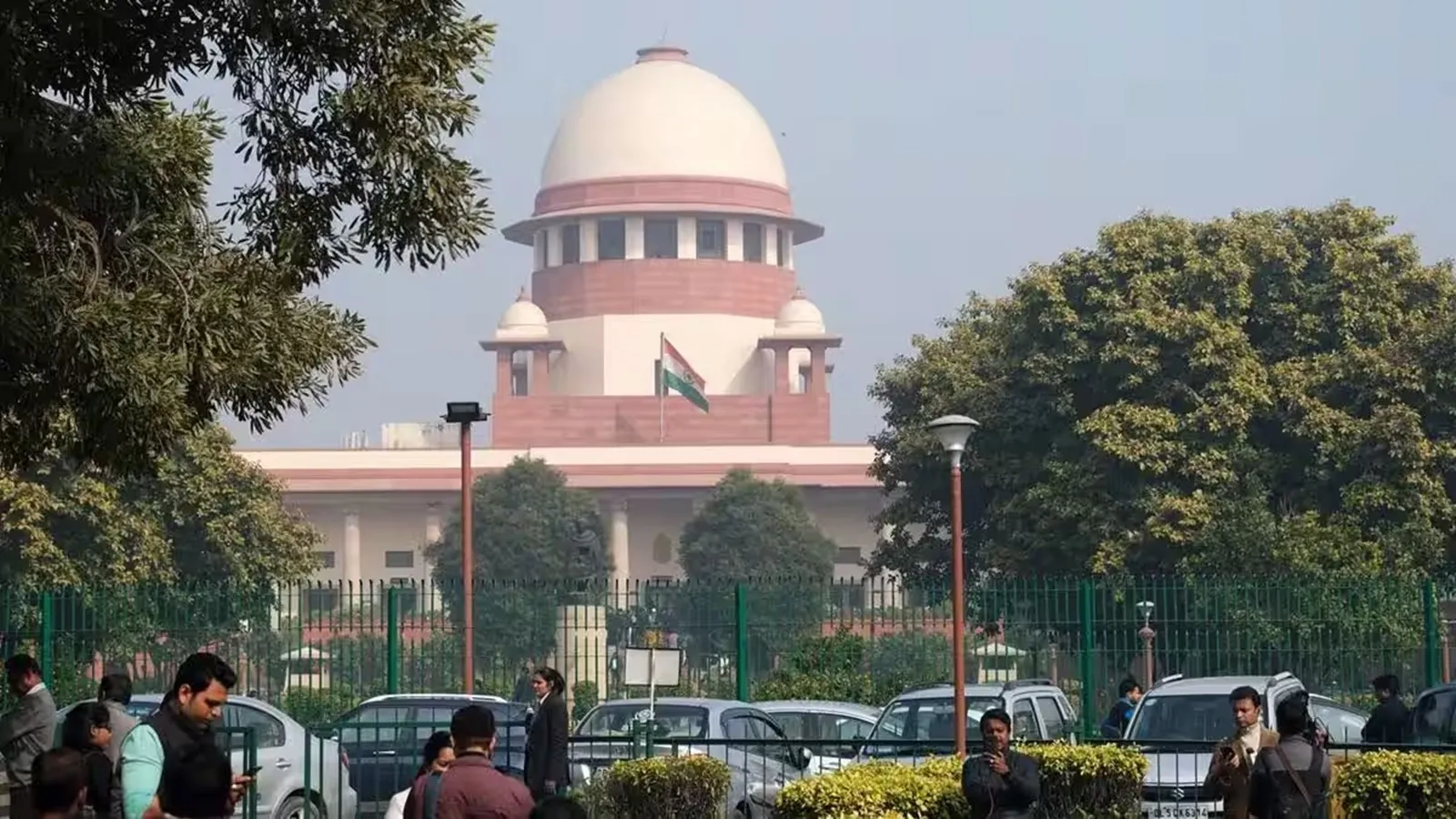
The Supreme Court of India has expanded its scrutiny of private universities, seeking detailed information on their finances, fee structures, fund utilisation, admissions, examinations, staff recruitment and regulatory compliance.
The directions were issued in proceedings arising from a petition involving Amity University, Noida, before a bench comprising Justice Ahsanuddin Amanullah and Justice N.V. Anjaria. The case is registered as Ayesha Jain v. Amity University, Noida & Ors.
The Court has asked the Union government, states and Union Territories to collect information from private universities and colleges and place the relevant material before it through affidavits. The matter is scheduled for further consideration on November 19.
Five Years of Financial Records Sought
One of the major areas of the Court’s inquiry concerns the financial operations of private universities.
Institutions have been asked to provide audited financial information covering the previous five years, including details of:
- Sources of institutional income
- Utilisation of funds
- Payments made to individuals outside regular educational functions
- Investments and deployment of surplus funds
- Fees collected from students
- Financial benefits received from governments
The disclosures could provide the Court with a broader picture of how private universities generate, manage and spend their financial resources.
The inquiry also covers public benefits received by institutions, including land allotments, exemptions, concessions or other facilities provided by central or state authorities.
Student Fees and Additional Charges Under Scrutiny
The Court has also sought details of the amounts collected from students during admission and throughout their courses.
Universities may be required to explain collections made under different categories, including development-related charges and fees for special activities or events.
The issue is not simply whether an institution maintains a financial surplus. Universities may need reserves to meet expenses such as salaries, infrastructure, research and other operational requirements.
The broader question before the Court is how institutional resources are generated, managed and ultimately used in connection with the educational purpose of the institution.
Admissions and Examination Systems Examined
The Supreme Court’s inquiry extends beyond financial records.
Private universities have been asked to provide information about their admission procedures, including how students are selected for different courses and which officials are responsible for the process.
Information concerning examinations is also part of the inquiry. Institutions have been asked to identify those involved in preparing examination papers, conducting examinations, evaluating answer scripts and managing related academic functions.
The Court is also examining the role played by university management in these processes.
Faculty Recruitment and Salary Details
Another area covered by the directions is the appointment and compensation of teaching and non-teaching staff.
Universities have been asked to provide information about recruitment procedures, salaries, benefits and service conditions.
The Court has also sought information concerning teaching assignments. For faculty members, institutions may have to provide details showing the number of classes allocated and conducted, along with arrangements made when assigned teachers were unavailable.
Such information could allow the Court to examine whether staffing and academic resources correspond with the requirements of the courses being offered.
Regulatory Bodies Asked to Provide Inspection Details
The scrutiny also extends to regulatory and affiliating authorities.
The Court has sought information concerning inspections conducted during the previous five years, including details of faculty and support staff considered when institutions were granted recognition or affiliation.
The proceedings involve information from professional regulatory bodies connected with fields such as medicine, dentistry, nursing, law and pharmacy, among others.
Where educational institutions are associated with hospitals, information concerning the relationship between the college and hospital has also been sought.
This is particularly relevant for professional courses where recognition can depend on factors such as qualified faculty, infrastructure and practical training facilities.
Case Originated From a Student Dispute
The proceedings originated from a dispute involving a student and Amity University, Noida. The Supreme Court proceedings have subsequently developed into a wider examination of issues concerning the functioning and regulation of private universities.
The Court’s directions seek information from institutions and authorities rather than deciding, at this stage, that all private universities have violated financial or regulatory requirements.
The information gathered through the affidavit process is expected to help the Court examine the broader issues raised during the proceedings.
What Happens Next
The Union government, state governments and Union Territories are expected to collect the required information and place it before the Supreme Court within the timeframe directed by the Court.
The material could cover financial management, student fees, admissions, examinations, staffing, government benefits and regulatory inspections across private higher-education institutions.
The case will be taken up again on November 19, when the Supreme Court can consider the information submitted by the concerned authorities and determine the next course of proceedings.
The latest directions therefore represent a broad judicial inquiry into the functioning of private universities, with particular attention to financial transparency, academic administration and regulatory compliance.
Business News
What Happened to the Power Plant Funds? ED Probes ₹290 Crore Loan Diversion in Kolkata

The Enforcement Directorate (ED) on Thursday conducted searches at 11 premises in Kolkata linked to Kohinoor Power as part of a money laundering investigation into an alleged ₹290 crore bank loan fraud. The searches were carried out under the Prevention of Money Laundering Act (PMLA) and covered premises linked to the company’s promoters, Prashant Bothra and Vijay Bothra, as well as other directors and auditors.
The agency has alleged that loans obtained from banks to establish a 66 MW power plant in Jharkhand were diverted to other group entities and for personal use instead of being used for the intended project.
How Was the ₹290 Crore Loan Allegedly Diverted?
According to the ED, Kohinoor Power had secured bank financing for setting up the power project in Jharkhand. The funds were meant to be used for establishing the plant and meeting expenses related to the project.
However, the agency has alleged that a portion of the loan amount was transferred to other group companies, while some of the funds were allegedly used for personal purposes.
The ED is now examining the flow of the loan proceeds, including the bank accounts into which the funds were transferred, the companies involved in the transactions and the stated purpose of these financial movements.
Investigators are also trying to determine whether borrowed funds were moved to entities that had no direct connection with the proposed power project.
Why Was Only Around ₹7 Crore Recovered?
Kohinoor Power subsequently faced financial difficulties and entered insolvency proceedings before the National Company Law Tribunal.
Liquidation proceedings were later initiated with the aim of recovering dues from the company’s available assets and resources.
However, according to officials, only around ₹7 crore could be recovered during liquidation, significantly lower than the outstanding bank exposure.
The ED is now examining how the company’s financial position deteriorated, what assets were available before insolvency proceedings began and how much of the borrowed money was allegedly diverted away from the power project.
What Is the ED Looking for in the Kolkata Searches?
Thursday’s searches form part of the agency’s investigation into the alleged diversion of loan proceeds and their subsequent laundering.
Officials are examining financial records, bank documents, business records and other material connected with the transactions. The evidence is expected to help investigators reconstruct the movement of funds and identify financial links between various group entities.
The ED has also searched premises linked to the company’s directors and auditors. Investigators are examining whether other individuals associated with Kohinoor Power played any role in the alleged financial irregularities.
Are Promoters, Directors and Auditors Also Under Scrutiny?
The searches covered premises linked to promoters Prashant Bothra and Vijay Bothra, along with other directors and auditors associated with the company.
Investigators are examining transactions through which the loan proceeds were allegedly transferred to other entities and whether those movements had any legitimate connection with the power project.
The role of individuals involved in the company’s financial management, accounting and movement of funds is also expected to be examined as part of the broader money laundering investigation.
What Happens Next in the ₹290 Crore Loan Probe?
The investigation is now focused on determining how much of the ₹290 crore borrowed from banks was actually used for the 66 MW power project, how much was transferred to other group entities and how much was allegedly used for personal purposes.
The agency is also examining why only around ₹7 crore could eventually be recovered during liquidation despite the much larger loan exposure.
The ED will analyse documents and other evidence gathered during the searches before deciding on further action. If investigators establish evidence of deliberate diversion of loan proceeds and attempts to disguise such transactions as legitimate financial dealings, further proceedings under the PMLA could follow against the individuals and entities concerned.
For now, the probe remains centred on the alleged misuse of the ₹290 crore bank loan, the movement of funds between different entities and the circumstances that resulted in only a fraction of the outstanding amount being recovered during liquidation.
Engineering and infrastructure major Larsen & Toubro (L&T) has announced plans to invest ₹5,000 crore in a new electronics business aimed at expanding India’s capabilities in advanced hardware manufacturing.
The strategic initiative will focus on developing high-value electronic systems for sectors including defense, energy, industrial automation, automotive technology, and infrastructure. The company aims to build a strong position in a growing electronics market estimated to have a total addressable opportunity of around $4.85 billion.
Moving Beyond Traditional Engineering Operations
The expansion represents a major step in L&T’s transition from its traditional engineering, procurement, and construction (EPC) business toward technology-driven manufacturing.
The company plans to use its engineering expertise and industrial experience to develop end-to-end capabilities covering electronic system design, precision manufacturing, testing, and system integration.
The new business is expected to serve both Indian customers and international markets, supporting demand for locally developed and manufactured electronic solutions.
Focus on Defense, Energy and Industrial Electronics
Rather than competing in low-margin consumer electronics, L&T’s new venture will concentrate on specialized, high-reliability systems.
Key focus areas are expected to include:
- Power electronics systems
- Renewable energy control solutions
- Industrial automation equipment
- Defense and aerospace electronics
- Smart grid technologies
- Advanced embedded systems
The initiative aligns with India’s efforts to strengthen domestic electronics production and reduce dependence on imported hardware through government programs, including Production Linked Incentive (PLI) schemes.
Investment to Support Manufacturing and Research
L&T plans to deploy the ₹5,000 crore investment in phases to establish advanced manufacturing facilities, research and development centers, and testing infrastructure.
The company is also expected to explore technology partnerships and strategic acquisitions to expand its capabilities and accelerate product development.
By building a complete electronics ecosystem, L&T aims to compete in sectors where reliability, security, and specialized engineering expertise are critical.
India Benefits From Global Supply Chain Shift
The expansion comes as global companies continue diversifying their supply chains under the “China Plus One” strategy, creating new opportunities for India’s electronics manufacturing sector.
Growing demand for electric vehicle components, renewable energy systems, industrial automation, and smart infrastructure is expected to drive long-term growth in locally produced electronic components and systems.
Industry observers view L&T’s move as a significant investment in India’s advanced manufacturing ambitions. The company joins other major Indian corporations expanding into areas such as electronics manufacturing, semiconductor-related industries, and technology hardware.
Strengthening Domestic Technology Capabilities
L&T’s electronics business is expected to contribute to India’s broader goal of developing a stronger domestic hardware ecosystem.
By combining engineering capabilities with advanced manufacturing, the company aims to create solutions for critical industrial and national security applications while reducing reliance on imported electronic systems.
-

 Business3 years ago
Pot Odor Does Not Justify Probable Cause for Vehicle Searches, Minnesota Court Affirms
-

 Business3 years ago
New Mexico cannabis operator fined, loses license for alleged BioTrack fraud
-

 Business3 years ago
Alabama to make another attempt Dec. 1 to award medical cannabis licenses
-

 Business3 years ago
Washington State Pays Out $9.4 Million in Refunds Relating to Drug Convictions
-

 Business3 years ago
Marijuana companies suing US attorney general in federal prohibition challenge
-

 Business3 years ago
Legal Marijuana Handed A Nothing Burger From NY State
-

 Business3 years ago
Can Cannabis Help Seasonal Depression
-

 Blogs3 years ago
Cannabis Art Is Flourishing On Etsy