
AI & Technology
Why the Chief AI Officer Is Becoming India’s Next Critical Leadership Role, and How FCRF Is Preparing Professionals for It

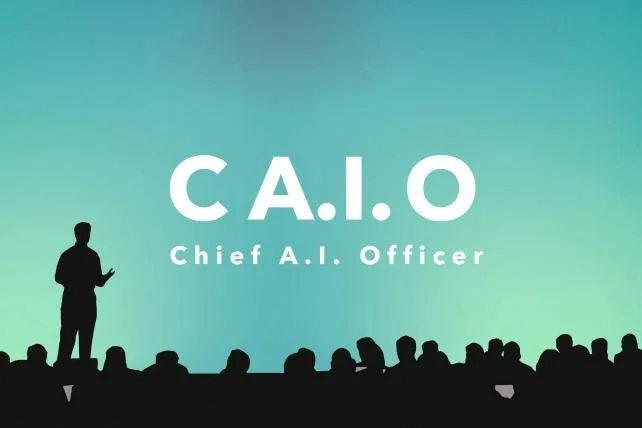
Artificial intelligence in India has rapidly moved from experimentation to widespread workplace adoption. Over the past two years, businesses, startups, law firms, banks, and public institutions have integrated generative AI tools into daily operations for tasks such as drafting content, coding, summarization, and customer support.
However, as AI systems become deeply embedded in core workflows, organizations are now confronting a more complex reality: managing risk, ensuring compliance, and preventing misuse of sensitive data. This shift is driving demand for a new leadership function — the Chief AI Officer (CAIO).
From AI Productivity Tool to Governance Priority
Early AI adoption in India was largely informal and productivity-focused. Employees used AI tools to improve efficiency, while organizations explored automation and innovation opportunities. But the second phase of adoption has highlighted serious governance challenges.
Concerns such as data leakage, algorithmic bias, AI-generated misinformation, deepfake threats, and lack of transparency in vendor systems are becoming increasingly significant. Cybersecurity teams are also facing new risks, including prompt injection attacks, model manipulation, and AI-assisted fraud techniques.
As a result, AI is no longer viewed purely as a technology function. It is increasingly becoming a governance and risk-management priority.
The Growing Importance of a Chief AI Officer
The Chief AI Officer role is emerging as a strategic leadership position responsible for overseeing how AI is adopted, monitored, and governed within an organization. Unlike traditional technology roles, the CAIO focuses on both innovation and accountability.
Key responsibilities typically include:
- Defining AI adoption policies and usage frameworks
- Evaluating AI tools and use cases across departments
- Ensuring compliance with legal and regulatory requirements
- Overseeing data protection and privacy safeguards
- Managing AI-related risks and ethical considerations
- Coordinating between technical, legal, and compliance teams
- Reporting AI risks and strategies to senior leadership and boards
In India’s evolving regulatory environment — shaped by data protection laws, cybersecurity advisories, and sector-specific compliance rules — the CAIO role is expected to become increasingly essential across industries.
Regulatory Pressure and Institutional Readiness in India
India’s digital ecosystem is expanding under frameworks such as the Digital Personal Data Protection Act, 2023, alongside national initiatives like the IndiaAI Mission, which emphasizes responsible AI development, safety, and skill-building.
At the same time, regulators and cybersecurity agencies have warned organizations about uncontrolled use of generative AI tools, especially where sensitive or personal data is involved.
Industries most affected include:
- Banking and financial services
- Insurance and fintech
- Healthcare systems
- Legal and compliance sectors
- Government and public infrastructure
- Cybersecurity and digital identity services
In these sectors, AI can directly influence fraud detection, credit decisions, identity verification, surveillance, and public service delivery. Without structured governance, the risks extend beyond operational errors to legal and reputational damage.
The Expanding AI Governance Gap
Many organizations are adopting AI faster than they are building governance frameworks. Common challenges include:
- Employees using unapproved AI tools for official work
- Lack of clear accountability for AI-driven decisions
- Insufficient review of AI vendor systems and contracts
- Absence of formal AI risk assessment frameworks
- Limited oversight from leadership and boards
This gap between adoption and governance is creating demand for professionals who can bridge technical, legal, and strategic domains.
Skills Required for a Modern Chief AI Officer
The CAIO role requires a multidisciplinary skill set that goes beyond technical knowledge of AI systems. Professionals in this position are expected to understand:
- Artificial intelligence fundamentals, including generative AI and large language models
- AI limitations, risks, and failure patterns
- Data governance principles such as consent, minimization, retention, and privacy compliance
- Cybersecurity threats linked to AI misuse, including deepfakes and automated fraud
- Regulatory frameworks governing data protection and digital systems
- Responsible AI practices, including transparency, explainability, and auditability
A CAIO must also be capable of translating technical risks into business language for executives while ensuring compliance requirements are clearly implemented across departments.
Rising Demand for AI Governance Professionals
The CAIO function is increasingly attracting professionals from diverse backgrounds, including cybersecurity specialists, legal experts, compliance officers, risk managers, public policy professionals, and technology leaders.
This reflects a broader shift: AI governance is no longer a niche technical function but an interdisciplinary leadership requirement.
Growth of Structured CAIO Training Programs
In response to rising demand, structured training programs focused on AI governance and leadership are emerging. One such initiative is the Certified Chief AI Officer program offered by FCRF Academy, which focuses on building AI governance capabilities for professionals across industries.
The program emphasizes areas such as:
- AI governance frameworks and strategy
- Cybersecurity risks in AI systems
- Data protection and compliance requirements
- Vendor and third-party AI risk management
- Deepfake detection and fraud prevention
- Regulatory readiness in the Indian context
Rather than focusing solely on technical AI tools, such programs aim to prepare professionals for leadership roles that combine governance, risk management, and strategic decision-making.
The Future of AI Leadership in India
As AI becomes more deeply integrated into organizational and national systems, governance will play a defining role in shaping its impact. The Chief AI Officer is emerging as a critical leadership position designed to ensure that AI adoption is not only innovative but also secure, ethical, and legally compliant.
In the coming years, organizations that successfully balance AI innovation with structured governance are likely to have a significant advantage — making the CAIO role central to the future of enterprise leadership in India.


A 55-year-old IT engineer in Pune has allegedly lost ₹67.94 lakh after being lured into a fake stock-trading operation promoted through a WhatsApp group.
According to the complaint filed with Pune Cyber Police, scammers initially deposited ₹5,400 into the man’s bank account to make their investment scheme appear legitimate. After gaining his trust, they allegedly persuaded him to transfer tens of lakhs of rupees to accounts linked to the fraudulent trading operation.
The victim was shown supposed profits of approximately ₹8.46 crore on the fake platform. His suspicions were eventually triggered when he tried to withdraw the money and was told to first pay ₹1.17 crore in brokerage charges.
How the WhatsApp Investment Scam Started
The alleged fraud began in August after the Pune resident joined a WhatsApp group while looking for information about stock-market investments.
Members of the group reportedly discussed shares and initial public offerings (IPOs), creating the appearance of an active investment community. A woman who claimed to represent an investment company subsequently contacted the man and promoted the group’s investment recommendations.
The victim initially avoided making any investment. The fraudsters then allegedly offered him ₹5,000 to make an initial trade.
Soon afterward, ₹5,400 was actually credited to his bank account. The genuine transfer reportedly convinced him that the people behind the investment platform were legitimate.
Victim Transfers Nearly ₹68 Lakh
After gaining confidence in the scheme, the victim began following the trading recommendations provided through the WhatsApp group.
According to the police complaint, scammers directed him to transfer funds to different bank accounts through a customer-service facility associated with the purported trading platform.
His first major transfer was reportedly ₹9.70 lakh on September 2. He later made two additional transfers of ₹31 lakh and ₹27.24 lakh.
Together, the three transactions brought his alleged losses to ₹67.94 lakh.
Meanwhile, the trading application showed his account generating enormous returns. The platform reportedly displayed a balance of around ₹8.46 crore, giving him the impression that his investments had produced extraordinary profits.
₹1.17 Crore Withdrawal Demand Raises Alarm
The scam began to unravel when the victim attempted to withdraw the money shown in his account.
Instead of releasing the funds, the operators allegedly demanded another ₹1.17 crore, describing it as brokerage charges that had to be paid before the withdrawal could be processed.
The unusually large payment request made the victim suspicious. He already had experience using legitimate stock-trading platforms and questioned why such a substantial payment was required simply to access his purported profits.
Rather than transferring more money, he decided to investigate the investment company independently.
Visit to Mumbai Reveals Fake Platform
On September 15, the victim reportedly visited the Mumbai office of the company whose name had allegedly been used by the fraudsters.
During the visit, he discovered that the people who had contacted him and the trading platform he had been using had no genuine connection with the company.
The realisation led him to conclude that he had fallen victim to an online investment scam. He subsequently contacted the cybercrime helpline and approached Pune Cyber Police.
Investigators are now examining the bank accounts and financial transactions allegedly used to collect the victim’s money.
How Fake Trading Platforms Gain Victims’ Trust
The case highlights a common pattern in online investment fraud: scammers often establish credibility before asking victims for large sums.
Fraudsters may use WhatsApp groups filled with discussions about stocks, IPOs and market trends to create the impression of a professional investment community. They may also provide apparently successful trading recommendations or make a small payment to demonstrate that the system works.
Once a victim becomes comfortable, scammers can encourage increasingly larger deposits. Fake trading applications may then display substantial profits that exist only within the platform.
The final stage often involves demands for additional money under labels such as taxes, brokerage, withdrawal fees, account verification or processing charges.
Police Warn Investors About Online Trading Scams
Cybercrime investigators regularly advise investors to independently verify investment companies and trading platforms before transferring money.
Potential investors should be particularly cautious when strangers approach them through WhatsApp or social media with promises of unusually high returns. The presence of a professional-looking application, investment group or initial payment does not by itself establish that a platform is genuine.
Investors should also avoid sending additional money simply because an online platform displays large profits or claims that a withdrawal will be blocked until another payment is made.
A ₹5,400 Payment Became the First Step in a ₹67.94 Lakh Loss
The Pune case demonstrates how a relatively small transaction can be used to establish trust before a much larger financial loss occurs.
What began with an alleged ₹5,400 confidence-building payment ultimately resulted in the victim transferring ₹67.94 lakh. The fake platform’s display of ₹8.46 crore in supposed profits and the subsequent ₹1.17 crore withdrawal demand eventually exposed the alleged fraud.
AI & Technology
Google Unveils Fairwind: Next-Gen AI Defense to Shield Critical Infrastructure from Cyber Threats

Google has introduced its Fairwind Cybersecurity Program to provide advanced cybersecurity support to government entities, Google Cloud customers and partner organizations, with a focus on identifying, addressing and mitigating cyber threats.
What Is Google’s Fairwind Cybersecurity Program?
The program is designed to help organizations respond to evolving cyber threats, including automated attacks, software vulnerabilities and increasingly sophisticated threat actors. Google said the initiative will provide access to advanced artificial intelligence capabilities to assist security teams in detecting and responding to threats more efficiently.
The focus extends across both public and private organizations, with the aim of strengthening their ability to protect digital infrastructure from cyberattacks.
How Will Fairwind Help Organizations Tackle Cyber Threats?
A key component of Fairwind is access to Google’s Gemini AI models. The models are intended to support cybersecurity operations and help organizations proactively defend their information technology infrastructure.
Security teams can use AI capabilities to analyze large volumes of data, identify potential weaknesses and respond to emerging threats more quickly. The program could be particularly relevant for government agencies and critical infrastructure operators, where cyberattacks could disrupt essential services and expose sensitive information.
How Will Gemini AI Support Cybersecurity Operations?
Fairwind is also expected to focus on identifying and fixing vulnerabilities across public and private organizations. Instead of relying only on traditional, reactive cybersecurity measures, the initiative emphasizes prevention and continuous protection.
The approach is intended to help participating organizations identify vulnerabilities before they can be exploited by malicious actors, strengthening their overall security posture.
What Technologies Will Google Use Under Fairwind?
According to the program’s planned capabilities, Fairwind will incorporate Gemini 3.8 Flash Cyber along with CodeMender Harness to support vulnerability remediation at what Google describes as an agentic scale.
These capabilities are intended to automate parts of the vulnerability-patching process, potentially allowing organizations to address security weaknesses more quickly and efficiently.
Google Announces Wider Cybersecurity Investment
Alongside the Fairwind announcement, Google has released its U.S. Cybersecurity Impact Report, outlining the company’s broader investments in cybersecurity. The report details a $100 million global cybersecurity initiative aimed at improving cyber resilience among organizations and communities.
As part of this investment, approximately $36 million has been allocated to 35 cyber clinics. These clinics are intended to provide cybersecurity assistance to organizations that may have limited resources while facing significant cyber risks.
Which Organizations Will Benefit From Google’s Cybersecurity Support?
The cyber clinics are expected to support organizations in responding to cyber risks, including helping healthcare organizations recover from cyberattacks and assisting municipal utilities in strengthening their defenses against sophisticated threats, including state-sponsored threats.
Google’s broader cybersecurity efforts reflect the growing importance of cooperation between technology companies, governments and other organizations as digital systems become increasingly important to healthcare, utilities, public administration and other essential services.
With the Fairwind Cybersecurity Program and its wider cybersecurity investments, Google is combining artificial intelligence, automated vulnerability remediation and direct support for organizations as part of a more proactive approach to cyber defense.
The Road Ahead
As cyber threats become faster and more automated, manual security responses simply can’t keep up. Google’s fusion of agentic AI patching and direct community support offers a glimpse into the future of digital defense—where threats are stopped before they ever cause damage.

Artificial intelligence is giving cybercriminals new ways to make financial scams appear genuine, from cloned voices and deepfake videos to highly personalised phishing messages and synthetic identities.
Traditional fraud often relied on generic emails, suspicious links or poorly written messages. AI is changing that approach by allowing scammers to create convincing communications tailored to individual victims.
The growing availability of generative AI has also lowered the technical barrier for producing fake audio, video, documents and identities, creating new challenges for consumers, businesses and financial institutions.
What Are AI-Powered Financial Scams?
AI-powered scams use technologies such as machine learning, natural language processing and generative AI to make fraudulent activity more convincing and scalable.
Criminals can use AI to analyse publicly available information and create messages that appear relevant to a particular person. Social media profiles, leaked information and other online data can potentially be used to understand a target’s relationships, interests or professional background.
AI can then help produce personalised messages, realistic conversations and convincing fake content designed to gain a victim’s trust.
The result is a shift from broad, mass-targeted scams toward fraud attempts that can appear specifically designed for one individual.
How Are Cybercriminals Using AI to Target Victims?
One emerging tactic involves AI-powered chatbots and automated systems that can maintain realistic conversations with potential victims.
Voice-cloning technology presents another serious threat. With a relatively small amount of audio, criminals can potentially reproduce characteristics of a person’s voice and use the result in fraudulent phone calls.
A scammer could, for example, impersonate a family member, company executive or other trusted individual and create a sense of urgency before requesting money or sensitive information.
AI can also help criminals process large amounts of stolen or leaked data. Instead of manually researching individual targets, automated systems can potentially identify people who may be more likely to respond to particular types of scams.
This automation allows fraud campaigns to operate on a much larger scale.
What Are the Most Common Types of AI-Driven Fraud?
Several forms of AI-assisted fraud are becoming increasingly prominent.
Deepfake Video Scams
Deepfake technology can be used to create convincing videos that imitate the appearance and voice of another person.
Criminals may attempt to impersonate executives, government officials, financial professionals or even family members to persuade victims to transfer money or reveal confidential information.
AI-Generated Phishing
AI can produce polished and personalised emails, text messages and other communications without the grammatical mistakes traditionally associated with many phishing attempts.
A fraudulent message can potentially reference a person’s workplace, recent activities or other contextual information to make the request appear legitimate.
Voice-Cloning Fraud
Voice cloning can be used to imitate someone familiar to the victim.
Scammers may create fake emergency situations involving relatives or impersonate bank representatives requesting sensitive information such as one-time passwords or account details.
Synthetic Identity Fraud
Synthetic identity fraud combines genuine information with fabricated details to create identities that may appear legitimate.
Such identities can potentially be used to open financial accounts, obtain credit or carry out other fraudulent activities while making it harder for investigators to determine who is behind the operation.
How Convincing Can AI Impersonation Become?
AI-generated audio and video can reproduce characteristics such as a person’s voice, appearance, accent and speaking style with increasing realism.
That makes it possible for scammers to create communications that appear to come from a boss, colleague, family member or financial institution.
The danger increases when the impersonation is combined with pressure.
A victim may receive what appears to be an urgent call from a familiar person asking for an immediate transfer or confidential information. Under pressure, the victim may focus on responding quickly instead of verifying the request.
For this reason, a familiar face or voice should no longer be treated as conclusive proof of someone’s identity when money or sensitive information is involved.
How Can AI Fraud Affect Victims?
The consequences of AI-assisted fraud can extend well beyond the initial financial loss.
Victims may face unauthorised transactions, fraudulent accounts or loans opened using their information, identity-related problems and lengthy efforts to recover money or restore their financial records.
Businesses can also be targeted through executive impersonation and other forms of social engineering. A convincing fake communication appearing to come from a senior employee could potentially persuade staff to make an unauthorised payment or disclose confidential information.
The increasing sophistication of these attacks is also putting pressure on banks and financial institutions to strengthen fraud detection. Behavioural monitoring, transaction analysis and other security systems are increasingly important for identifying unusual activity.
How Can People Recognise an AI-Powered Scam?
AI-generated content can be convincing enough that users should not rely solely on appearance or sound when deciding whether a communication is genuine.
Several warning signs deserve attention:
- An unexpected request for money or sensitive information.
- Pressure to act immediately.
- Requests for OTPs, passwords, PINs or banking credentials.
- Unfamiliar links or attachments.
- A sudden request to change payment details.
- A video or voice call that seems unusual despite appearing authentic.
- Messages that discourage independent verification.
Even professionally written messages can be fraudulent. AI allows criminals to produce polished communications without the obvious spelling and grammar mistakes commonly associated with older phishing campaigns.
When a request involves money, users should independently verify the identity of the sender before taking action.
Real-World AI Fraud Shows the Growing Threat
Cases involving deepfake videos, voice cloning and AI-generated impersonation have demonstrated how criminals can exploit public trust.
Fake videos may be created to imitate public figures and promote fraudulent investment schemes, while cloned voices can be used to manufacture emergencies involving relatives or trusted contacts.
These cases highlight an important change in online fraud: convincing content can now be generated at scale, meaning users can no longer assume that realistic audio or video is genuine simply because it looks and sounds authentic.
How Can People Protect Themselves?
As AI-powered fraud becomes more sophisticated, independent verification is one of the most effective defences.
Users should:
- Verify unexpected requests: Contact the person or organisation through a trusted number or separate communication channel.
- Slow down when faced with urgency: Pressure is a common tactic used to prevent victims from checking a request.
- Never share financial credentials: Do not disclose OTPs, passwords, PINs or banking details to someone who contacts you unexpectedly.
- Treat links and attachments cautiously: Avoid clicking unfamiliar links, even when the message appears professionally written.
- Enable multi-factor authentication: Additional authentication can provide another layer of account protection.
- Limit personal information online: Public social media information can help criminals create more convincing impersonation attempts.
- Monitor financial accounts: Regularly review bank and payment activity for transactions you do not recognise.
- Verify voice and video calls: If someone makes an unusual financial request, contact them separately rather than relying on the original call.
The Biggest Lesson as AI Scams Evolve
The rise of AI-assisted fraud means that traditional warning signs are becoming less reliable. A message can be grammatically perfect, a voice can sound familiar and a video can look authentic while the underlying request is completely fraudulent.
The safest approach is therefore to verify before trusting.
Whenever a communication involves money, account access or confidential information, users should independently confirm the request—even when it appears to come from someone they know.
As artificial intelligence continues to advance, strong security practices, digital awareness and careful verification will become increasingly important tools for protecting personal and financial information.
-

 Business3 years ago
Pot Odor Does Not Justify Probable Cause for Vehicle Searches, Minnesota Court Affirms
-

 Business3 years ago
New Mexico cannabis operator fined, loses license for alleged BioTrack fraud
-

 Business3 years ago
Alabama to make another attempt Dec. 1 to award medical cannabis licenses
-

 Business3 years ago
Washington State Pays Out $9.4 Million in Refunds Relating to Drug Convictions
-

 Business3 years ago
Marijuana companies suing US attorney general in federal prohibition challenge
-

 Business3 years ago
Legal Marijuana Handed A Nothing Burger From NY State
-

 Business3 years ago
Can Cannabis Help Seasonal Depression
-

 Blogs3 years ago
Cannabis Art Is Flourishing On Etsy