
Crime
Tupac Shakur Murder Case Resurrected as Police Execute Search Warrant in Las Vegas


Las Vegas metro police descended upon a home in Henderson, Nevada in connection with the Tupac Shakur homicide case.
Tupac Shakur’s still-unsolved murder mystery was revived—over 30 years later after his murder at the peak of his career in 1996—as police agents in Las Vegas, Nevada executed a new search warrant Monday.
A gunman in a white Cadillac rolled up and shot Shakur four times while he sat in a black BMW with Death Row Records CEO Marion “Suge” Knight at a stoplight in Vegas on Sept. 7, 1996. He died from his wounds six days later in the hospital on Sept. 13, 1996. The prime suspect, outlined in documentaries, was long-believed to be Orlando “Baby Lane” Anderson, who died in 1998, and the whole thing was believed to have allegedly escalated over a Death Row Records medallion, and a scuffle at the MGM Grand. Anderson was never convicted, however, and evidence wasn’t sufficient to close the case.
Nevada does not impose a time limit for prosecuting homicide cases, and detectives have new evidence that might enable them to finally crack the case, perhaps explaining who was the driver and/or other suspects involved.
On July 17, Las Vegas Metropolitan Police Department (LVMPD) executed a search warrant and descended upon a home in Henderson. Video footage obtained by ABC News showed the moment police demanded that they come out with their hands up.
The LVMPD merely confirmed a warrant was executed, giving no further details. “LVMPD can confirm a search warrant was served in Henderson, Nevada on July 17, 2023, as part of the ongoing Tupac Shakur homicide investigation. We will have no further comment at this time,” Las Vegas Police said in a statement.
The search was conducted at about 10 p.m. local time, and the police were joined by Las Vegas Metro PD SWAT at the site. ABC News reports that the scene was described as loud, and police used bullhorns and lights.
No charges have been filed yet, and the investigation will likely drag on for weeks to months. Investigators generally believe that the gunman is likely dead, having been killed in a separate shooting just two years after the Vegas drive-by that took Shakur’s life.
The current investigation could lead to a determination of who was in the car with the gunman when the rounds were fired that killed Tupac. That could lead to someone being charged as an accomplice. But the official cautions that charging decisions have not been made yet.
Tupac Shakur’s Impact on Hip-Hop and Weed
Shakur’s rebellious nature and overall imprint on hip-hop is legendary, especially considering he did it all before his death at the age of 25—with five number one albums topping the Billboard 200, three more Top 5 albums, a diamond-certified album, and songs topping the charts. He was also nominated for six Grammy Awards and inducted into the Rock & Roll Hall of Fame. Shakur was also known as 2Pac and Makavelli and blossomed as an actor (Nothing But Trouble, Poetic Justice, Above the Rim, Juice.)
Chronic of course went hand-in-hand with the gangsta rap of the era, and a blunt was Shakur’s form of choice. In a video tutorial, Shakur demonstrated how to roll a blunt and absolutely lights up as he talks about his favorite herb. “We gotta keep it all natural, right?” Shakur said, making a canoe shape with a blunt roll. “Once you got it all broken down like that, get it all, right. Use your fingers like that. You can’t just fold. That’s why we got sloppy blunts. You gotta roll it, like you’re rolling a joint. Close it off at the [ends]”
In the early ‘90s, Snoop Dogg was of course seasoned with joints wrapped in papers and other forms of smoking. But he told Howard Stern that it was Shakur who introduced him to his first blunt in the early ‘90s. Last December, Snoop Dogg announced that Death Row Records, Shakur’s record label, would be entering the cannabis game with Death Row Cannabis.













Business News
What Happened to the Power Plant Funds? ED Probes ₹290 Crore Loan Diversion in Kolkata

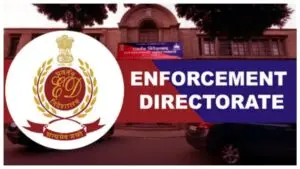
The Enforcement Directorate (ED) on Thursday conducted searches at 11 premises in Kolkata linked to Kohinoor Power as part of a money laundering investigation into an alleged ₹290 crore bank loan fraud. The searches were carried out under the Prevention of Money Laundering Act (PMLA) and covered premises linked to the company’s promoters, Prashant Bothra and Vijay Bothra, as well as other directors and auditors.
The agency has alleged that loans obtained from banks to establish a 66 MW power plant in Jharkhand were diverted to other group entities and for personal use instead of being used for the intended project.
How Was the ₹290 Crore Loan Allegedly Diverted?
According to the ED, Kohinoor Power had secured bank financing for setting up the power project in Jharkhand. The funds were meant to be used for establishing the plant and meeting expenses related to the project.
However, the agency has alleged that a portion of the loan amount was transferred to other group companies, while some of the funds were allegedly used for personal purposes.
The ED is now examining the flow of the loan proceeds, including the bank accounts into which the funds were transferred, the companies involved in the transactions and the stated purpose of these financial movements.
Investigators are also trying to determine whether borrowed funds were moved to entities that had no direct connection with the proposed power project.
Why Was Only Around ₹7 Crore Recovered?
Kohinoor Power subsequently faced financial difficulties and entered insolvency proceedings before the National Company Law Tribunal.
Liquidation proceedings were later initiated with the aim of recovering dues from the company’s available assets and resources.
However, according to officials, only around ₹7 crore could be recovered during liquidation, significantly lower than the outstanding bank exposure.
The ED is now examining how the company’s financial position deteriorated, what assets were available before insolvency proceedings began and how much of the borrowed money was allegedly diverted away from the power project.
What Is the ED Looking for in the Kolkata Searches?
Thursday’s searches form part of the agency’s investigation into the alleged diversion of loan proceeds and their subsequent laundering.
Officials are examining financial records, bank documents, business records and other material connected with the transactions. The evidence is expected to help investigators reconstruct the movement of funds and identify financial links between various group entities.
The ED has also searched premises linked to the company’s directors and auditors. Investigators are examining whether other individuals associated with Kohinoor Power played any role in the alleged financial irregularities.
Are Promoters, Directors and Auditors Also Under Scrutiny?
The searches covered premises linked to promoters Prashant Bothra and Vijay Bothra, along with other directors and auditors associated with the company.
Investigators are examining transactions through which the loan proceeds were allegedly transferred to other entities and whether those movements had any legitimate connection with the power project.
The role of individuals involved in the company’s financial management, accounting and movement of funds is also expected to be examined as part of the broader money laundering investigation.
What Happens Next in the ₹290 Crore Loan Probe?
The investigation is now focused on determining how much of the ₹290 crore borrowed from banks was actually used for the 66 MW power project, how much was transferred to other group entities and how much was allegedly used for personal purposes.
The agency is also examining why only around ₹7 crore could eventually be recovered during liquidation despite the much larger loan exposure.
The ED will analyse documents and other evidence gathered during the searches before deciding on further action. If investigators establish evidence of deliberate diversion of loan proceeds and attempts to disguise such transactions as legitimate financial dealings, further proceedings under the PMLA could follow against the individuals and entities concerned.
For now, the probe remains centred on the alleged misuse of the ₹290 crore bank loan, the movement of funds between different entities and the circumstances that resulted in only a fraction of the outstanding amount being recovered during liquidation.

Mumbai, July 27, 2026: Mumbai Cyber Police have initiated legal action against a telecom point-of-sale (POS) operator accused of supplying fraudulently activated SIM cards to cybercriminal networks. Investigators allege that the operator used forged or misused identity documents to obtain mobile connections, which were later circulated among organized cyber fraud groups operating across multiple states.
FIR Registered Following Cyber Fraud Investigation
The West Region Cyber Police registered a First Information Report (FIR) on July 21 after examining several cybercrime cases linked to suspicious mobile numbers. According to investigators, the accused, identified as Prathamesh Chorat, allegedly activated SIM cards using identity documents belonging to unsuspecting individuals between January 2025 and May 2026.
Authorities believe many of these documents may have originally been submitted by citizens for legitimate purposes such as banking or other verification processes before being misused to obtain unauthorized mobile connections.
‘Ghost SIMs’ Allegedly Used in Financial Scams
Police say the illegally activated mobile connections, commonly referred to as “ghost SIMs,” are frequently exploited by cybercriminals to conceal their identities while carrying out online fraud. These SIM cards are allegedly used to contact victims, bypass verification procedures, operate fraudulent bank accounts, and facilitate digital financial crimes.
Investigators stated that fraudsters used these numbers to communicate with potential victims through online platforms, gain their trust through deceptive tactics or intimidation, and ultimately persuade them to transfer money into multiple bank accounts controlled by criminal networks.
NCRP Database Helped Identify Suspected Links
The investigation was supported by data collected through the National Cybercrime Reporting Portal (NCRP) and information provided by the Indian Cybercrime Coordination Centre (I4C) under the Ministry of Home Affairs.
Officials analyzed records of cyber fraud complaints, including mobile numbers, bank accounts, and transaction details reported through the national cybercrime helpline and online complaint system. During the review, investigators reportedly discovered that several mobile numbers connected to cybercrime cases had been issued by specific telecom point-of-sale operators in the Mumbai Metropolitan Region.
Further verification with telecom service providers allegedly linked multiple suspicious SIM cards to the accused operator. Police also found complaints associated with these numbers from Maharashtra and West Bengal, indicating a wider geographical spread of the suspected operation.
Probe Suggests Organized Cybercrime Network
According to the FIR, organized cybercrime syndicates allegedly employ field agents to collect bank accounts and SIM cards registered in the names of unsuspecting individuals from different parts of the country. These resources are then reportedly used to facilitate various forms of online financial fraud, including investment scams, stock market frauds, digital arrest scams, and other cyber-enabled crimes.
Investigators suspect that the accused supplied multiple mule SIM cards to these criminal groups during the period under investigation. Authorities are now working to identify other individuals involved in the network, including those responsible for collecting identity documents, arranging bank accounts, and distributing illegally obtained mobile connections.
The investigation remains ongoing, and police are examining whether additional operators or intermediaries were involved in the alleged racket.c

Police in Maharashtra have registered a cheating case against a retired Army officer and his associate for allegedly duping a man of ₹11 lakh by falsely promising to secure a government job for his son. Investigators claim the accused staged a fake recruitment process, including a mock interview and forged official documents, before offering an alternative government position when the original promise failed.
Victim Allegedly Lured With Promise of Income Tax Department Job
According to the police complaint, Yusuf Lotan Pinjari, an RTO agent from Ulhasnagar, was searching for a government job opportunity for his commerce graduate son. During this time, a relative introduced him to Bharat Ashok Devre, a resident of Nashik and a retired Army officer who allegedly claimed to have influence in government recruitment.
Police said Devre allegedly assured the family that vacancies linked to the 2023 waiting list in the Income Tax Department were being filled and that he could arrange an appointment. Investigators allege he demanded a total of ₹16 lakh for the recruitment process, requesting an advance payment to begin the procedure.
Believing the assurances, the complainant allegedly paid ₹4 lakh initially. Authorities say additional payments were sought later after the accused claimed that educational certificates had been verified and the selection process had progressed.
Fake Interview and Forged Documents Under Investigation
As per the complaint, Pinjari was later instructed to travel to Aurangabad with another ₹5 lakh. At a hotel, he reportedly met Baban Bhausaheb Gaikwad and another individual who was allegedly introduced as an Income Tax Department employee.
Investigators claim the complainant’s son was made to participate in what appeared to be an official interview, submit educational documents, and receive paperwork purportedly related to a government medical examination. During the meeting, another ₹5 lakh was allegedly handed over to the accused.
Despite these developments, no appointment letter was issued.
Alternative Job Offer Raised Further Suspicion
Police said that when the promised Income Tax Department job failed to materialize, the accused allegedly informed the complainant that they could instead secure employment in the Nashik Health Department.
To support this claim, they reportedly shared a waiting list showing the complainant’s son at serial number 65. The complainant later alleged that the document was fabricated and intended only to create the impression that the recruitment process was ongoing.
After several months without any appointment in either department, Pinjari approached the police, alleging he had been deceived.
Police Probe Financial Trail and Possible Wider Fraud
Based on the complaint, Mahatma Phule Police Station has registered a case against Bharat Ashok Devre and Baban Bhausaheb Gaikwad under relevant provisions of the Bharatiya Nyaya Sanhita (BNS) for alleged cheating.
Investigators are examining the financial transactions, verifying the authenticity of the documents presented to the complainant, and reviewing the circumstances surrounding the alleged interview. Police are also exploring whether the accused may have used a similar method to target other job seekers.
Authorities have urged citizens to avoid paying money to anyone claiming they can guarantee government employment and to verify all recruitment announcements through official government channels before making any financial commitments.
-

 Business3 years ago
Pot Odor Does Not Justify Probable Cause for Vehicle Searches, Minnesota Court Affirms
-

 Business3 years ago
New Mexico cannabis operator fined, loses license for alleged BioTrack fraud
-

 Business3 years ago
Alabama to make another attempt Dec. 1 to award medical cannabis licenses
-

 Business3 years ago
Washington State Pays Out $9.4 Million in Refunds Relating to Drug Convictions
-

 Business3 years ago
Marijuana companies suing US attorney general in federal prohibition challenge
-

 Business3 years ago
Legal Marijuana Handed A Nothing Burger From NY State
-

 Business3 years ago
Can Cannabis Help Seasonal Depression
-

 Blogs3 years ago
Cannabis Art Is Flourishing On Etsy