
Crime
The Tale of the Hippie Trail

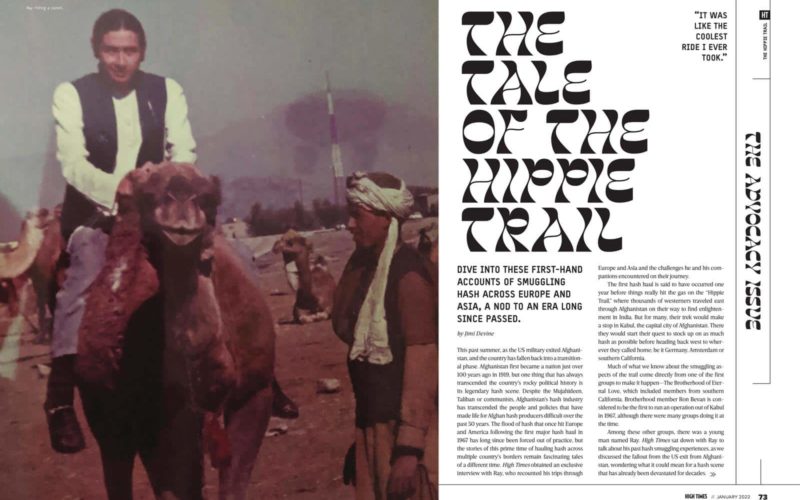
Dive into these first-hand accounts of smuggling hash across Europe and Asia, a nod to an era long since passed.
This past summer, as the US military exited Afghanistan, and the country has fallen back into a transitional phase. Afghanistan first became a nation just over 100 years ago in 1919, but one thing that has always transcended the country’s rocky political history is its legendary hash scene. Despite the Mujahideen, Taliban or communists, Afghanistan’s hash industry has transcended the people and policies that have made life for Afghan hash producers difficult over the past 50 years. The flood of hash that once hit Europe and America following the first major hash haul in 1967 has long since been forced out of practice, but the stories of this prime time of hauling hash across multiple country’s borders remain fascinating tales of a different time. High Times obtained an exclusive interview with Ray, who recounted his trips through Europe and Asia and the challenges he and his companions encountered on their journey.
The first hash haul is said to have occurred one year before things really hit the gas on the “Hippie Trail,” where thousands of westerners traveled east through Afghanistan on their way to find enlightenment in India. But for many, their trek would make a stop in Kabul, the capital city of Afghanistan. There they would start their quest to stock up on as much hash as possible before heading back west to wherever they called home; be it Germany, Amsterdam or southern California.
Much of what we know about the smuggling aspects of the trail come directly from one of the first groups to make it happen—The Brotherhood of Eternal Love, which included members from southern California. Brotherhood member Ron Bevan is considered to be the first to run an operation out of Kabul in 1967, although there were many groups doing it at the time.
Among these other groups, there was a young man named Ray. High Times sat down with Ray to talk about his past hash smuggling experiences, as we discussed the fallout from the US exit from Afghanistan, wondering what it could mean for a hash scene that has already been devastated for decades.
Hop In—We’re Going Smuggling
The days before Ray’s first trip to Afghanistan were filled with proper hippie business. “We went to southern Oregon in the late ’60s and for whatever reason out of pure synchronicity a bunch of us from northern California and southern California all ended up in this one house in southern Oregon,” Ray told High Times.
The group decided to take things to the next level and looked to start a commune. They spent some time hunting for a property, but after some hiccups with the search, they regrouped in California in 1968. A lot of the people that originally tossed that idea around remain friends to this day after originally finding each other all those years ago.
Part of that group included some friends who had already been smuggling hash from Afghanistan a year or two before that, and they had just brought back a load. In those days, Ray and his friends were staying in the High Sierras—the perfect place to unload some hash.
Most people associate the “Hippie Trail” with the image of a classic Volkswagen bus and a Hanomag Camper that rolled up to their spot in the same hills that was also very popular with other hash smugglers, such as Darrell. “He came, we unloaded it there, and it took a while. And after he got what he thought was the load amount he goes, ‘Okay, you guys can have the rest.’ And so we picked away at it because it was in the framework,” Ray said, “We had to use all kinds of tools we implement to dig it all out but I think eventually we got like another 10 pounds.”
This would be the first time Ray mentioned the man that he eventually partnered with to make the travel east. “So you know we are quite thrilled to make a connection with him. This is Long Beach, brother, I can give you his name because he’s no longer with us. Well, he had many names, but we knew him as Darrell,” Ray noted with a laugh.
Before connecting with Ray, Darrell had already made two or three trips. He was always a driver, and for good reason. In this critical role, he was the main person who drove from Holland to Kabul and back, through every border. He didn’t even need a map when he was on his runs.
Eventually Darrell shared his next plan with Ray: “Here’s what I want to do next time because I’m gonna have another Honomag, but also I’m going to buy a really nice motorhome,” Darrell told Ray at the time.
The motorhome was called a Revcon. It was the top-of-the-line in 1968 when it was designed. It had an aerodynamic aluminum body, and the 26 rails that ran the length of its frame were a hash smuggler’s dream.
“Very cool, very modern, front wheel drive. And he goes ‘I’m gonna buy this and we’re gonna, this is the vehicle we’re gonna make special rails that go inside the rails and we’ll have little hooks to pull it out,”’ Ray said of Darrell’s original plan.
Ray and Darrell had some friends that were engineers who helped them with building the rails. Eventually they would drive the Revcon across the country from California to New York, shipping it on to Rotterdam, Netherlands.
Darrell asked Ray to tag along for the full run to Afghanistan. “I go, ‘Sure, I’ll go slide and sit shotgun,”’ Ray replied. “It was like the coolest ride I ever took. But we were vegetarian at the time, so we were doing a lot of soups, avocados and carrot juice. We had it all decked out with the Norwalk Press, which is a real good juicing machine. We totally kept our eating habits intact.” Their eating habits would eventually earn them the nickname “The Carrot Juice Boys.”
The group prepped for their journey from Rotterdam after picking up the Revcon. They would make their way through Germany and Austria, then travel through Yugoslavia, Bulgaria, Turkey and Iran before finally reaching the Afghan Border.
That first trip would end up taking a few months, after Ray and Darrell got caught up in eastern Turkey. The Revcon’s front wheel drive engine featured torsion bars in the front, which didn’t pair well with the traffic or potholes they encountered on their journey. They lost control of the Revcon for a second, but were able to come to a stop in the center median. “Eastern Turkey is definitely the sticks, very isolated and very desolate,” Ray said of the breakdown.
When you break down out there, it’s common to surround your vehicle with rocks. They did so before hitchhiking to the closest town. They brought mechanics back to the Revcon, knowing they wouldn’t be able to replace the bar, but could rig something to get the Revcon back to civilization.
They hobbled into Tehran, Iran and messaged home for the part they needed. It wasn’t a fast process. “So we were in Tehran for about a good month, repairing the vehicle, but everything got straightened down,” Ray said, “So we rolled into Afghanistan, probably in late summer of 1970.”
Of Science and Borders
The mission was to obtain a couple hundred pounds of hash and five gallons of hash oil. While other groups had brought hash loads back for about three years before this trip, to the best of The Carrot Juice Boys’ knowledge, they were the first people ever to bring a flash evaporator to Afghanistan. Much of the Revcon was loaded with Everclear for their grand chemistry project.
If the idea of driving across the middle east with a chemistry set seemed weird, the opulence of the Revcon stole everyone’s attention at each border crossing, simplifying getting its contents across various borders in both directions. “I mean, they’ve seen the ‘Hippie Trail’ in the VW Vans, the Honomags, but they’ve never seen anything of this magnitude in this amazing really cool motorhome,” Ray noted on the border crossings. “And of course once we got into Persia we decked it out with Persian carpets and runners and it was looking really cool.”
They were very much playing the part of rich Californians, but they would still be pulled from the line at every border. “The head custom guy would come out and just wanted to go inside and look at it and say ‘oh very nice,”’ Ray said, “It’s just amazing.”
One time, a border agent pulled out their chemistry set and pulled out a beaker. He asked Darrell and the pair what it was. “Glass,” they replied. The border guard looked at it again, nodded in agreement with their take, and put it back in the box.
Iran had some of the toughest border restrictions, but once you entered the country, the group found that it was amongst the most welcoming as they attempted to Westernize before the Shah fell in 1979. Ray emphasized that it was one of the nicest places he’s ever been to, as they spent the month waiting for car parts. “They just want to make sure you’re [not] smuggling weapons or anything, doing nefarious stuff, but all the people there were so nice,” Ray noted of Tehran. “They just were so hospitable and helped us [with] whatever. If we’d go looking for the embassy, [residents] would take us in their car, take us to their home, feed us and then take us to the embassy.”
But with a repaired Revcon, things got a bit rougher as they approached the Afghanistan border. Every hotel featured signs that warned a prison sentence of 10 years in prison for a gram of hash, and life in prison for a kilo. “They try and put the fear in you, but we got some good hash in Turkey,” Ray said with a laugh.
After getting into Afghanistan, the group headed straight for Kabul. They stayed in a fancy neighborhood fitting of rich Californians. From there, they would head to The Solan Hotel, a hotspot for hash enthusiasts and general tourists heading in both directions on the trail.
One of Ray’s favorite things about The Solan Hotel was a space attached to the courtyard where you could park your van and camp near a little park attached to the hotel. There was always an ongoing rotation of Europeans and a few Americans, and it was always a good time.
The locals did their best to keep the hippies and smugglers happy, too. “Afghanis just loved us because we had money and we were very careful about religion,” Ray said. “We were very aware of how they are and how not to trespass or do anything [that] goes counter to them. There’s just some things so you don’t mess with. You don’t eat during the day during Ramadan and walk around chewing food.”
But Ray argued that besides that kind of thing, the religion of Islam was based in hospitality. Over the course of three trips that, in total, took about a year to complete, Ray picked up some language skills. One of the things he noticed immediately was how caring and personal everything was. He noted that a lot of the conversation focused on how the other person was feeling.
Back in their Kabul neighborhood, they rented out a two-story mansion and set up the hash lab. They would do a lot of the extraction work offsite and then bring the crude material back to the flash evaporator in the bathroom to get all the alcohol out. It would take them a couple of months to get the five gallons of hash oil they were shooting for.
Unloading the Goods
High Times asked Ray how much hash they needed to make the five gallons. Ray estimated that about 200 kilos were concentrated into the oil. He also noted the unpressed hash made for much better oil, then they hid the rest to stuff in the specialized frames of the Revcon. “The rest we had pressed up and put into the containers, the square tubes, it actually ended up making the hash look like a Hershey bar. We sold most of that in Amsterdam and I’m sure to this day, there are a lot of people there who call it ‘screw hole hash,’” Ray said.
The hash received this name when they put five to seven of the bars together and put a screw through the stack, just to tighten it up before they tossed it down the tube designed to fit into the Revcon’s internal storage system. “It was a precise measurement that we had all the patties pressed,” Ray noted on the precision used to fill each tube with as much product as possible.
As for the oil, that came out pretty great, too. The flash evaporator kept the oil at a reasonable temperature as it sweat off the Everclear used in production. “I mean, it was a black oil. But because of the flash evaporator we didn’t have to heat it in a high temperature, it was in a vacuum, so you got the real essence of really, really good hash,” Ray said. “I don’t know if you’ve had really, really good hash but it’s very floral and very sweet.”
Just like today, in order to make the best oil possible, they had to get their hands on the best material possible. Ray described the process that took them around the country from their upscale Kabul hash lab and base camp. The first connection they ever made was in Kandahar, Afghanistan.
“We used to go to Kandahar, but that was a tough place to be,” Ray noted on the trip. “Kandahar was like going back 1,000 years. I was like ‘Oh my God. That was an ancient town.’ And you couldn’t help but get dysentery just hanging out there for any amount of time. But Kabul was more modern.” In addition to the more modern vibe in Kabul, you could basically get whatever you needed. And in reality, it wasn’t that competitive with other smugglers in town because there was just so much hash to go around.
When it was time to return, the Revcon would leave Afghanistan without Ray. They hired a German woman to play the role of a fancy lady with a fancy motorhome. “We paid her like $10,000 or something. And she was great! She had like a fur coat. I mean, she’d look the part of being wealthy,” Ray said. She was the perfect accessory for a driver who had already completed this trip five times before. The key was the balance of looking like a regular person. Not being an asshole, but also not being too nice, in the hopes of getting waved through borders smoothly.
Ray and Darrell made it to Holland with no problems. The Revcon worked like a charm before being unloaded on a small farm outside Amsterdam. Most of the load would be sold locally.
“But here’s a luggage story for you,” Ray laughed. While the hash moved in Europe, they decided to bring a bunch of the oil back to America. At the time, Ray estimated that the oil was selling for about $10 a milliliter, so a whole liter was worth roughly $10,000 bucks. “We went to a liquor store in Amsterdam and bought Kahlua. Then we’d melt the little seal and stretch it and pull it over the bottle, undo the cap and pour out all the Kahlua and then poured in the hash oil. Then we heated the seal back up and you know back the cap and so it looked sealed, and we’d take two bottles,” Ray said. “So, we go to the airport and we’d go to the duty free and buy another bottle of Kahlua and we traded out the bottle we bought at duty-free. So, we just carried it right across check-in.”
Ray emphasized not to forget the exchange rate. That $10,000 bottle in 1970 would be worth over $70,000 today. He can’t recall how many bottles made it back, the whole five gallons would be worth $1.2 million today.
Adapting the Experience
On Ray’s two trips to Afghanistan, he already had the lay of the land. He flew into Kabul and would buy the hash ahead of time to limit the time spent in the country compared to the marathon road trip and hash oil production of his inaugural adventure.
Ray’s first trip lasted so long he actually overstayed his visa. When he returned for the second run the customs people at the airport noticed it on his passport and gave him a shorter amount of time. After learning his lesson, he got a new passport for the third run. It did the trick, and it was clear sailing at customs. “So, I’d go ahead of time and get there and order up and make sure everything’s ready,” Ray said, “So when the vehicle came through it wasn’t just there, it was like it was going across. It wasn’t there longer than a week or two, which is about the average tourist time somebody might spend there.”
The later runs wouldn’t feature the Revcon. The team moved on to four-wheel drive Suburbans with special compartments in the gas tank that could hold over 100 pounds of gas. The only problem with it was you had to stop a lot more to fuel up, but the trucks did a lot better on the roads than a motorhome.
“But it was pretty safe because to get to it you’d have to take out the whole gas tank and cut into it,” Ray said, “And that was the last time that we did it. We actually hired a professional race driver, who was a dear friend, and he did a good job.”
The gang had a mission of wider psychedelic enlightenment between trips. As they made the runs through the early 1970s, a lot of the resources went into furthering that mission. The freedom Ray and his peers were in search of came with the smuggling and they wanted to make sure to pay it forward. What would start as personal projects for the group would eventually end up in the hands of nonprofits down the line in the form of an unfinished boat. “So the majority of the money that we ever made went on that boat, eventually when the Russians started coming in and put in the puppet government and everything we said, ‘okay, that’s done. We’re not going back there again,”’ Ray said.
Expanding Lore of the First Smuggler
Three years prior to Ray’s first run, Ronnie Bevan of the Brotherhood of Eternal Love would make the first major smuggling run out of Afghanistan. He released the first autobiography of a hash smuggler entitled Brotherhood Hashish: The Story of Ronnie Bevan in 2018.
Many people speak of the “Hippie Trail” as intertwined tales of the many tourists that passed through and a handful of preeminent smugglers like him. High Times asked Bevan to weigh in on that idea. “One thing was there was more than just the two,” Bevan quickly rebutted. “You could get on a bus in London and end up in Kathmandu and there are photos of those people going in 1967 or 1968. The girls have bouffant hairdos and they’re in tight skirts. And then you see him a year later in Kathmandu, and we’re in the hippie clothes and their hair is all down.”
Bevan found that was really the basic motivation of the of the European travelers. Thousands of Europeans made that trip, but very few Americans did, because of the overseas aspect. “We didn’t have the buses. There just weren’t that many. I know, all of the guys that were in Afghanistan smuggling because I was there through several years, and there just weren’t that many,” Bevan said.
Bevan explained that a lot of people in London, or wherever they went from, by the time they got to Nepal all of a sudden they were into the metaphysical side of everything and taking psychedelics. But not everyone. Some people were there for the opposite of self-help. “There also was another large group of people that just did drugs,” Bevan explained, “You could buy heroin, cocaine, you could buy either from the pharmacy in Afghanistan. And consequently, we saw a lot of druggie type people just hanging out. So that’s just another dimension to what you’re talking about.”
Technically, many date the “Hippie Trail” to beginning in 1968, one year after Bevan’s first run. Bevan went on to explain how those increased crowds impacted business. “In the early days nobody got busted for anything, it wasn’t until 1971 that somebody busted [in] one of the vans,” Bevan said.
By 1973, Bevan and his friends had a warrant poster, and he was on the run. That same year Afghanistan’s King Zahir Shah made hash illegal following a $47 million dollar payment from the US government. “Our people had to move into Pakistan to do their work, and it was pretty much destroyed after that. And then it faltered and then a lot of people got busted and especially in those Volkswagens. I think about eight of them, and from that point on, none of them made it they got every one of them but when the Russians came [in] 1979 it was over for sure. That it’s, been over since then.”
A recent article in the South China Morning Post spoke with a cannabis farmer and hash producer outside of Kandahar named Ghulam Ali. Ali noted he hasn’t had any problems since the most recent transition of power, despite concerns that the Taliban would crack down a lot more than the coalition-backed government that fell last summer. “We don’t hear a lot over there. But I think the Taliban is pretty much leaving everything alone,” Bevan replied after reading Ali’s story. “I think what they’re doing is they’re trying to get in there economically.”
It’s also important to remember that hash and Afghanistan have a much longer history than the Taliban does with the nation. “And I think the Taliban probably see that and realize that the people are going to be much happier and much easier to deal with if they let them have their culture,” Bevan argued.
Source: https://hightimes.com/culture/the-tale-of-the-hippie-trail/












AICybercrime
ED Accuses IAS Officer Gyanendra Kumar Gangwar of Taking ₹1.30 Crore Bribe in KPSC Paper Leak

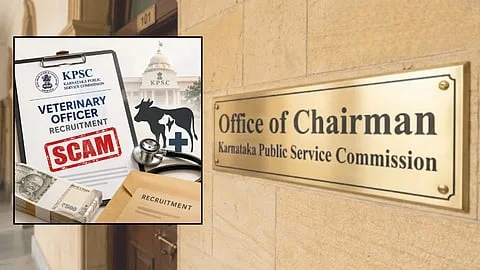
The Enforcement Directorate has alleged that suspended IAS officer Gyanendra Kumar Gangwar received ₹1.30 crore in cash from an alleged middleman in connection with the leakage of a Karnataka Public Service Commission (KPSC) Veterinary Officer recruitment examination paper.
The allegations were presented before a Bengaluru special court as the ED sought custody of Gangwar in a money-laundering investigation under the Prevention of Money Laundering Act (PMLA).
The court subsequently remanded Gangwar to six days of ED custody, until September 26, according to court reporting. The allegations remain subject to investigation and judicial proceedings.
ED Claims ₹1.50 Crore Was Collected From Candidates
According to the ED’s remand application, alleged middleman Basavaraj Kannale collected around ₹1.50 crore from candidates who were seeking access to the leaked examination material.
The agency alleges that approximately ₹1.30 crore of that amount was subsequently handed over to Gangwar in cash.
The ED is investigating the alleged flow of funds as part of its money-laundering probe and has sought to determine how the proceeds were collected, transferred and potentially converted into other assets.
Question Paper Allegedly Handed Over Before Examination
The ED has alleged that Gangwar provided the Veterinary Officer recruitment examination question paper, along with its answers, to Kannale through an HP pen drive on January 7, 2026.
The examination was scheduled for January 9.
Investigators allege that candidates who had paid money were subsequently given access to the examination material before the test. Earlier CID investigations have also examined allegations that selected candidates were taken to a resort and coached using leaked questions.
The recruitment examination was conducted for 400 Veterinary Officer posts in Karnataka.
Jewellery and Other Financial Transactions Under Investigation
The alleged financial trail also includes purchases of jewellery.
The ED told the court that approximately ₹23 lakh was spent on gold jewellery using funds connected to the alleged recruitment racket. Separate CID proceedings have examined additional jewellery purchases and other expenditures allegedly linked to the money collected from candidates.
Investigators are also examining financial transactions and other records to establish the full extent of the alleged money trail.
Gangwar Served as KPSC Examination Controller
Gangwar served as the Controller of Examinations at KPSC from 2024 until March 2026.
His role has brought particular attention to the alleged paper leak because investigators are examining how examination material could have been accessed and transferred before the test.
The ED is also investigating whether alleged proceeds from other recruitment examinations conducted during his tenure could be connected to the wider financial network.
Investigation Expands to Other KPSC Officials
The investigation is not limited to Gangwar and Kannale.
Authorities are examining the possible involvement of other individuals associated with the recruitment process, including suspended KPSC chairman Sahukar S. Shivashankarappa.
Investigators are looking into alleged communications, financial transactions and relationships between individuals involved in the recruitment process. The allegations against other officials remain under investigation and should not be treated as established findings.
Recruitment Process Came Under Scrutiny After Complaints
The alleged irregularities emerged after concerns were raised over the Veterinary Officer recruitment examination and selection process.
The CID investigation has examined allegations involving question-paper leakage, payments by candidates and the use of leaked material to prepare candidates before the examination. Earlier reporting said 329 candidates were selected from the recruitment process, while investigators were examining allegations involving candidates who allegedly paid money for selection.
The financial investigation by the ED is now focused on identifying the alleged proceeds of crime and tracing their movement.
High Court Orders Fresh Investigation
The wider KPSC controversy has also resulted in judicial intervention.
Recent reporting indicates that the Karnataka High Court constituted a Special Investigation Team (SIT) to conduct a fresh investigation into alleged irregularities connected with KPSC recruitment, including the Veterinary Officer examination.
The developments have expanded the case beyond the alleged paper leak to broader questions about recruitment procedures, financial transactions and the functioning of the commission.
ED Probe Continues
The six-day ED custody of Gangwar is intended to allow investigators to question him about the alleged financial transactions, identify other participants and trace the suspected proceeds of crime.
The case remains at the investigation stage. Allegations made by the ED or CID will ultimately have to be tested through the judicial process.
The KPSC controversy has meanwhile triggered wider scrutiny of recruitment examinations in Karnataka, with investigators continuing to examine whether the alleged network extended beyond the Veterinary Officer recruitment test.
Business News
What Happened to the Power Plant Funds? ED Probes ₹290 Crore Loan Diversion in Kolkata
The Enforcement Directorate (ED) on Thursday conducted searches at 11 premises in Kolkata linked to Kohinoor Power as part of a money laundering investigation into an alleged ₹290 crore bank loan fraud. The searches were carried out under the Prevention of Money Laundering Act (PMLA) and covered premises linked to the company’s promoters, Prashant Bothra and Vijay Bothra, as well as other directors and auditors.
The agency has alleged that loans obtained from banks to establish a 66 MW power plant in Jharkhand were diverted to other group entities and for personal use instead of being used for the intended project.
How Was the ₹290 Crore Loan Allegedly Diverted?
According to the ED, Kohinoor Power had secured bank financing for setting up the power project in Jharkhand. The funds were meant to be used for establishing the plant and meeting expenses related to the project.
However, the agency has alleged that a portion of the loan amount was transferred to other group companies, while some of the funds were allegedly used for personal purposes.
The ED is now examining the flow of the loan proceeds, including the bank accounts into which the funds were transferred, the companies involved in the transactions and the stated purpose of these financial movements.
Investigators are also trying to determine whether borrowed funds were moved to entities that had no direct connection with the proposed power project.
Why Was Only Around ₹7 Crore Recovered?
Kohinoor Power subsequently faced financial difficulties and entered insolvency proceedings before the National Company Law Tribunal.
Liquidation proceedings were later initiated with the aim of recovering dues from the company’s available assets and resources.
However, according to officials, only around ₹7 crore could be recovered during liquidation, significantly lower than the outstanding bank exposure.
The ED is now examining how the company’s financial position deteriorated, what assets were available before insolvency proceedings began and how much of the borrowed money was allegedly diverted away from the power project.
What Is the ED Looking for in the Kolkata Searches?
Thursday’s searches form part of the agency’s investigation into the alleged diversion of loan proceeds and their subsequent laundering.
Officials are examining financial records, bank documents, business records and other material connected with the transactions. The evidence is expected to help investigators reconstruct the movement of funds and identify financial links between various group entities.
The ED has also searched premises linked to the company’s directors and auditors. Investigators are examining whether other individuals associated with Kohinoor Power played any role in the alleged financial irregularities.
Are Promoters, Directors and Auditors Also Under Scrutiny?
The searches covered premises linked to promoters Prashant Bothra and Vijay Bothra, along with other directors and auditors associated with the company.
Investigators are examining transactions through which the loan proceeds were allegedly transferred to other entities and whether those movements had any legitimate connection with the power project.
The role of individuals involved in the company’s financial management, accounting and movement of funds is also expected to be examined as part of the broader money laundering investigation.
What Happens Next in the ₹290 Crore Loan Probe?
The investigation is now focused on determining how much of the ₹290 crore borrowed from banks was actually used for the 66 MW power project, how much was transferred to other group entities and how much was allegedly used for personal purposes.
The agency is also examining why only around ₹7 crore could eventually be recovered during liquidation despite the much larger loan exposure.
The ED will analyse documents and other evidence gathered during the searches before deciding on further action. If investigators establish evidence of deliberate diversion of loan proceeds and attempts to disguise such transactions as legitimate financial dealings, further proceedings under the PMLA could follow against the individuals and entities concerned.
For now, the probe remains centred on the alleged misuse of the ₹290 crore bank loan, the movement of funds between different entities and the circumstances that resulted in only a fraction of the outstanding amount being recovered during liquidation.

Mumbai, July 27, 2026: Mumbai Cyber Police have initiated legal action against a telecom point-of-sale (POS) operator accused of supplying fraudulently activated SIM cards to cybercriminal networks. Investigators allege that the operator used forged or misused identity documents to obtain mobile connections, which were later circulated among organized cyber fraud groups operating across multiple states.
FIR Registered Following Cyber Fraud Investigation
The West Region Cyber Police registered a First Information Report (FIR) on July 21 after examining several cybercrime cases linked to suspicious mobile numbers. According to investigators, the accused, identified as Prathamesh Chorat, allegedly activated SIM cards using identity documents belonging to unsuspecting individuals between January 2025 and May 2026.
Authorities believe many of these documents may have originally been submitted by citizens for legitimate purposes such as banking or other verification processes before being misused to obtain unauthorized mobile connections.
‘Ghost SIMs’ Allegedly Used in Financial Scams
Police say the illegally activated mobile connections, commonly referred to as “ghost SIMs,” are frequently exploited by cybercriminals to conceal their identities while carrying out online fraud. These SIM cards are allegedly used to contact victims, bypass verification procedures, operate fraudulent bank accounts, and facilitate digital financial crimes.
Investigators stated that fraudsters used these numbers to communicate with potential victims through online platforms, gain their trust through deceptive tactics or intimidation, and ultimately persuade them to transfer money into multiple bank accounts controlled by criminal networks.
NCRP Database Helped Identify Suspected Links
The investigation was supported by data collected through the National Cybercrime Reporting Portal (NCRP) and information provided by the Indian Cybercrime Coordination Centre (I4C) under the Ministry of Home Affairs.
Officials analyzed records of cyber fraud complaints, including mobile numbers, bank accounts, and transaction details reported through the national cybercrime helpline and online complaint system. During the review, investigators reportedly discovered that several mobile numbers connected to cybercrime cases had been issued by specific telecom point-of-sale operators in the Mumbai Metropolitan Region.
Further verification with telecom service providers allegedly linked multiple suspicious SIM cards to the accused operator. Police also found complaints associated with these numbers from Maharashtra and West Bengal, indicating a wider geographical spread of the suspected operation.
Probe Suggests Organized Cybercrime Network
According to the FIR, organized cybercrime syndicates allegedly employ field agents to collect bank accounts and SIM cards registered in the names of unsuspecting individuals from different parts of the country. These resources are then reportedly used to facilitate various forms of online financial fraud, including investment scams, stock market frauds, digital arrest scams, and other cyber-enabled crimes.
Investigators suspect that the accused supplied multiple mule SIM cards to these criminal groups during the period under investigation. Authorities are now working to identify other individuals involved in the network, including those responsible for collecting identity documents, arranging bank accounts, and distributing illegally obtained mobile connections.
The investigation remains ongoing, and police are examining whether additional operators or intermediaries were involved in the alleged racket.c
-
 Business3 years ago
Pot Odor Does Not Justify Probable Cause for Vehicle Searches, Minnesota Court Affirms
-

 Business3 years ago
New Mexico cannabis operator fined, loses license for alleged BioTrack fraud
-

 Business3 years ago
Alabama to make another attempt Dec. 1 to award medical cannabis licenses
-

 Business3 years ago
Washington State Pays Out $9.4 Million in Refunds Relating to Drug Convictions
-

 Business3 years ago
Marijuana companies suing US attorney general in federal prohibition challenge
-

 Business3 years ago
Legal Marijuana Handed A Nothing Burger From NY State
-

 Business3 years ago
Can Cannabis Help Seasonal Depression
-

 Blogs3 years ago
Cannabis Art Is Flourishing On Etsy