
Consumer Awareness
Retired Railway Employee Duped Of Lakhs In Fake Pension Verification Scam


Jabalpur: A 66-year-old retired Indian Railways employee has allegedly been cheated out of ₹74.4 lakh in a sophisticated cyber fraud in which scammers posed as government pension officials and convinced him to transfer his retirement savings under the pretext of a pension verification process.
The Madhya Pradesh Cyber Police have launched an investigation to trace the money trail and identify the fraudsters, who allegedly routed the stolen funds through multiple bank accounts across different states.
Fraudsters Posed as Pension Officials
According to investigators, the victim received a phone call from individuals claiming to represent a government pension department. The callers falsely informed him that discrepancies had been found in his pension records and Aadhaar details, warning that his pension payments could be suspended if the issue was not resolved immediately.
To increase pressure, the fraudsters allegedly claimed that the retiree’s bank accounts were linked to a money laundering investigation involving an international criminal network. They assured him that transferring his money into a so-called “government verification account” was necessary to safeguard his savings and complete the verification process.
Investigators say the victim was instructed to remain on the phone throughout the process and was repeatedly told not to contact family members or bank officials until the verification was complete.
Retirement Savings Transferred in Multiple Transactions
Believing the callers were genuine government officials, the retired employee liquidated his fixed deposits and transferred a total of ₹74.40 lakh through multiple online transactions to bank accounts provided by the fraudsters.
The scam came to light only after the victim later visited his bank to inquire about the verification process and learned that the money had been transferred to fraudulent accounts with no connection to any government agency.
Cyber Police Tracking Multi-State Money Trail
Following the complaint, the Madhya Pradesh Cyber Cell registered a case under relevant provisions related to cheating, forgery, criminal intimidation, and cyber fraud.
Preliminary investigation indicates that the stolen funds were immediately distributed across several mule bank accounts in different states, a common tactic used by cybercriminals to complicate financial tracking.
Cyber investigators are now examining banking records, digital transaction trails, mobile phone data, and internet protocol (IP) logs to identify those involved and recover any remaining funds before they are withdrawn.
Authorities Warn Senior Citizens Against Verification Scams
The incident has prompted authorities to issue a fresh advisory warning pensioners and senior citizens about scams involving fake verification calls.
Officials emphasized that government departments, banks, pension authorities, and law enforcement agencies never ask individuals to transfer money into personal or temporary accounts for verification, investigation, or security purposes.
Citizens are advised to disconnect any suspicious calls demanding urgent financial transactions, independently verify claims through official government offices or bank branches, and avoid sharing banking credentials, OTPs, or personal information with unknown callers.
Victims of cyber fraud are urged to immediately report incidents through the National Cyber Crime Helpline (1930) or the official cybercrime reporting portal to improve the chances of freezing fraudulent transactions.










A single flat owner has secured a precedent-setting victory after a six-year legal battle, with the Maharashtra Real Estate Appellate Tribunal (MahaREAT) ordering developers of the stalled Nilkanth Kingdom project in Mumbai to complete full Real Estate Regulatory Authority (RERA) registration within 60 days.
The ruling, delivered in favour of a lone appellant, significantly strengthens the enforcement of RERA by clarifying that incomplete housing projects must be treated as active projects under the law, even if partial possession was granted before RERA came into force.
Tribunal Overturns Earlier Order
The latest order overturns MahaREAT’s own June 18, 2019 decision, which had earlier allowed registration only for unfinished amenities. The tribunal has now held that where Completion Certificates (CC) and Occupation Certificates (OC) are pending, the entire project remains incomplete and must be fully registered under RERA.
Legal experts say the clarification closes a long-used loophole that allowed developers of pre-RERA projects to avoid regulatory oversight by claiming partial completion.
Legal Significance Highlighted by Counsel
Counsel for the flat owner said the ruling reinforces the core intent of RERA — accountability and transparency. According to the tribunal’s interpretation, developers cannot escape their obligations simply because possession was handed over before RERA became operational.
“This judgment makes it clear that incomplete projects cannot be selectively registered. If essential approvals and amenities are pending, the project is active under RERA,” the lawyer said. Experts believe the decision could influence dozens of stalled or partially completed projects across Maharashtra.
Project Delays and Long-Standing Disputes
The case relates to Nilkanth Kingdom, a residential project in Vidyavihar (West) comprising seven buildings constructed on leased land. The project was launched in 2005, with possession initially promised by 2008. However, internal disputes among developers and prolonged legal challenges led to repeated delays.
While structures were largely completed by 2012–13, buyers received only fit-out possession. Key amenities such as a clubhouse and swimming pool remain unfinished to date, and statutory approvals including CC and OC were never obtained.
A Lone Battle Against Major Builders
The appeal before MahaREAT was filed solely by flat owner Stuti Galiya of N K Avanti Cooperative Housing Society. Nearly 499 other flat buyers and seven housing societies chose not to participate in the prolonged litigation.
Stuti pursued the case alone against 11 developers, many of whom are large corporate entities represented by leading law firms. The tribunal’s decision highlights how sustained legal effort by a single homebuyer can lead to systemic accountability.
Broader Impact on RERA Enforcement
The ruling significantly enhances the scope of RERA by reaffirming that the law applies to unfinished projects regardless of when possession was offered. Developers are now legally required to complete not just structural construction, but also promised amenities and statutory approvals.
Housing activists say the judgment strengthens buyer protection and sends a clear signal that partial completion will no longer shield developers from regulatory responsibility.
As stalled housing projects continue to affect thousands of buyers across the state, the verdict is being seen as a milestone in real estate jurisprudence — and a reminder that persistence can reshape accountability in India’s property sector.
Consumer Awareness
India’s Major Telecom Operators Deploy CNAP as Silent Call Scams Surge Nationwide
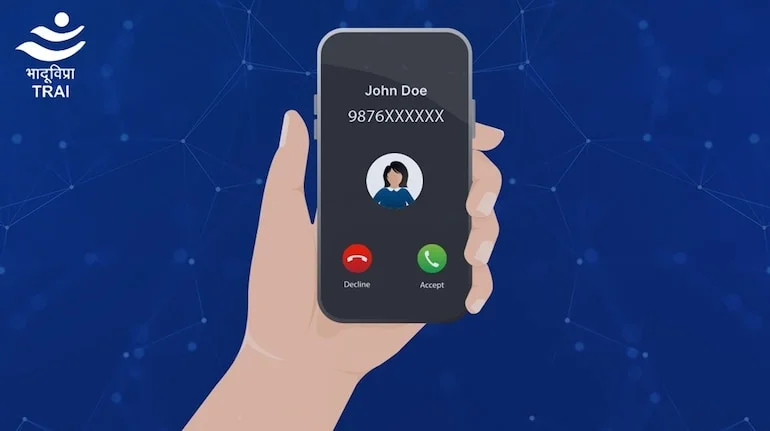
India’s leading telecom companies are accelerating the rollout of Caller Name Presentation (CNAP) as authorities warn that a growing wave of “silent calls” is being used as a gateway for fraud and financial scams. The move signals a shift in how regulators and operators are attempting to restore trust in voice calls, which have increasingly become a tool for low-tech but highly effective cybercrime.
Silent Calls: A Quiet Tool for Fraud
India’s Department of Telecommunications (DoT) recently issued a public advisory clarifying that silent calls—where a phone rings and no voice is heard after answering—are not technical glitches. Instead, officials say they are often deliberate attempts by fraudsters to verify whether a number is active.
Once a call is answered, even without conversation, the number can be marked as “live” and sold or reused by scam networks. These verified numbers may later be targeted for phishing calls, impersonation scams, or more sophisticated social-engineering attacks.
To counter this, the DoT has urged citizens to block silent callers immediately and report them via the government’s Sanchar Saathi portal, which aggregates user reports to identify patterns of telecom abuse.
CNAP: Putting Verified Names to Phone Numbers
In response to rising fraud, telecom operators are introducing Caller Name Presentation (CNAP), a system that displays the registered name of the caller on the recipient’s screen.
Reliance Jio has taken the lead by rolling out CNAP across multiple regions. Unlike third-party caller ID apps that rely on crowdsourced labels, CNAP uses subscriber information collected during SIM registration, which is verified against official identity documents.
Supporters say this adds a layer of accountability to phone calls, making it harder for scammers to hide behind anonymous numbers and easier for users to decide whether to answer a call.
Nationwide Push to Standardise Caller Identity
The Telecom Regulatory Authority of India (TRAI) has directed all major operators to implement CNAP, aiming to make it a national standard rather than a fragmented, operator-specific feature.
Current rollout status includes:
- Reliance Jio: Live in several regions, including West Bengal, Kerala, Bihar, Rajasthan, Odisha, and parts of northern and southern India
- Airtel: Active in select circles such as West Bengal, Gujarat, and Madhya Pradesh
- Vodafone-Idea (Vi): Limited rollout in Maharashtra, with pilot testing in Tamil Nadu
- BSNL: CNAP remains in trial phases
Industry sources note that deployment is technically demanding, requiring upgrades to legacy switching systems and seamless coordination across competing networks.
Balancing Fraud Prevention and Privacy
While CNAP is positioned as an anti-scam measure, it has also revived concerns over privacy, data accuracy, and potential misuse of subscriber information. Experts caution that verified caller names are only as reliable as the data behind them, and determined criminals may still obtain SIM cards using false or proxy identities.
Regulators acknowledge these risks, emphasizing that CNAP is meant to complement—not replace—other safeguards such as spam call filtering, bulk caller identification, and stricter telemarketing regulations.
A Changing Reality for Phone Calls
The rise of silent calls alongside verified caller identity reflects a broader shift: phone calls are no longer inherently trustworthy. Fraudsters exploit anonymity and human reflexes, while authorities respond with transparency and traceability.
For consumers, the guidance remains cautious. Silent calls should be treated as red flags, and displayed caller names should be viewed as helpful indicators, not guarantees. In a country handling billions of calls daily, even incremental changes in how calls are identified and answered could significantly reduce exposure to scams.
-

 Business3 years ago
Pot Odor Does Not Justify Probable Cause for Vehicle Searches, Minnesota Court Affirms
-

 Business3 years ago
New Mexico cannabis operator fined, loses license for alleged BioTrack fraud
-

 Business3 years ago
Alabama to make another attempt Dec. 1 to award medical cannabis licenses
-

 Business3 years ago
Washington State Pays Out $9.4 Million in Refunds Relating to Drug Convictions
-

 Business3 years ago
Marijuana companies suing US attorney general in federal prohibition challenge
-

 Business3 years ago
Legal Marijuana Handed A Nothing Burger From NY State
-

 Business3 years ago
Can Cannabis Help Seasonal Depression
-

 Blogs3 years ago
Cannabis Art Is Flourishing On Etsy