
Healthcare
No One Is Giving Your Kids Weed At Halloween, But Here’s How To Prevent Them From Eating Some By Accident


Since it’s virtually impossible to tell an edible from regular food these days, it’s become critical for parents and guardians to take extra care around children.
People who give children THC edibles give all the other responsible consumers a bad rep. And with Halloween just around the corner, it’s important for parents to keep their kids safe from THC-infused edibles disguised as candy.
For us adults, the fact that cannabis edibles don’t smell or taste differently from regular candy is a bonus — but that obviously is not okay for kids. We don’t want young ones to suffer from getting high, and worrying their parents sick for that matter.

There has been an increase in cases of children consuming cannabis in states where it’s legal. In Colorado, there was even a case of a two year old child having a marijuana overdose. Meanwhile, in other mature markets like Colorado and California, kids around the age of 8 suffered from cannabis poisoning. It is certainly rare, but there is still a chance of it happening.
Since it’s virtually impossible to tell an edible from regular food these days, it’s become critical for parents and guardians to take extra care around children. They have no idea they’re ingesting cannabis edibles. Many companies even manufacture edibles and sell them in packaging designed to look like popular brands of candy, cookies, and cereal.
While marijuana is well-tolerated by adults, it can be traumatic and severe for young children and infants. In many cases, they have to be taken to the emergency room of a hospital to help manage their symptoms.
Edibles may take a while for its effects to be felt, even in children. Here are some signs you can look out for:
- Weakness
- Panic
- Intoxication
- Excessive sleepiness
- Paranoia
- Slurred speech
- Slowed breathing
- Ataxia (difficulty balancing)
You know your child best, so observe for other signs and behaviors that aren’t typical of them.
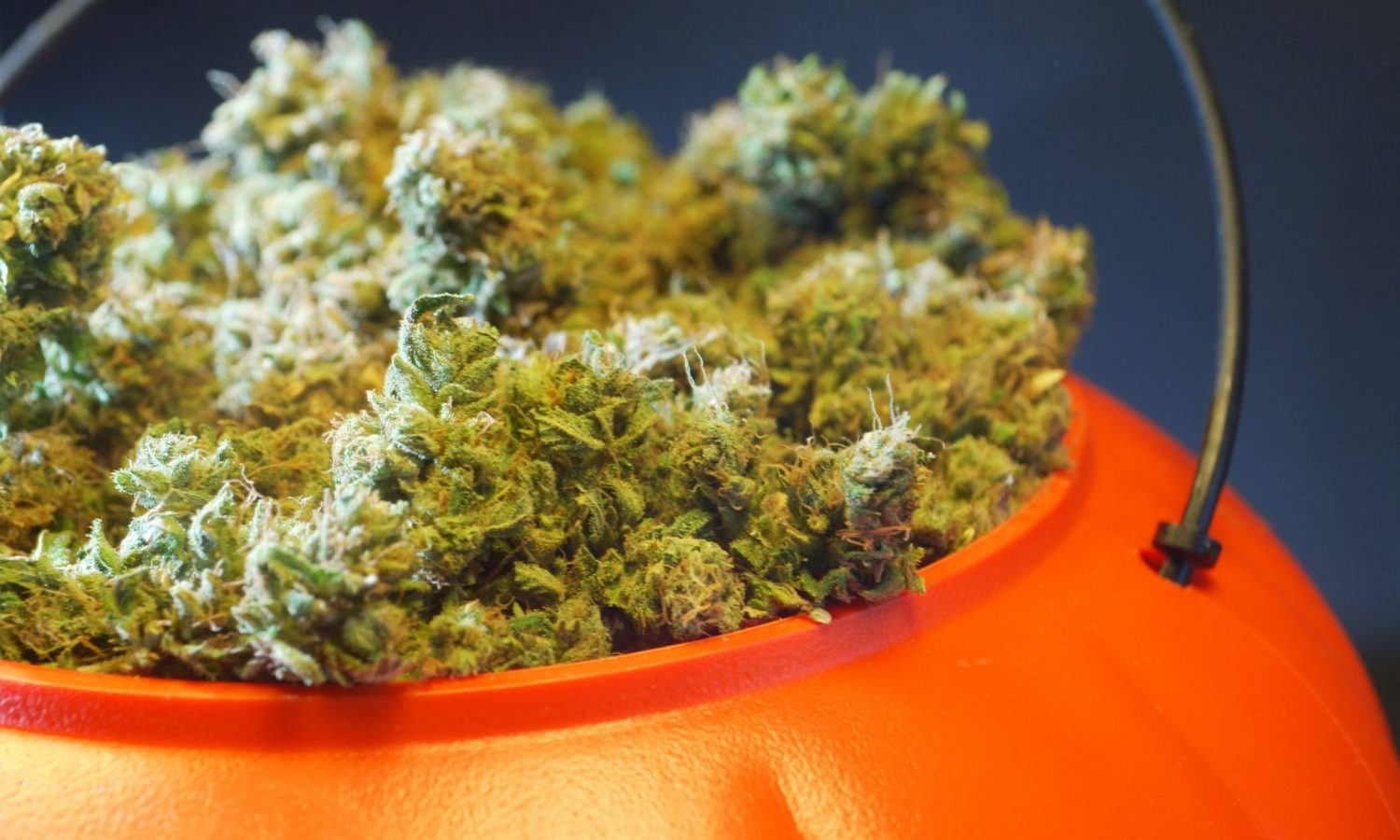
However, there are some ways you can prevent your kids from accidentally ingesting cannabis edibles. This isn’t important just around Halloween, but year-round:
- Go trick or treating with your kids, and don’t accept homemade candies without properly sealed packaging from known brands. Check for any treats that may have been tampered with. Throw away any candy that has been opened.
- Tell your trick-or-treaters not to consume any candy before you personally inspect them. At the very least, if they are old enough, ask them to keep all the wrappers so that you can check if there were any edibles given to them in the bags. If you live in a state where cannabis is legal either medically or recreationally, any good parent will take the few minutes it requires to inspect the Halloween candy of their child before they consume it.
- Talk to your children about the potential risks of accidentally eating marijuana edibles. This will educate them about the stress and the dangers of ingesting marijuana. It would also be a good opportunity for older children and teens to have discussions about underage use of marijuana and what it can do to their health, paving the way to talk about alcohol and tobacco use too.
While the nationwide cases are few and far in between, it’s still best to avoid the risk. THC edibles are also more costly compared to actual candy, so the chances of adults giving them out is truly rare. But you never know if you have someone malicious lurking around your neighborhood that could actually lace candy and give some out.
If you are a cannabis-consuming parent yourself, it always helps to keep the candies far away from children’s reach. Treat them the same way you would toxic products and pharmaceutical medications. Using child-safe or child-resistant packaging is always recommended, especially with a clear label.

What To Do If You Think Your Child Ate And Edible
In the event that you suspect your child may have eaten marijuana edibles, the most important thing to do first is to stay calm.
Try to obtain information such as by checking what candy or edible your child may have possibly consumed. See how much they ate by comparing how much was in the package, and how much of it is left. Check for any information on the packaging about how much THC it contains.
If you notice that your child is excessively sleepy, breathing deeply, having a hard time breathing, or any other changes in their normal behavior, calling 9-1-1 is best.
Alternatively, you can also visit the nearest emergency room and give them as much information as you possibly can. You may also call poison control even if your child is acting normally. They will let you know if you can monitor your child from the comfort at home, and when it’s best for them to see a medical professional.
The most important thing to remember is that no child has ever died from a marijuana overdose. They will be uncomfortable for a while, but all will be fine. It’s just best to avoid getting their hands into THC edibles for the meantime.














U.S. federal authorities have secured the return of a fugitive suspect accused of involvement in a massive Medicare fraud operation, following his arrest in Türkiye. The extradition marks a significant development in a major healthcare fraud investigation that allegedly cost the American healthcare system billions of dollars.
The suspect, Ibrahim Khaldoon Hilmi, is now in federal custody after spending more than a year outside the United States. Prosecutors are expected to move forward with criminal proceedings as investigators continue to examine what authorities describe as a sophisticated fraud network targeting public healthcare funds.
International Manhunt Ends with Arrest in Türkiye
According to federal investigators, Hilmi left the United States in May 2025 while authorities were building their case. Law enforcement agencies later tracked his location to Türkiye, where cooperation between U.S. and Turkish officials led to his detention.
Following the completion of legal and diplomatic procedures, the suspect was transferred to American custody. Officials described the operation as a successful example of international law enforcement collaboration in pursuing suspects accused of large-scale financial crimes.
A specialized FBI team reportedly traveled to Türkiye to coordinate the transfer and ensure the extradition process was completed smoothly.
Alleged Scheme Targeted Medicare Reimbursement System
Investigators allege that Hilmi played a central role in a fraudulent operation that exploited the Medicare reimbursement system through false claims and improper billing practices.
Authorities estimate that the alleged scheme involved financial losses equivalent to approximately ₹31,700 crore, making it one of the most significant healthcare fraud investigations in recent years.
While the allegations have yet to be tested in court, investigators believe the operation relied on complex financial transactions and coordinated activities designed to extract funds from a government healthcare program serving millions of beneficiaries.
Federal Agencies Expand Investigation
The case extends beyond a single suspect. Federal authorities are examining the potential involvement of additional individuals, businesses, and organizations believed to be connected to the alleged fraud network.
Investigators are reviewing banking records, financial transactions, corporate structures, and digital evidence to determine the full scope of the operation and identify any additional participants.
Officials indicated that tracing the movement of funds and uncovering potential links between entities remains a key focus of the ongoing investigation.
Healthcare Fraud Remains a Major Concern
Government agencies continue to treat Medicare fraud as a serious threat because it impacts taxpayer-funded healthcare resources intended for legitimate medical services.
Authorities argue that fraudulent claims can divert critical funding, increase administrative costs, and place additional pressure on public healthcare programs. As healthcare systems become increasingly digitized, fraud schemes have also become more sophisticated and difficult to detect.
Financial crime specialists note that modern healthcare fraud investigations often involve shell companies, layered transactions, and cross-border financial networks that require extensive forensic analysis.
Growing Importance of Global Law Enforcement Cooperation
The successful return of Hilmi highlights the increasing role of international cooperation in combating financial crime. Law enforcement agencies worldwide are relying more heavily on cross-border partnerships to locate and apprehend suspects who attempt to evade prosecution by relocating overseas.
Officials say such collaborations are essential as financial crimes become increasingly global in nature, involving multiple jurisdictions and complex international money flows.
Legal Proceedings Ahead
The U.S. Department of Justice is expected to present evidence against the suspect as court proceedings move forward. Prosecutors will seek to establish the extent of the alleged fraud and determine accountability among those involved.
The outcome of the case could influence future enforcement efforts aimed at protecting public healthcare programs and strengthening safeguards against large-scale financial misconduct.
For federal authorities, the extradition of Ibrahim Khaldoon Hilmi represents a major step in an ongoing campaign to crack down on healthcare fraud and recover public funds allegedly lost through criminal schemes.

Cybercriminals have defrauded doctors across Telangana of nearly ₹30 crore since September 2024, prompting authorities to strengthen awareness campaigns and cybersecurity education within the healthcare sector.
The alarming figures were revealed during a cyber awareness programme organized by the Telangana Cyber Security Bureau (TGCSB) in Hyderabad. Senior officials warned that healthcare professionals are increasingly becoming targets of sophisticated online scams despite their educational and professional backgrounds.
Healthcare Professionals Under Growing Cyber Threat
Addressing representatives from various medical associations, TGCSB Director Shikha Goel highlighted the rising number of cybercrime incidents involving doctors and healthcare workers. She emphasized that cybercriminals are exploiting digital platforms to target individuals across all professions, including highly qualified medical practitioners.
Officials stressed that vigilance, awareness, and prompt reporting remain the strongest defenses against cyber fraud. The event focused on strengthening cooperation between law enforcement agencies and the medical fraternity to improve preparedness against evolving cyber threats.
More than 70 office-bearers from medical organizations across Telangana attended the session, including presidents, secretaries, treasurers, and senior representatives.
Investment Scams Responsible for Major Financial Losses
According to TGCSB data, at least 735 doctors have reported cybercrime-related incidents since September 2024, with total losses reaching approximately ₹29.88 crore.
Business and investment fraud emerged as the most damaging category, accounting for losses of ₹22.39 crore involving 127 victims. Investigators noted that fraudsters often lure professionals with promises of high returns, fake investment opportunities, and deceptive business schemes.
Authorities also reported a wide range of other cyber offences affecting doctors, including digital arrest scams, identity theft, impersonation fraud, fake advertisements, job-related scams, insurance fraud, cryptocurrency fraud, UPI-related cheating, matrimonial scams, and sextortion cases.
Authorities Stress Importance of Rapid Reporting
The Telangana Cyber Security Bureau urged victims to report cybercrime incidents immediately, especially during the critical “golden hour” after a fraudulent transaction occurs.
Officials explained that timely complaints through the national cybercrime helpline 1930 and the official cybercrime reporting portal can significantly improve the chances of freezing suspicious transactions and recovering stolen funds.
The bureau further warned that cybercriminals are employing increasingly advanced techniques to deceive victims, making awareness and quick action more important than ever.
Medical Associations Join Awareness Drive
Representatives from associations of paediatricians, cardiologists, dentists, orthopaedic surgeons, gynaecologists, and hospital administrators participated in the discussions. The groups pledged to work closely with authorities to spread cybersecurity awareness through hospitals, clinics, medical conferences, and professional training programmes.
Officials believe that expanding cyber awareness among healthcare professionals will play a key role in reducing financial fraud and strengthening digital security across the state’s medical community.
As cyber threats continue to evolve, law enforcement agencies are encouraging doctors and other professionals to remain cautious when responding to investment offers, unknown communications, and requests for sensitive financial information online.
Education News
AIIMS Gorakhpur Reservation Controversy: FIR Alleges Fake OBC Certificate Used Despite ₹80 Lakh Income

A major controversy has emerged at AIIMS Gorakhpur after allegations surfaced that reservation benefits were misused to secure a postgraduate medical seat. A criminal case has been registered against former AIIMS Gorakhpur Executive Director Dr. G.K. Pal and his son, Dr. Oro Prakash Pal, over the alleged use of a forged Other Backward Class (OBC) Non-Creamy Layer certificate for admission to an MD course.
The case has triggered widespread debate within medical and administrative circles, raising serious questions about transparency and oversight in admissions to premier medical institutions.
FIR Filed on Court’s Direction
The First Information Report (FIR) was registered at the AIIMS police station following directions from Chief Judicial Magistrate Tvishi Srivastava. According to the complaint, the alleged offence took place on August 30, 2024, when forged documents were purportedly used to obtain an MD seat under the OBC reservation quota.
Sources indicate that the matter was subsequently brought to the attention of the Union Ministry of Health, prompting internal reviews and administrative action.
Alleged Income Far Above Eligibility Threshold
Central to the allegations is the claim that Dr. G.K. Pal and his wife Parvati Pal have a combined annual income exceeding ₹80 lakh. Under existing reservation rules, families with such income levels are not eligible for OBC Non-Creamy Layer benefits.
Following the emergence of the controversy, Dr. Pal was first removed from his position at AIIMS Gorakhpur and later relieved of responsibilities at AIIMS Patna. He is currently posted at JIPMER Puducherry. With the registration of the FIR, officials suggest that further legal and departmental action may follow, depending on the outcome of the investigation.
Complaint Highlights Systemic Concerns
The complaint was filed by Ashutosh Kumar Mishra, a resident of Divyanagar in the Cantonment area. He alleged that the events related to the case occurred between January and September 2024. The complainant argued that misuse of reservation provisions by individuals in senior positions undermines the integrity of public institutions and erodes trust in the medical education system.
The case has reignited concerns over whether verification mechanisms for reservation certificates are robust enough, particularly in high-stakes admissions.
Impact on Medical Community
The allegations have sent shockwaves through the medical fraternity. Experts believe that if the claims are substantiated, the case could prompt a broader review of admission procedures and lead to stricter scrutiny of category certificates across institutions like AIIMS.
Authorities have stated that all relevant documents will be carefully examined before taking further steps. The outcome of the investigation is expected to have far-reaching implications for accountability and compliance in medical admissions.
Questions Await Answers
As the probe continues, several key issues remain unresolved: whether reservation norms were deliberately violated, how verification processes failed, and whether similar cases may surface in the future. For now, the focus remains on the investigation and its potential consequences.
-
 Business3 years ago
Pot Odor Does Not Justify Probable Cause for Vehicle Searches, Minnesota Court Affirms
-

 Business3 years ago
New Mexico cannabis operator fined, loses license for alleged BioTrack fraud
-

 Business3 years ago
Alabama to make another attempt Dec. 1 to award medical cannabis licenses
-

 Business3 years ago
Washington State Pays Out $9.4 Million in Refunds Relating to Drug Convictions
-

 Business3 years ago
Marijuana companies suing US attorney general in federal prohibition challenge
-

 Business3 years ago
Legal Marijuana Handed A Nothing Burger From NY State
-

 Business3 years ago
Can Cannabis Help Seasonal Depression
-

 Blogs3 years ago
Cannabis Art Is Flourishing On Etsy