
U.S. News
New York Marijuana Prices Drop 17% as Competition Surges in Expanding Legal Market

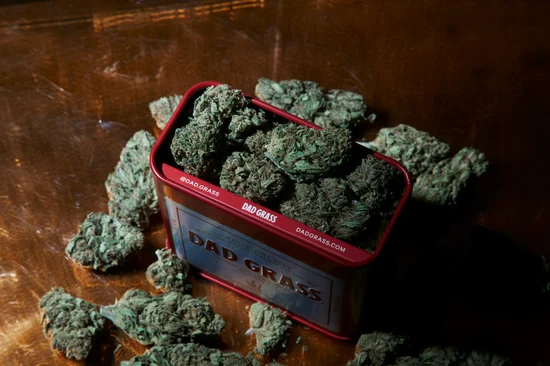
The cost of cannabis in New York continues to tumble as the state’s legal marijuana market grows rapidly, offering consumers more options and stronger price competition than ever before.
According to the New York Office of Cannabis Management (OCM), the average price of cannabis products has fallen 17% since legalization — dropping from $38.61 in 2023 to $32.15 today. The decline reflects an increasingly crowded marketplace, with more than 500 licensed dispensaries now operating across the state and a swelling roster of cultivators and manufacturers.
“Competition is high. We have all these brands fighting for shelf space,” said Britni Tantalo, president of the New York Cannabis Retail Association. She added that the rapid opening of new dispensaries is reshaping the retail landscape.
More Stores, More Products, Lower Prices
Industry leaders say the downward trend is expected — and mirrors what other legalized states saw as regulated markets matured. Today, New York shelves are stocked with a wide range of products, including flower, edibles, vapes, concentrates, and cannabis-infused beverages.
Retailers report:
- An ounce of cannabis flower priced between $100–$125, roughly a 50% markup from wholesale
- Single joints selling for around $10
- Five-pack pre-roll sets at $25
- One-gram vape cartridges averaging $30
With increased cultivation and processing capacity, wholesalers have been offering better prices — savings that retailers say they are now able to pass on to customers.
“When we get a lower wholesale price, we can pass along a lower cost to the customer,” said Osbert Orduna, CEO of The Cannabis Place in Queens.
Legal vs. Illegal Market: The Price Gap Is Shrinking
Unlicensed cannabis sellers have long enjoyed an advantage by avoiding labor, compliance, and the state’s 13% cannabis tax. However, industry observers say that as prices fall and access to legal dispensaries grows, the regulated market is becoming more appealing to consumers seeking safe, tested, and accurately labeled products.
In a major shift, New York recently approved promotional discounts for licensed dispensaries — including deals for veterans, teachers, seniors, and first responders — a move expected to further narrow the price gap with illegal sellers.
A Market Recovering From Its Rocky Start
New York’s cannabis rollout has faced lawsuits, regulatory delays, and operational hurdles, but analysts say the market is stabilizing and heading toward significant annual growth. While New York’s cannabis prices still sit slightly above national averages in states with established legal industries, the difference is steadily shrinking.
The OCM estimates that legal sales could approach $2 billion by the end of the year, marking a major milestone for one of the country’s newest — and now fastest-growing — cannabis markets.


COLORADO — A new study from the University of Colorado and MedPharm Research reveals that nearly 50% of cannabis flower products sold in Colorado carry THC labels that do not match their actual potency. The research highlights inconsistencies in testing and labeling practices that could mislead consumers regarding both strength and safety.
The statewide review, funded by the Institute of Cannabis Research, tested 277 cannabis products from 52 licensed dispensaries across 19 counties. Researchers examined 178 flower products, including loose flower and pre-rolled joints, and 99 concentrates such as oils, waxes, and hash. Edibles were not part of this stage of the study.
Testing revealed a significant discrepancy between labeled and actual THC content for flower products. About 44% failed to meet Colorado’s standard of being within 15% of the stated THC level. Most of these overestimated potency, while a smaller number contained more THC than indicated. In contrast, concentrates were far more accurately labeled, with only four products showing inconsistencies.
“Accurate THC information is critical, whether for medical use or recreational consumption,” said L. Cinnamon Bidwell, senior author of the study and associate professor at CU Boulder. “Users need reliable information to avoid unintentional overconsumption and associated risks.”
The study also highlighted the rise of ultra-potent cannabis. Flower products averaged 21% THC, while concentrates reached 71% on average, with some exceeding 80%. By comparison, marijuana in the 1980s typically contained about 8% THC.
Researchers identified several factors contributing to labeling discrepancies. Flower plants are inherently heterogeneous, making potency more difficult to measure than homogenized concentrates. In some cases, third-party labs may inflate THC results to attract business from marketers seeking higher potency claims.
Beyond THC, the study found that other cannabinoids such as cannabigerol (CBG) and cannabigerolic acid (CBGA) were present in higher concentrations than CBD in many products, despite labels rarely reflecting these compounds. Only 16% of products reported cannabinoids beyond THC and CBD, though these compounds may have notable therapeutic benefits, including anti-inflammatory and anti-anxiety effects.
“Focusing solely on THC can mislead consumers and underrepresent the value of other cannabinoids,” said Duncan Mackie, co-author and director of pharmacology at MedPharm. “Future labeling should provide a more complete cannabinoid profile to guide informed choices.”
The researchers plan to expand their work to include cannabis edibles and hope their findings will inform regulatory standards and industry practices as legal cannabis markets continue to grow nationwide.
Reference: Giordano, G., Brook, C. P., Ortiz Torres, M., MacDonald, G., Skrzynski, C. J., Lisano, J. K., Mackie, D. I., & Bidwell, L. C. (2025). Accuracy of labeled THC potency across flower and concentrate cannabis products. Scientific Reports, 1 July 2025. DOI:10.1038/s41598-025-03854-3

The longest federal government shutdown in American history came to an end on Wednesday night when President Donald Trump signed a funding bill, but the potential end of the $28 billion hemp industry—and its countless THC-infused beverages, edibles and other intoxicating products— has just begun.
An amendment inside the Agriculture Appropriations section of the minibus spending bill to re-open the federal government effectively bans most hemp derived-THC products currently on the market, which has been both a lifeline to the struggling marijuana industry and another fierce competitor.
In 2018, the Farm Bill legalized hemp and all its derivatives, isomers and extracts. And since hemp and marijuana are different varietals of the same plant—cannabis sativa L.—they contain the same compounds and hemp can be used to make products of similar potencies, or even stronger, than those found in state-regulated marijuana dispensaries across 40 states.
For the last seven years, as long as each hemp product is made from hemp—defined as cannabis that contains 0.3% of delta-9 THC or less—they have been considered technically legal at the federal level. Armed with the Farm Bill, an entire industry unfettered by laws banning marijuana has been selling these products online, across state lines, at gas stations, convenience stores and other places where marijuana is still outlawed. THC-infused beverages, which generate about $1 billion in annual sales across the U.S., have surged in popularity and even big box retailers like Total Wine, Circle K, and Target have begun to carry these products. And Edibles.com, owned by parent company Edible Arrangements, known for its festive fruit baskets, even leaned into its name earlier this year and began selling edibles infused with hemp-derived THC.
But the amendment now changes the definition of hemp, closing the so-called “loophole” that gave birth to the intoxicating hemp industry. The amendment bans the synthetic manufacture of cannabinoids—most intoxicating hemp products are made by converting CBD into the more desirable delta-9 THC through a chemical process, and other cannabinoids like delta-8 and others. But the most punishing part of the amendment is that it bans all hemp products that contain more than 0.4 milligrams of THC per package. Most hemp products on the market today have at least 5 milligrams of THC, and some contain as much as 1,000 milligrams per package. (In state-legal marijuana dispensaries, the maximum THC level per package is between 100 mg and 200 mg, depending on the state.) The silver lining is that the ban is not immediate, there is a grace period and will go into effect in 365 days.
In Kentucky, Jim Higdon, a cofounder of Louisville-based Cornbread Hemp, which sells hemp-derived CBD and THC gummies, tinctures and seltzers, is already feeling the pressure.
“This is an extinction level event for the CBD products industry, and the greater hemp and hemp beverage industry,” says Higdon. “If we can’t stop it, and we don’t pivot, it will destroy our business. Every product that we make currently will become a Schedule I narcotic when it is implemented.”
By narrowing the definition of hemp, the amendment essentially expanded the definition of marijuana.
Cornbread, which will generate about $40 million in revenue this year, up from about $25 million last year, fears a massive sales drop if the amendment goes into effect next year. He says he will never pivot to the marijuana side of the cannabis industry. Instead, Higdon plans to spend a lot of time in the coming year lobbying politicians to get a hemp products-friendly bill on the House floor.
“The chairman of the House Energy and Commerce Committee is Brett Guthrie from Kentucky,” says Higdon. “We are going to bearhug Brett Guthrie and do everything we can to motivate him to help us move a bill through this committee.”
Ironically, the author of the 2018 Farm Bill, Senator Mitch McConnell (R-Ky.), is also the person who brought the provision to ban intoxicating hemp products in the current federal spending bill. In an op-ed in the Louisville Courier Journal published this summer, McConnell wrote: “These products are poisoning Kentucky’s kids,” explaining how calls to the Poison Control Center in Kentucky about cannabis more than doubled over the last five years, with 40% of those calls in regards to children under 12. “We cannot let this go on any longer.”
McConnell, who is retiring from Senate in January 2027, has become a leader in trying to close the hemp THC loophole he created. On Monday, the junior senator from Kentucky, Rand Paul, introduced an amendment that would remove the hemp ban from the federal spending bill, but it failed, 76-24, in a Senate floor vote.
The irony that the godfather of the intoxicating hemp industry is the one who is trying to ban it is not lost on Thomas Winstanley, the executive vice president of Georgia-based Edibles.com. “Mitch McConnell, the man who gave us the seeds to grow hemp, now wants to burn the crop and salt the ground,” says Winstanley.
He is worried about the ban, but he has put an optimistic spin on the new amendment. “[We see] it as not one year to ban, it’s one year to regulate,” says Winstanley, who has been a key player in the hemp industry’s lobbying efforts. “We do not see this as the end. The clock started, but there’s still of runway for better policy here. It was a tough battle to lose, but it’s not the end of the war.”
For Curaleaf, the Connecticut-based cannabis giant with $1.3 billion in sales last year from its chain of 151 dispensaries and wholesaling business, is not concerned about its bottom line when it comes to the hemp ban. Curaleaf—and many other cannabis companies, including Green Thumb Industries, Wana, Wyld and Kiva—has diversified into hemp. The company sells hemp-derived THC products and even turned one of its Florida medical dispensaries into a hemp store, but these products make up less than $5 million in sales a year. “Our hemp business right now is a decimal point in our revenues, it’s truly irrelevant,” says Curaleaf CEO, billionaire Boris Jordan.
Jordan says he is not in favor of the ban, but he believes something needed to be done to get rid of bad actors in the space, who make far too potent and untested products. Many products found in gas stations, convenience stores and smoke shops are actually marijuana disguised as hemp.
“The big issue is does the government enforce this? If this all happens and if they don’t enforce it, well then it was a giant waste of time,” Jordan says. “[The government’s] track record is not great.”
Big Alcohol groups also lobbied for the ban, which Jordan sees as an attempt to push out entrepreneurs and startups from the THC beverage space. Curaleaf will be lobbying for common sense regulations so cannabis and hemp companies can stay in the industry they created. “I believe beverage will be the dominant form factor five years from now and we will make sure to lobby before the winddown period,” he says.
In Indianapolis, Indiana, a state where marijuana is still illegal, Justin Journay is weighing his options. He founded 3Chi, one of the country’s largest manufacturers of hemp-derived THC products, in 2018 and grew the company into a $100 million (estimated 2024 sales) powerhouse. 3Chi manufacturers and sells gummies, cookies, brownies, vaporizers, lotions, tinctures and even hemp flower. These products are packed with mind-bending levels of hemp-derived cannabinoids—everything from the well-known delta-9-THC and CBD to and alphabet soup of cannabis compounds, including delta-8-THC, CBN, CBG, THCv, HHC and 44 others. But the new amendment puts 3Chi on the wrong side of the law when it goes into effect in 365 days.
“The way it’s written right now, you can’t even process it legally. I think it completely kills that industry all the way,” Journay says.
Journay says he is open to pivoting to the marijuana industry, considering that less than 10% of his company’s products would be compliant under the new hemp law if the ban goes into effect. It’s enough revenue to keep the lights on and employees paid, but 3Chi would need to figure out new revenue streams.
For Angus Rittenburg, the CEO and cofounder of Wynk, a New York-based THC beverage company, and BestBev, a white label beverage manufacturer that makes many THC drinks for popular brands such Cann and Brēz, he is looking at this one-year window as a way to make as much money as possible while trying his hardest to convince lawmakers to make sensible regulations that do not kill the industry.
“We are leaning in harder to get awareness up,” says Rittenburg, whose two companies will generate around $80 million this year, up from $45 million last year. “Our distributors are aligned; it’s a full-court press while they have the opportunity.”
Rittenburg notes that hemp made it into the national conversation during the shutdown and now has the chance to get regulations in place that support businesses that have been selling to retailers such as liquor stores that only sell to customers 21 and older.
“I’m less terrified than most: I see a legal scenario in which we have a short-term law in place which is a good outcome because it could’ve been permanent,” he says. “There’s a very real opportunity to revert this in the final days before the ban.”
-

 Business3 years ago
Pot Odor Does Not Justify Probable Cause for Vehicle Searches, Minnesota Court Affirms
-

 Business3 years ago
New Mexico cannabis operator fined, loses license for alleged BioTrack fraud
-

 Business3 years ago
Alabama to make another attempt Dec. 1 to award medical cannabis licenses
-

 Business3 years ago
Washington State Pays Out $9.4 Million in Refunds Relating to Drug Convictions
-

 Business3 years ago
Marijuana companies suing US attorney general in federal prohibition challenge
-

 Business3 years ago
Legal Marijuana Handed A Nothing Burger From NY State
-

 Business3 years ago
Can Cannabis Help Seasonal Depression
-

 Blogs3 years ago
Cannabis Art Is Flourishing On Etsy