
Laws
Legal Weed Likely To Cost Drug Companies Billions

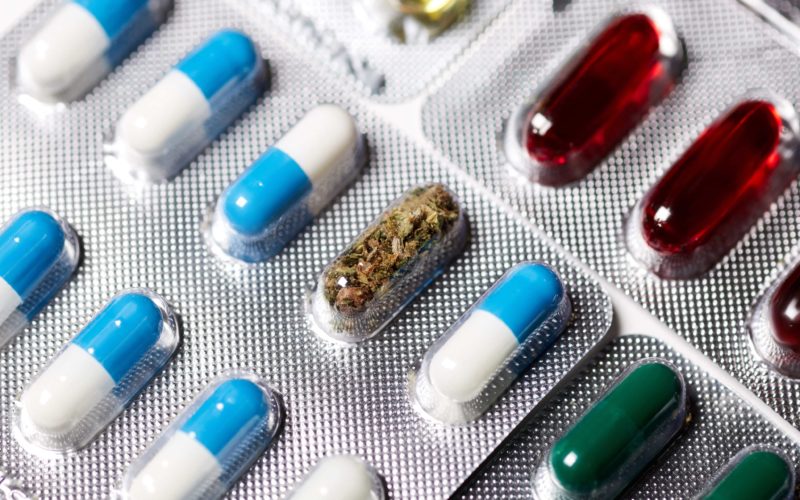
New research shows that legalizing weed will cost the conventional pharmaceutical industry billions of dollars in lost sales and stock value.
Cannabis legalization is projected to cost conventional pharmaceutical companies billions of dollars in reduced drug sales and stock market value, according to a new study by researchers affiliated with California Polytechnic State University and The University of New Mexico.
The researchers studied how the stock market returns of publicly traded pharmaceutical firms responded to laws legalizing medical and recreational cannabis over a 25-year period between 1996 and 2019. They found that stock market returns were 1.5% to 2% lower 10 days after a cannabis legalization event and that the implications of the reduction were in the billions of dollars. Returns decreased in response to both medical and recreational legalization, for both generic and name brand drug manufacturers. The authors estimate that investors anticipate a single legalization event to reduce drugmaker annual sales by an average of $3 billion.
“Using a data set and estimation approach novel to health policy, we find evidence that investors predict legal cannabis access will significantly decrease sales of conventional pharmaceutical drugs. Legal cannabis applies competitive pressure to both generic and brand drug markets, across both classes of drugmakers,” the authors of the study wrote. “This makes legal cannabis distinct from typical brand drug patent expiration and generic drug entry where typically only one drug, the drug coming off patent, and its substitutes are affected. Furthermore, cannabis can be purchased without a prescription and home cultivated, unlike any other conventional medication.”
Cannabis as a Substitute for Pharmaceuticals
In their report, the researchers note that previous studies have shown that access to legal cannabis reduces the consumption of certain pharmaceutical drugs, including highly addictive opioids. Additionally, other research has shown that legalizing marijuana reduces the consumption of other drugs among specific patient populations, such as Medicaid recipients.
Marijuana legalization is also likely to impact pharmaceutical companies because of the vast number of conditions it can be used to treat. Unlike conventional medications, which are developed and approved to treat specific ailments, patients use cannabis to treat a range of physical symptoms such as pain and muscle spasms, as well as mental health conditions including anxiety, depression, and PTSD.
The high cost of pharmaceuticals is also cited by the authors as a factor in the financial impact cannabis legalization measures have on conventional pharmaceutical companies. As legalization measures take hold, cannabis can potentially help alleviate the barrier that high drug costs pose to healthcare access and reduce the fiscal burden on state and federal governments.
The researchers determined through the study that cannabis is becoming a significant new competitor in drug markets and estimate that full federal legalization will result in a reduction in conventional pharmaceutical sales of nearly 11%. Study co-author Sarah Stith of the University of New Mexico’s Economics department adds that consumers’ migration away from pharmaceutical drugs toward cannabis continues to grow despite standardization, health insurance coverage or clear dosing instructions.
“Currently, cannabis patients and their providers have little information to guide them towards the most effective treatment for their condition,” said Stith. “The future of cannabis medicine lies in understanding the prevalence and effects of the plants’ components beyond THC and CBD and identifying ways to categorize cannabis by measurable characteristics that are known to yield specific effects. Mimicking conventional pharmaceuticals through standardization may not be the optimal endpoint for cannabis, as the variability inherent in the cannabis plant is likely driving its ability to treat so many conditions.”
In addition to their overall findings that cannabis legalization decreases the stock market value of publicly traded pharmaceutical firms, the authors found that legalizing recreational marijuana had more than twice the impact of medical cannabis legalization, likely because they affect more people and create a larger new market. Manufacturers of brand-name drugs were affected more than generic drugmakers.
In their conclusion, the authors note that conventional pharmaceutical manufacturers can likely benefit more by investing in regulated cannabis markets rather than lobbying against efforts to expand marijuana legalization. They also recommend that cannabis regulatory policy should support research into the risks and benefits of both medical and recreational cannabis.
The study, “U.S. Cannabis Laws Projected to Cost Generic and Brand Pharmaceutical Firms Billions,” was published on Wednesday in the journal PLOS One.
Source: https://hightimes.com/business/legal-weed-likely-to-cost-drug-companies-billions/











Business
A Tipping Point for Cannabis: President Trump Champions CBD & Cannabis Science on Truth Social


When the President of the United States shares a video about the life changing potential of hemp derived CBD on his personal social media platform, it is more than news, it is a cultural shift.
For decades our government lied to us about cannabis. It demonized the plant, waged war on its users, and filled prisons while allowing pharmaceutical companies to flood the nation with addictive and deadly drugs. For over a century we have been fighting uphill, not just for legalization, but for truth, for science, and for the right to heal ourselves naturally.
Now in 2025, the most powerful political figure on Earth is using his own voice and platform to talk about the endocannabinoid system and the science backed benefits of CBD. That is monumental. It is validation for everyone who has fought, been arrested, been silenced, and been dismissed for telling this truth. The President’s video post is already being described as a pivotal moment in cannabis history, and President Trump CBD Cannabis Science Truth Social is trending across platforms as advocates celebrate the breakthrough.
The Science Behind the Endocannabinoid System
The video begins by introducing something most people, including many doctors, still know little about, the endocannabinoid system. Discovered in the 1990s, the ECS is a network of receptors and signaling molecules that works as the body’s master regulator, coordinating communication between major systems like the nervous, immune, cardiovascular, and digestive systems.
The roots of this discovery go back much further. CBD was first isolated in 1940 by American chemist Roger Adams, but it was Dr. Raphael Mechoulam, an Israeli organic chemist, who fully elucidated the chemical structure of CBD and identified its stereochemistry in the 1960s. His pioneering work not only opened the door to modern cannabinoid science but also earned him the title “Godfather of Cannabis Research.” It was this foundation that led to the identification of the endocannabinoid system itself decades later, revealing how cannabinoids interact with our physiology on a fundamental level.
The ECS is now widely recognized as a vital part of human biology, with extensive research supported by the National Institutes of Health. When functioning properly, the ECS acts like the conductor of an orchestra, ensuring every section plays in harmony. As we age, the system weakens. That imbalance is linked to inflammation, chronic pain, cognitive decline, sleep problems, and many other conditions associated with aging.
Mainstream medicine often addresses these issues with pharmaceutical band aids, dangerous and addictive drugs that treat symptoms rather than root causes. Lifestyle changes such as diet and exercise help, but they only partially support the ECS and do so slowly over time.
Hemp Derived CBD: A Game Changer for Aging
Here is where the science gets exciting. As the video explains, the ECS can be restored much more quickly with hemp derived CBD. Strengthening this system naturally helps the body regain balance, reducing pain, improving sleep, lowering stress, slowing disease progression, and even extending healthy lifespan.
It is not theoretical. One in five seniors is already using CBD to manage pain, arthritis, cancer symptoms, sleep disorders, Alzheimer’s, and more. Despite decades of research and acknowledgment from institutions like the National Institutes of Health, most physicians receive no training on the ECS. There are still no FDA standards for CBD products on the market. If that were the case for any other class of medicine, it would be considered malpractice.
The World Health Organization has confirmed CBD’s excellent safety profile and non addictive nature in its critical review report. The result is that millions of older Americans are suffering unnecessarily when a safe and natural solution exists.
Hemp derived CBD is a powerful first step in restoring balance to the endocannabinoid system, but it is only part of the picture. Research shows that full spectrum cannabis extracts, which include a broader range of cannabinoids and terpenes, can work even more effectively. Complete concentrated cannabis oil, containing the full spectrum of natural endocannabinoids, may deliver the most profound results for certain patients. Expanding access to these therapies will be essential if we want to unlock the full healing potential of this plant.
The Economic and Social Impact
The video cites a powerful figure. A PricewaterhouseCoopers analysis estimates that fully integrating cannabis into the healthcare system could save the United States nearly 64 billion dollars annually. These savings reflect reduced pharmaceutical dependency, fewer hospitalizations, improved chronic disease outcomes, and enhanced quality of life for aging Americans. You can read more about PwC’s research on healthcare innovation here.
It is a financial argument, but it is also a moral one. Why should our elders endure pain, anxiety, and cognitive decline when nature has given us tools to help them live longer, happier, and healthier lives?
A Call to Action: Finish What the Farm Bill Started
The message concludes by crediting the 2018 Farm Bill, championed by President Trump, for legalizing hemp and laying the groundwork for today’s CBD market. The Farm Bill was just the first step.
Now the call is for bold next moves.
- Educate doctors about the endocannabinoid system
- Include CBD under Medicare coverage
- Provide clear federal standards for CBD quality and dosing
These steps would constitute the most significant senior health reform in modern history, one that would transform aging and cement a powerful legacy for any administration that makes it happen.
What This Means for Future Cannabis Medicine
For those of us who have been in the cannabis community for decades, this is not just another news story. It is a signal that our movement is winning. A conversation that was once criminalized and censored is now being amplified by the President of the United States on his own platform.
It means the science is undeniable. It means the truth can no longer be buried. It means the wall of prohibition is cracking, not just legally, but culturally, scientifically, and politically.
It also means that everything we have been fighting for at 420 Magazine since 1993, education, access, healing, and justice, is finally moving full steam ahead. The President Trump CBD Cannabis Science Truth Social moment is proof that science and policy are finally converging.

New Mexico regulators fined a cannabis operator nearly $300,000 and revoked its license after the company allegedly created fake reports in the state’s traceability software.
The New Mexico Cannabis Control Division (CCD) accused marijuana manufacturer and retailer Golden Roots of 11 violations, according to Albuquerque Business First.
Golden Roots operates the The Cannabis Revolution Dispensary.
The majority of the violations are related to the Albuquerque company’s improper use of BioTrack, which has been New Mexico’s track-and-trace vendor since 2015.
The CCD alleges Golden Roots reported marijuana production only two months after it had received its vertically integrated license, according to Albuquerque Business First.
Because cannabis takes longer than two months to be cultivated, the CCD was suspicious of the report.
After inspecting the company’s premises, the CCD alleged Golden Roots reported cultivation, transportation and sales in BioTrack but wasn’t able to provide officers who inspected the site evidence that the operator was cultivating cannabis.
In April, the CCD revoked Golden Roots’ license and issued a $10,000 fine, according to the news outlet.
The company requested a hearing, which the regulator scheduled for Sept. 1.
At the hearing, the CCD testified that the company’s dried-cannabis weights in BioTrack were suspicious because they didn’t seem to accurately reflect how much weight marijuana loses as it dries.
Company employees also poorly accounted for why they were making adjustments in the system of up to 24 pounds of cannabis, making comments such as “bad” or “mistake” in the software, Albuquerque Business First reported.
Golden Roots was fined $298,972.05 – the amount regulators allege the company made selling products that weren’t properly accounted for in BioTrack.
The CCD has been cracking down on cannabis operators accused of selling products procured from out-of-state or not grown legally:
- Regulators alleged in August that Albuquerque dispensary Sawmill Sweet Leaf sold out-of-state products and didn’t have a license for extraction.
- Paradise Exotics Distro lost its license in July after regulators alleged the company sold products made in California.
Golden Roots was the first alleged rulebreaker in New Mexico to be asked to pay a large fine.
Source: https://mjbizdaily.com/new-mexico-cannabis-operator-fined-loses-license-for-alleged-biotrack-fraud/

Four marijuana companies, including a multistate operator, have filed a lawsuit against U.S. Attorney General Merrick Garland in which they allege the federal MJ prohibition under the Controlled Substances Act is no longer constitutional.
According to the complaint, filed Thursday in U.S. District Court in Massachusetts, retailer Canna Provisions, Treevit delivery service CEO Gyasi Sellers, cultivator Wiseacre Farm and MSO Verano Holdings Corp. are all harmed by “the federal government’s unconstitutional ban on cultivating, manufacturing, distributing, or possessing intrastate marijuana.”
Verano is headquartered in Chicago but has operations in Massachusetts; the other three operators are based in Massachusetts.
The lawsuit seeks a ruling that the “Controlled Substances Act is unconstitutional as applied to the intrastate cultivation, manufacture, possession, and distribution of marijuana pursuant to state law.”
The companies want the case to go before the U.S. Supreme Court.
They hired prominent law firm Boies Schiller Flexner to represent them.
The New York-based firm’s principal is David Boies, whose former clients include Microsoft, former presidential candidate Al Gore and Elizabeth Holmes’ disgraced startup Theranos.
Similar challenges to the federal Controlled Substances Act (CSA) have failed.
One such challenge led to a landmark Supreme Court decision in 2005.
In Gonzalez vs. Raich, the highest court in the United States ruled in a 6-3 decision that the commerce clause of the U.S. Constitution gave Congress the power to outlaw marijuana federally, even though state laws allow the cultivation and sale of cannabis.
In the 18 years since that ruling, 23 states and the District of Columbia have legalized adult-use marijuana and the federal government has allowed a multibillion-dollar cannabis industry to thrive.
Since both Congress and the U.S. Department of Justice, currently headed by Garland, have declined to intervene in state-licensed marijuana markets, the key facts that led to the Supreme Court’s 2005 ruling “no longer apply,” Boies said in a statement Thursday.
“The Supreme Court has since made clear that the federal government lacks the authority to regulate purely intrastate commerce,” Boies said.
“Moreover, the facts on which those precedents are based are no longer true.”
Verano President Darren Weiss said in a statement the company is “prepared to bring this case all the way to the Supreme Court in order to align federal law with how Congress has acted for years.”
While the Biden administration’s push to reschedule marijuana would help solve marijuana operators’ federal tax woes, neither rescheduling nor modest Congressional reforms such as the SAFER Banking Act “solve the fundamental issue,” Weiss added.
“The application of the CSA to lawful state-run cannabis business is an unconstitutional overreach on state sovereignty that has led to decades of harm, failed businesses, lost jobs, and unsafe working conditions.”
-
 Business3 years ago
Pot Odor Does Not Justify Probable Cause for Vehicle Searches, Minnesota Court Affirms
-
 Business3 years ago
New Mexico cannabis operator fined, loses license for alleged BioTrack fraud
-
 Business3 years ago
Alabama to make another attempt Dec. 1 to award medical cannabis licenses
-
 Business3 years ago
Washington State Pays Out $9.4 Million in Refunds Relating to Drug Convictions
-
 Business3 years ago
Marijuana companies suing US attorney general in federal prohibition challenge
-

 Business3 years ago
Legal Marijuana Handed A Nothing Burger From NY State
-

 Business3 years ago
Can Cannabis Help Seasonal Depression
-

 Blogs3 years ago
Cannabis Art Is Flourishing On Etsy