
Drug Enforcement & Policy
Kerala Police, ED Join Hands to Trace Drug Money Networks and Target Financial Syndicates


In a major step toward dismantling organised crime financing, Kerala Police are set to collaborate with the Enforcement Directorate (ED) to trace and disrupt financial networks linked to narcotics trafficking. The initiative focuses on identifying and targeting the economic infrastructure that sustains drug syndicates, including laundering channels, shell companies, and benami assets.
Officials say the move represents a strategic shift from conventional street-level enforcement toward a broader financial intelligence-driven approach aimed at weakening organised crime at its source.
Focus Shifts to Financial Backbone of Drug Trade
Law enforcement agencies in Kerala are increasingly prioritising the financial dimensions of drug-related crime. Investigators are now examining not only trafficking operations but also the monetary systems that enable them to function.
Authorities plan to track:
- Suspicious banking transactions
- Real estate investments linked to illicit proceeds
- Shell companies used to hide ownership
- Cross-border financial movements
- Digital payment and cryptocurrency flows
Officials believe that dismantling these financial pipelines is critical to disrupting long-term organised drug networks.
Joint Intelligence Sharing Between Police and ED
Under the proposed coordination framework, Kerala Police and the ED will exchange intelligence related to suspicious financial activity, asset ownership, and money laundering patterns tied to narcotics cases.
The collaboration is expected to include:
- Forensic analysis of bank records
- Identification of layered or structured transactions
- Tracing of property acquisitions linked to drug proceeds
- Attachment and seizure of suspected illegal assets
Investigators will also examine the role of intermediaries and front entities allegedly used to conceal ownership and move illicit funds across jurisdictions.
Targeting the Entire Criminal Ecosystem
Officials stated that the objective of the initiative is to identify and dismantle the full ecosystem supporting drug trafficking networks, including suppliers, transport facilitators, financial operators, and laundering intermediaries.
Across India, enforcement agencies are increasingly adopting a “follow the money” strategy, which prioritises financial disruption over arrests alone. This approach is aimed at weakening the operational capacity of organised crime groups by cutting off funding channels.
Intensified Financial Surveillance and Asset Tracking
The partnership is expected to strengthen financial monitoring mechanisms for narcotics-related investigations. Authorities plan to use advanced digital forensics, banking analytics, and inter-agency coordination to detect unusual financial patterns associated with criminal activity.
Key focus areas include:
- Monitoring of high-value and suspicious transactions
- Tracking of asset ownership trails
- Identification of unexplained wealth accumulation
- Cross-referencing of financial data across agencies
Officials believe enhanced surveillance will help uncover hidden links between drug trafficking operations and financial networks.
A Broader Push Against Organised Crime Financing
The initiative reflects a wider national trend of integrating financial intelligence into crime investigations. By combining the expertise of state police and central financial enforcement agencies, authorities aim to strengthen their ability to combat sophisticated criminal syndicates operating across state and international borders.
Experts say such coordinated efforts are increasingly necessary as criminal groups adopt more complex methods to conceal profits, including digital currencies and layered financial systems.
Conclusion
The Kerala Police–ED collaboration marks a significant escalation in efforts to combat organised drug networks by targeting their financial foundations. By focusing on money trails, asset flows, and laundering mechanisms, authorities aim to weaken the economic structures that sustain narcotics trafficking and related criminal enterprises.







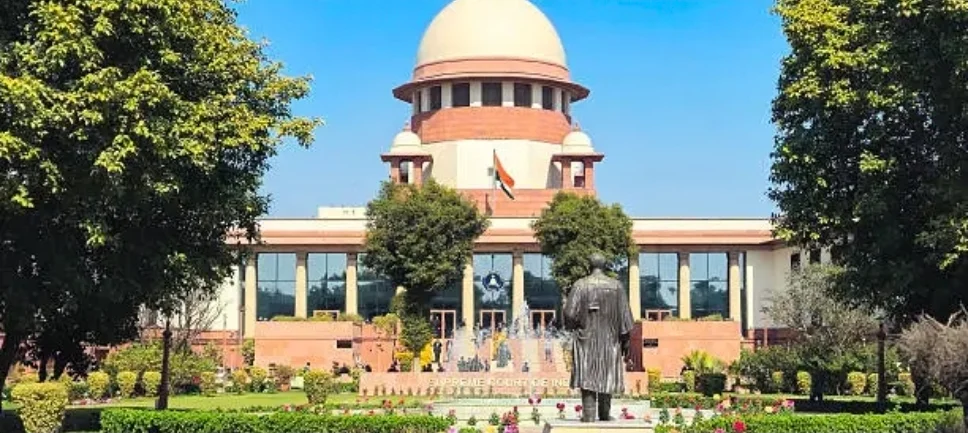
The Supreme Court of India has questioned the sharp difference between the prices at which medicines reach retailers and the maximum retail prices charged to patients, particularly in corporate hospitals.
During a hearing on September 29, a bench of Justices Vikram Nath and Sandeep Mehta examined whether a uniform limit of 16% could be applied to medicine margins. The discussion followed the court’s earlier concern over a cancer medicine with a retailer price of about ₹2,700–₹3,000 but an MRP of ₹27,000.
Court Questions Wide Gap Between Retail Price and MRP
The Supreme Court focused on how such large differences between the Price to Retailer (PTR) and MRP can affect patients who have little choice over where they obtain medicines during hospital treatment.
The bench questioned why different pricing rules should apply to essential and non-essential medicines and asked whether a common 16% margin could be considered across pharmaceutical products. The issue remains under consideration and the court has not imposed such a cap at this stage.
Concerns Over In-House Hospital Pharmacies
The court also examined the purchasing practices of corporate hospitals.
According to the proceedings, patients admitted to some hospitals may be directed to obtain medicines from the facility’s own pharmacy. The bench raised concerns about situations in which hospitals may not accept medicines purchased from outside pharmacies or may decline to provide treatment assurances when patients bring their own drugs.
The issue becomes particularly significant for patients undergoing expensive or long-term treatments, where medicine costs can represent a substantial part of the overall bill.
Impact on Government Health Schemes
The Supreme Court also highlighted the potential effect of high medicine prices on publicly funded healthcare programmes.
Where treatment is reimbursed under government schemes, the court noted that taxpayers ultimately finance the medical expenses. If reimbursement is calculated using substantially inflated MRPs, the difference between procurement costs and the amount reimbursed could increase public expenditure.
The bench also pointed to a consumer-trust problem. If a medicine officially carries an MRP of ₹27,000 but a pharmacy offers it for around ₹3,000, patients may question whether the cheaper medicine is genuine.
Government Seeks Time to Examine the Issue
Solicitor General Tushar Mehta, appearing for the Centre, told the court that the government would need to work out a balanced approach.
The government has been asked to examine the issue with relevant officials before responding further. The court granted additional time for consultations rather than immediately introducing a new pricing rule.
The proceedings are part of a broader case concerning medicine pricing, generic prescriptions and regulation of medical costs. The Supreme Court’s official website lists Justice Vikram Nath and Justice Sandeep Mehta as sitting together in Court No. 2 on September 29, 2026.
Court’s Earlier Warning on Medicine Pricing
The latest hearing follows strong observations made by the Supreme Court earlier in September after it examined the pricing of cancer medicines.
The bench had highlighted an example where a medicine costing roughly ₹2,700 at the retailer level carried an MRP of ₹27,000. The court questioned how such a substantial price difference could be justified when patients are dependent on life-saving medicines.
The court also heard arguments that pharmaceutical manufacturers may not necessarily retain the entire difference between the retailer price and the final amount charged to patients, with significant margins potentially arising at later stages of the supply chain, including retail and hospital sales.
What Happens Next?
The Supreme Court has not yet ordered a nationwide 16% medicine-margin cap. Instead, it has asked the government to consider possible regulatory solutions and return with its response.
The matter is scheduled for further hearing on October 12, when the court is expected to consider the government’s position on medicine pricing and related issues.
Any eventual regulatory change could have implications for patients, hospitals, pharmacies, pharmaceutical companies and government-funded healthcare programmes. For now, the 16% figure remains a proposal raised during the court proceedings rather than an operative rule.
-

 Business3 years ago
Pot Odor Does Not Justify Probable Cause for Vehicle Searches, Minnesota Court Affirms
-

 Business3 years ago
New Mexico cannabis operator fined, loses license for alleged BioTrack fraud
-
 Business3 years ago
Alabama to make another attempt Dec. 1 to award medical cannabis licenses
-

 Business3 years ago
Washington State Pays Out $9.4 Million in Refunds Relating to Drug Convictions
-

 Business3 years ago
Marijuana companies suing US attorney general in federal prohibition challenge
-

 Business3 years ago
Legal Marijuana Handed A Nothing Burger From NY State
-

 Business3 years ago
Can Cannabis Help Seasonal Depression
-

 Blogs3 years ago
Cannabis Art Is Flourishing On Etsy