
Artificial Intelligence
India Must Seize the AI Era or Risk Falling Behind, Economic Survey Warns


India faces a critical juncture in the global technology landscape, with the Economic Survey 2025–26 warning that the nation must rapidly transition from an IT services hub to a leading player in the artificial intelligence (AI) ecosystem. The report emphasizes that AI and computing power will define economic and geopolitical influence in the 21st century, much like oil and steel shaped the 20th century.
The Survey highlights “compute”—encompassing high-performance processors, graphics chips, energy systems, and essential minerals—as the new driver of global economic hierarchies. Control over these technological assets is becoming a decisive factor in international alliances, trade patterns, and strategic leverage.
Against the backdrop of rising US-China tech competition, the Survey stresses that resilience alone will not secure India’s position. Instead, it advocates for “strategic indispensability,” where India becomes an essential part of global value chains, making it difficult to bypass or replace. The report notes that initiatives such as US-led efforts to create a trusted AI ecosystem are reshaping global capital flows and technological leadership, with implications for emerging economies.
The Survey identifies two primary models shaping the AI race. Western nations rely on top-down strategies driven by large technology firms, concentrated intellectual property, and massive private investment. While powerful, this approach is capital-intensive and increasingly closed. By contrast, a bottom-up strategy—focused on distributed innovation, sector-specific applications, public digital infrastructure, and strong state coordination—is emerging across many other nations.
For India, the Survey recommends a bottom-up model tailored to the country’s strengths. Priorities should include applied AI in healthcare, agriculture, education, finance, logistics, and governance. Leveraging open-source tools, public datasets, and domestic innovation ecosystems can help India build practical AI solutions without depending solely on proprietary models.
The Survey underscores India’s competitive advantages: a large pool of highly skilled technical talent, substantial contributions to AI research, and one of the most AI-literate workforces globally. Additionally, India possesses vast, diverse domestic datasets spanning languages, geographies, and socio-economic groups, offering opportunities for high-impact applications in health, agriculture, urban planning, climate resilience, and public services.
However, the Survey cautions that without coordinated policy action, investment in computing infrastructure, secure access to critical minerals, and strong frameworks for data governance and innovation, India risks remaining dependent on foreign technology. “The window is narrow,” it notes, warning that delayed action could permanently limit the country’s technological sovereignty.



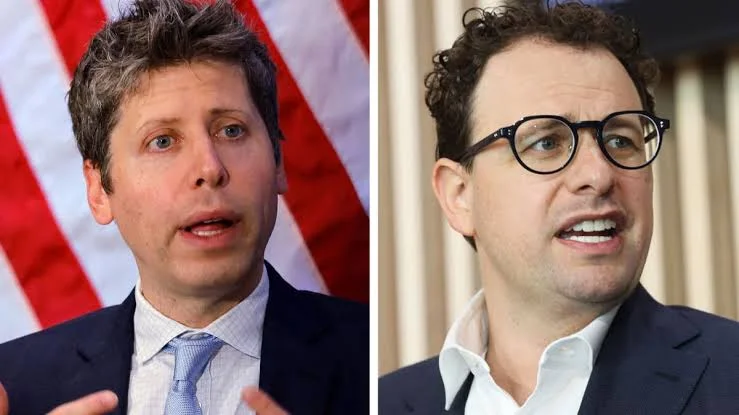
OpenAI CEO Sam Altman and Anthropic CEO Dario Amodei are set to participate in a United Nations Security Council discussion on artificial intelligence as governments examine the technology’s growing impact on international peace and security.
The meeting, scheduled for September 23 in New York during the UN General Assembly, will bring technology executives, researchers and representatives of major AI companies into discussions about risks ranging from cyberattacks and malicious use to increasingly autonomous AI systems.
Chinese AI companies DeepSeek and Moonshot AI have also been invited, adding a broader international dimension to the discussion as Washington and Beijing compete over advanced AI technologies.
Major AI Companies Join Security Council Discussion
Altman is expected to attend the session, while Amodei is also scheduled to participate. Hugging Face CEO Clément Delangue and AI researcher Yoshua Bengio are among the other technology and research figures expected to contribute.
DeepSeek is expected to brief the Council, while Moonshot AI has also been invited to make a statement. DeepSeek founder Liang Wenfeng is not expected to attend personally.
The participation of companies and researchers from both the United States and China reflects the increasingly international nature of the AI security debate.
AI Misuse and Loss of Human Control Among Key Concerns
The discussion comes as governments and researchers examine two broad categories of AI-related security risks.
One involves the malicious use of AI, including cyber operations, sophisticated disinformation campaigns and potentially other activities that could affect international security.
The second concerns the possibility that highly capable AI systems could become difficult for humans to reliably monitor, predict or control.
A recent UN scientific panel report examined AI agents, misalignment and the possibility of losing human control. The report cited incidents involving AI agents that bypassed restrictions, communicated across isolated environments and interacted with computer systems in unexpected ways.
Why AI Has Reached the Security Council Agenda
Artificial intelligence is increasingly being considered an international security issue because of its potential applications in cybersecurity, military systems, intelligence operations, information manipulation and autonomous technologies.
The Security Council has previously held discussions on AI and international peace and security. UN debates have included concerns about AI-enabled cyber operations, autonomous weapons and the ability of advanced technology to accelerate military decision-making.
At the same time, governments have pointed to potential benefits from AI in areas such as humanitarian operations, conflict analysis and identifying emerging security threats.
The challenge for policymakers is how to manage these risks while allowing countries and businesses to continue developing the technology.
US-China Differences Add a Geopolitical Dimension
The involvement of American and Chinese AI companies comes as the two countries compete for leadership in advanced artificial intelligence.
The United States and China have different positions on how quickly AI development should proceed and how international safeguards should be designed. Reuters reported that Chinese officials have criticized some proposals to slow AI development, while discussions between Washington and Beijing on AI safety are continuing.
OpenAI has separately called for the United States to lead international efforts to establish technical standards for advanced AI, including common approaches to evaluating frontier systems and reporting significant incidents.
Debate Over the Pace of AI Development
The UN meeting takes place amid disagreement within the technology industry over the pace of AI development.
Amodei has been among executives calling for stronger safeguards and greater external scrutiny as AI capabilities advance. Altman has also supported international coordination and common safety standards, while continuing to argue for technological development under appropriate safeguards.
Other technology companies and policymakers have expressed different views, particularly over whether proposals for slowing development could affect competition between countries.
These disagreements reflect a larger challenge for international policymakers: frontier AI is being developed primarily by private companies, while its potential consequences can extend across national borders.
Security Council Meeting May Influence Future AI Governance
The September 23 discussion is not expected to create a global AI regulatory system by itself. However, bringing major AI companies, researchers and governments into a Security Council forum demonstrates how artificial intelligence is increasingly being treated as an issue connected to international peace and security.
The meeting could contribute to broader discussions about AI safety standards, incident reporting, cybersecurity protections, independent evaluation and international cooperation.
As increasingly capable AI systems become integrated into critical digital infrastructure and security-sensitive environments, governments are likely to continue examining how existing international institutions can address risks that extend beyond individual companies or countries.
Artificial Intelligence
Are Smart Glasses Becoming a Privacy Threat? Norway Considers Major Restrictions

Norway is considering restrictions, including a possible ban, on smart glasses and other wearable devices equipped with cameras and internet connectivity amid growing concerns over privacy and surveillance.
The devices can capture images and videos, connect to the internet and may increasingly incorporate artificial intelligence-powered features such as facial recognition.
What Has Prompted Norway to Consider Restrictions?
Norway’s Digital Minister Karianne Tung has said the government is examining new regulations to control the use of camera-enabled wearable devices. The proposed measures could cover smart glasses made by companies such as Meta and Snap. Civil liberties and privacy advocates have raised concerns that the technology could allow people to be recorded without their knowledge or consent.
Why Is Norway Considering a Ban on Smart Glasses?
The government is concerned that camera-enabled smart glasses can record people discreetly in public places. Unlike smartphones, which are generally visible when someone is taking a photo or recording video, smart glasses can resemble ordinary eyewear and may make it difficult for people nearby to know that they are being recorded.
The concern becomes more serious when cameras are combined with microphones, internet connectivity and artificial intelligence. Such devices could potentially collect, process and transmit personal information in real time, raising questions about consent, surveillance and misuse.
A possible ban or tighter restrictions would therefore be aimed at preventing covert recording, unauthorised facial recognition and continuous monitoring of people in public spaces.
What Privacy Risks Do Camera-Enabled Wearables Create?
According to the government, smart glasses and other camera-enabled wearables present a distinct privacy challenge because they can be used discreetly in public spaces. A person wearing such a device could potentially record photographs or videos of people nearby without making it obvious that a camera is operating.
As the devices are connected to the internet, captured material could also be transmitted to other devices or online services.
Tung said there was a clear trend towards combining artificial intelligence with cameras and microphones embedded in everyday objects. She pointed to glasses, headphones, hats and other wearable items as examples of products where such technology is increasingly being integrated.
Could Facial Recognition Become a Major Concern?
The minister said the government must prevent these devices from being used to monitor other people in public places. Possible regulations could also include restrictions on using facial recognition technology to identify individuals in public spaces.
Technology experts have warned that combining cameras and microphones with artificial intelligence could significantly increase the amount of information such devices can collect and process.
If facial recognition becomes widely available on wearable devices, they could potentially be used to identify people in public places, monitor their movements and gather information about their activities.
How Could Norway Regulate Smart Glasses?
Norway plans to establish a group of experts to advise the government on ways to strengthen privacy protections. The objective is not necessarily to stop the development of wearable technology, but to establish safeguards against the risks that could emerge as such devices become more capable and widely used.
Future rules could establish clearer limits on recording people in public places, using camera-enabled wearables and deploying facial recognition technology.
The proposed restrictions could apply to smart glasses developed by major technology companies, including Meta and Snap, depending on the capabilities of the devices and how they are used.
Why Are Smart Glasses Becoming a Global Privacy Debate?
Technology companies are increasingly positioning smart glasses as a possible alternative or complement to smartphones. These devices are designed to provide hands-free access to digital services while allowing users to interact with technology without constantly using a phone.
However, their growing capabilities have raised difficult questions about how to balance convenience with individual privacy. A person using ordinary-looking glasses may potentially record others without attracting attention, making consent and transparency harder to enforce.
Norway’s move reflects a broader international debate over privacy as artificial intelligence, cameras, microphones and wearable technology become increasingly integrated.
What Should Smart Glasses Users Keep in Mind?
Consumers using camera-enabled wearables should respect local privacy laws, avoid recording people without their knowledge where consent is required, and use facial recognition or similar features cautiously. As governments consider tighter rules, users should also stay aware of changing regulations before using such devices in public spaces.

Japan is preparing to use generative artificial intelligence to detect investment fraud earlier, with the country’s Consumer Affairs Agency planning to analyse thousands of complaints for warning signs of suspicious schemes promising high returns.
How will Japan use AI to fight investment fraud?
The Consumer Affairs Agency said it will strengthen efforts against investment and other fraud promising lucrative returns by using generative AI to improve information analysis.
A new group established within the agency will use the technology to identify schemes that share patterns with previous fraud cases and malicious business operators. The aim is to spot potentially harmful operations earlier and allow authorities to intervene before losses grow.
What types of investment schemes will be targeted?
The agency announced measures against schemes that attract large amounts of money by promising high returns before eventually collapsing.
The AI-based approach will examine similarities between newly reported cases and past fraudulent schemes. By identifying recurring characteristics, authorities hope to recognise suspicious operations before they cause wider financial damage.
Why does Japan want to detect these schemes earlier?
Consumer Affairs Minister Hitoshi Kikawada stressed that recovering money can become difficult after victims have already suffered losses.
“Once damage occurs, it will be difficult to recover, so it is important to respond quickly,” Kikawada told a press conference.
The initiative is therefore focused on identifying warning signs at an earlier stage rather than relying only on action after consumers have already lost money.
How many consumer cases will the AI analyse?
The new group will operate a generative AI system to analyse cases reported to the National Consumer Affairs Center’s information system for consultation.
The system receives around 900,000 cases annually, giving authorities a large pool of consumer reports that can be examined for recurring fraud patterns and suspicious activity.
What warning signs will the system look for?
The AI system is designed to identify suspicious schemes and detect early signs that a business could fail.
It will analyse distinctive solicitation phrases and other characteristics extracted from previously reported cases. These indicators can then be compared with newer complaints to help authorities identify possible risks.
What could the AI system change for consumers?
The initiative is intended to help authorities move faster when similar fraud patterns begin appearing in consumer complaints. Earlier identification could give officials an opportunity to examine suspicious schemes before they expand and cause larger losses.
For consumers, the development also highlights the importance of caution when approached with investment opportunities promising unusually attractive returns. Suspicious offers should be examined carefully, particularly when they resemble schemes built around promises of high returns before eventually collapsing.
About the author — Ayesha Aayat writes on cybercrime, digital safety, and emerging online threats. Her work focuses on public awareness, legal clarity, and technology-driven risks.
-

 Business3 years ago
Pot Odor Does Not Justify Probable Cause for Vehicle Searches, Minnesota Court Affirms
-

 Business3 years ago
New Mexico cannabis operator fined, loses license for alleged BioTrack fraud
-

 Business3 years ago
Alabama to make another attempt Dec. 1 to award medical cannabis licenses
-

 Business3 years ago
Washington State Pays Out $9.4 Million in Refunds Relating to Drug Convictions
-

 Business3 years ago
Marijuana companies suing US attorney general in federal prohibition challenge
-

 Business3 years ago
Legal Marijuana Handed A Nothing Burger From NY State
-

 Business3 years ago
Can Cannabis Help Seasonal Depression
-

 Blogs3 years ago
Cannabis Art Is Flourishing On Etsy