
Financial Fraud
ED Attaches Assets Worth ₹38.21 Crore in Chhattisgarh Liquor Scam Linked to Senior IAS Officer


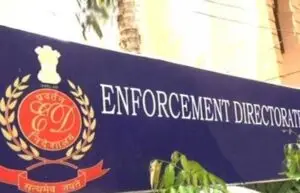
The Enforcement Directorate (ED) has provisionally attached assets worth ₹38.21 crore in connection with the ongoing Chhattisgarh liquor scam. The action targets senior IAS officer Niranjan Das (former Excise Commissioner) and 30 other excise officials, under the Prevention of Money Laundering Act (PMLA), 2002.
Scope of Attachments
- Immovable assets: ₹21.64 crore
- 78 properties, including luxury bungalows, premium flats, commercial shops, high-end complexes, and large agricultural land parcels.
- Movable assets: ₹16.56 crore
- 197 items such as fixed deposits, bank balances, life insurance policies, and diversified investment portfolios.
Investigators allege that these assets were acquired through illegal commissions, bribery, and manipulation of the state’s liquor procurement and distribution system.
Alleged Parallel Excise System
The ED claims that Niranjan Das and Arun Pati Tripathi (then CEO of CSMCL) ran a parallel excise network that bypassed official oversight. Key methods included:
- Use of fake holograms and illegal bottle types
- Direct supply from distilleries to retail shops, bypassing state warehouses
- Active collusion from excise officers ensuring smooth storage and sales of illicit liquor
Systematic Pay-offs
Investigators allege a structured monthly commission system:
- Niranjan Das: Allegedly received up to ₹50 lakh per month, totaling over ₹18 crore in illegal gains.
- Other 30 officers: Estimated combined illegal earnings of ₹89.56 crore.
- Funds were reportedly laundered through shell companies, front accounts, and layered investments.
Investigation Background
The ED’s probe follows initial findings by the ACB–EOW, Raipur, under relevant sections of the Indian Penal Code (IPC) and the Prevention of Corruption Act. The case highlights:
- Substantial financial losses to the state exchequer
- Widespread collusion among officials responsible for revenue protection
- Distortion of the legal liquor market and erosion of public trust
Next Steps
The ED has indicated that further actions may include prosecution complaints and additional asset attachments as the investigation progresses.



Business News
What Happened to the Power Plant Funds? ED Probes ₹290 Crore Loan Diversion in Kolkata

The Enforcement Directorate (ED) on Thursday conducted searches at 11 premises in Kolkata linked to Kohinoor Power as part of a money laundering investigation into an alleged ₹290 crore bank loan fraud. The searches were carried out under the Prevention of Money Laundering Act (PMLA) and covered premises linked to the company’s promoters, Prashant Bothra and Vijay Bothra, as well as other directors and auditors.
The agency has alleged that loans obtained from banks to establish a 66 MW power plant in Jharkhand were diverted to other group entities and for personal use instead of being used for the intended project.
How Was the ₹290 Crore Loan Allegedly Diverted?
According to the ED, Kohinoor Power had secured bank financing for setting up the power project in Jharkhand. The funds were meant to be used for establishing the plant and meeting expenses related to the project.
However, the agency has alleged that a portion of the loan amount was transferred to other group companies, while some of the funds were allegedly used for personal purposes.
The ED is now examining the flow of the loan proceeds, including the bank accounts into which the funds were transferred, the companies involved in the transactions and the stated purpose of these financial movements.
Investigators are also trying to determine whether borrowed funds were moved to entities that had no direct connection with the proposed power project.
Why Was Only Around ₹7 Crore Recovered?
Kohinoor Power subsequently faced financial difficulties and entered insolvency proceedings before the National Company Law Tribunal.
Liquidation proceedings were later initiated with the aim of recovering dues from the company’s available assets and resources.
However, according to officials, only around ₹7 crore could be recovered during liquidation, significantly lower than the outstanding bank exposure.
The ED is now examining how the company’s financial position deteriorated, what assets were available before insolvency proceedings began and how much of the borrowed money was allegedly diverted away from the power project.
What Is the ED Looking for in the Kolkata Searches?
Thursday’s searches form part of the agency’s investigation into the alleged diversion of loan proceeds and their subsequent laundering.
Officials are examining financial records, bank documents, business records and other material connected with the transactions. The evidence is expected to help investigators reconstruct the movement of funds and identify financial links between various group entities.
The ED has also searched premises linked to the company’s directors and auditors. Investigators are examining whether other individuals associated with Kohinoor Power played any role in the alleged financial irregularities.
Are Promoters, Directors and Auditors Also Under Scrutiny?
The searches covered premises linked to promoters Prashant Bothra and Vijay Bothra, along with other directors and auditors associated with the company.
Investigators are examining transactions through which the loan proceeds were allegedly transferred to other entities and whether those movements had any legitimate connection with the power project.
The role of individuals involved in the company’s financial management, accounting and movement of funds is also expected to be examined as part of the broader money laundering investigation.
What Happens Next in the ₹290 Crore Loan Probe?
The investigation is now focused on determining how much of the ₹290 crore borrowed from banks was actually used for the 66 MW power project, how much was transferred to other group entities and how much was allegedly used for personal purposes.
The agency is also examining why only around ₹7 crore could eventually be recovered during liquidation despite the much larger loan exposure.
The ED will analyse documents and other evidence gathered during the searches before deciding on further action. If investigators establish evidence of deliberate diversion of loan proceeds and attempts to disguise such transactions as legitimate financial dealings, further proceedings under the PMLA could follow against the individuals and entities concerned.
For now, the probe remains centred on the alleged misuse of the ₹290 crore bank loan, the movement of funds between different entities and the circumstances that resulted in only a fraction of the outstanding amount being recovered during liquidation.

Artificial intelligence is giving cybercriminals new ways to make financial scams appear genuine, from cloned voices and deepfake videos to highly personalised phishing messages and synthetic identities.
Traditional fraud often relied on generic emails, suspicious links or poorly written messages. AI is changing that approach by allowing scammers to create convincing communications tailored to individual victims.
The growing availability of generative AI has also lowered the technical barrier for producing fake audio, video, documents and identities, creating new challenges for consumers, businesses and financial institutions.
What Are AI-Powered Financial Scams?
AI-powered scams use technologies such as machine learning, natural language processing and generative AI to make fraudulent activity more convincing and scalable.
Criminals can use AI to analyse publicly available information and create messages that appear relevant to a particular person. Social media profiles, leaked information and other online data can potentially be used to understand a target’s relationships, interests or professional background.
AI can then help produce personalised messages, realistic conversations and convincing fake content designed to gain a victim’s trust.
The result is a shift from broad, mass-targeted scams toward fraud attempts that can appear specifically designed for one individual.
How Are Cybercriminals Using AI to Target Victims?
One emerging tactic involves AI-powered chatbots and automated systems that can maintain realistic conversations with potential victims.
Voice-cloning technology presents another serious threat. With a relatively small amount of audio, criminals can potentially reproduce characteristics of a person’s voice and use the result in fraudulent phone calls.
A scammer could, for example, impersonate a family member, company executive or other trusted individual and create a sense of urgency before requesting money or sensitive information.
AI can also help criminals process large amounts of stolen or leaked data. Instead of manually researching individual targets, automated systems can potentially identify people who may be more likely to respond to particular types of scams.
This automation allows fraud campaigns to operate on a much larger scale.
What Are the Most Common Types of AI-Driven Fraud?
Several forms of AI-assisted fraud are becoming increasingly prominent.
Deepfake Video Scams
Deepfake technology can be used to create convincing videos that imitate the appearance and voice of another person.
Criminals may attempt to impersonate executives, government officials, financial professionals or even family members to persuade victims to transfer money or reveal confidential information.
AI-Generated Phishing
AI can produce polished and personalised emails, text messages and other communications without the grammatical mistakes traditionally associated with many phishing attempts.
A fraudulent message can potentially reference a person’s workplace, recent activities or other contextual information to make the request appear legitimate.
Voice-Cloning Fraud
Voice cloning can be used to imitate someone familiar to the victim.
Scammers may create fake emergency situations involving relatives or impersonate bank representatives requesting sensitive information such as one-time passwords or account details.
Synthetic Identity Fraud
Synthetic identity fraud combines genuine information with fabricated details to create identities that may appear legitimate.
Such identities can potentially be used to open financial accounts, obtain credit or carry out other fraudulent activities while making it harder for investigators to determine who is behind the operation.
How Convincing Can AI Impersonation Become?
AI-generated audio and video can reproduce characteristics such as a person’s voice, appearance, accent and speaking style with increasing realism.
That makes it possible for scammers to create communications that appear to come from a boss, colleague, family member or financial institution.
The danger increases when the impersonation is combined with pressure.
A victim may receive what appears to be an urgent call from a familiar person asking for an immediate transfer or confidential information. Under pressure, the victim may focus on responding quickly instead of verifying the request.
For this reason, a familiar face or voice should no longer be treated as conclusive proof of someone’s identity when money or sensitive information is involved.
How Can AI Fraud Affect Victims?
The consequences of AI-assisted fraud can extend well beyond the initial financial loss.
Victims may face unauthorised transactions, fraudulent accounts or loans opened using their information, identity-related problems and lengthy efforts to recover money or restore their financial records.
Businesses can also be targeted through executive impersonation and other forms of social engineering. A convincing fake communication appearing to come from a senior employee could potentially persuade staff to make an unauthorised payment or disclose confidential information.
The increasing sophistication of these attacks is also putting pressure on banks and financial institutions to strengthen fraud detection. Behavioural monitoring, transaction analysis and other security systems are increasingly important for identifying unusual activity.
How Can People Recognise an AI-Powered Scam?
AI-generated content can be convincing enough that users should not rely solely on appearance or sound when deciding whether a communication is genuine.
Several warning signs deserve attention:
- An unexpected request for money or sensitive information.
- Pressure to act immediately.
- Requests for OTPs, passwords, PINs or banking credentials.
- Unfamiliar links or attachments.
- A sudden request to change payment details.
- A video or voice call that seems unusual despite appearing authentic.
- Messages that discourage independent verification.
Even professionally written messages can be fraudulent. AI allows criminals to produce polished communications without the obvious spelling and grammar mistakes commonly associated with older phishing campaigns.
When a request involves money, users should independently verify the identity of the sender before taking action.
Real-World AI Fraud Shows the Growing Threat
Cases involving deepfake videos, voice cloning and AI-generated impersonation have demonstrated how criminals can exploit public trust.
Fake videos may be created to imitate public figures and promote fraudulent investment schemes, while cloned voices can be used to manufacture emergencies involving relatives or trusted contacts.
These cases highlight an important change in online fraud: convincing content can now be generated at scale, meaning users can no longer assume that realistic audio or video is genuine simply because it looks and sounds authentic.
How Can People Protect Themselves?
As AI-powered fraud becomes more sophisticated, independent verification is one of the most effective defences.
Users should:
- Verify unexpected requests: Contact the person or organisation through a trusted number or separate communication channel.
- Slow down when faced with urgency: Pressure is a common tactic used to prevent victims from checking a request.
- Never share financial credentials: Do not disclose OTPs, passwords, PINs or banking details to someone who contacts you unexpectedly.
- Treat links and attachments cautiously: Avoid clicking unfamiliar links, even when the message appears professionally written.
- Enable multi-factor authentication: Additional authentication can provide another layer of account protection.
- Limit personal information online: Public social media information can help criminals create more convincing impersonation attempts.
- Monitor financial accounts: Regularly review bank and payment activity for transactions you do not recognise.
- Verify voice and video calls: If someone makes an unusual financial request, contact them separately rather than relying on the original call.
The Biggest Lesson as AI Scams Evolve
The rise of AI-assisted fraud means that traditional warning signs are becoming less reliable. A message can be grammatically perfect, a voice can sound familiar and a video can look authentic while the underlying request is completely fraudulent.
The safest approach is therefore to verify before trusting.
Whenever a communication involves money, account access or confidential information, users should independently confirm the request—even when it appears to come from someone they know.
As artificial intelligence continues to advance, strong security practices, digital awareness and careful verification will become increasingly important tools for protecting personal and financial information.

Japan is preparing to use generative artificial intelligence to detect investment fraud earlier, with the country’s Consumer Affairs Agency planning to analyse thousands of complaints for warning signs of suspicious schemes promising high returns.
How will Japan use AI to fight investment fraud?
The Consumer Affairs Agency said it will strengthen efforts against investment and other fraud promising lucrative returns by using generative AI to improve information analysis.
A new group established within the agency will use the technology to identify schemes that share patterns with previous fraud cases and malicious business operators. The aim is to spot potentially harmful operations earlier and allow authorities to intervene before losses grow.
What types of investment schemes will be targeted?
The agency announced measures against schemes that attract large amounts of money by promising high returns before eventually collapsing.
The AI-based approach will examine similarities between newly reported cases and past fraudulent schemes. By identifying recurring characteristics, authorities hope to recognise suspicious operations before they cause wider financial damage.
Why does Japan want to detect these schemes earlier?
Consumer Affairs Minister Hitoshi Kikawada stressed that recovering money can become difficult after victims have already suffered losses.
“Once damage occurs, it will be difficult to recover, so it is important to respond quickly,” Kikawada told a press conference.
The initiative is therefore focused on identifying warning signs at an earlier stage rather than relying only on action after consumers have already lost money.
How many consumer cases will the AI analyse?
The new group will operate a generative AI system to analyse cases reported to the National Consumer Affairs Center’s information system for consultation.
The system receives around 900,000 cases annually, giving authorities a large pool of consumer reports that can be examined for recurring fraud patterns and suspicious activity.
What warning signs will the system look for?
The AI system is designed to identify suspicious schemes and detect early signs that a business could fail.
It will analyse distinctive solicitation phrases and other characteristics extracted from previously reported cases. These indicators can then be compared with newer complaints to help authorities identify possible risks.
What could the AI system change for consumers?
The initiative is intended to help authorities move faster when similar fraud patterns begin appearing in consumer complaints. Earlier identification could give officials an opportunity to examine suspicious schemes before they expand and cause larger losses.
For consumers, the development also highlights the importance of caution when approached with investment opportunities promising unusually attractive returns. Suspicious offers should be examined carefully, particularly when they resemble schemes built around promises of high returns before eventually collapsing.
About the author — Ayesha Aayat writes on cybercrime, digital safety, and emerging online threats. Her work focuses on public awareness, legal clarity, and technology-driven risks.
-

 Business3 years ago
Pot Odor Does Not Justify Probable Cause for Vehicle Searches, Minnesota Court Affirms
-

 Business3 years ago
New Mexico cannabis operator fined, loses license for alleged BioTrack fraud
-

 Business3 years ago
Alabama to make another attempt Dec. 1 to award medical cannabis licenses
-

 Business3 years ago
Washington State Pays Out $9.4 Million in Refunds Relating to Drug Convictions
-

 Business3 years ago
Marijuana companies suing US attorney general in federal prohibition challenge
-

 Business3 years ago
Legal Marijuana Handed A Nothing Burger From NY State
-

 Business3 years ago
Can Cannabis Help Seasonal Depression
-

 Blogs3 years ago
Cannabis Art Is Flourishing On Etsy