
Consumer Rights
Dark Patterns Cost Indian Online Shoppers ₹28,000 Crore Annually


A new industry report has highlighted a growing consumer protection concern in India’s booming digital economy, revealing that deceptive interface designs known as “dark patterns” may be costing online shoppers nearly ₹28,000 crore every year.
The findings point to a widespread use of manipulative design strategies across e-commerce, travel booking, food delivery, and subscription platforms, raising fresh questions about transparency and ethical practices in the country’s rapidly expanding online marketplace.
How Hidden Design Tricks Increase Consumer Costs
The report explains that many digital platforms structure their user interfaces in ways that subtly influence purchasing decisions. These tactics often lead consumers to unknowingly accept additional charges, subscribe to unwanted services, or miss clearly visible cancellation options.
Commonly observed practices include pre-selected checkboxes, hidden fees revealed only at checkout, misleading urgency timers, and complicated subscription cancellation processes. While not always classified as outright fraud, experts say these methods exploit user behavior to increase spending.
Surge in Digital Consumption Amplifies Impact
With India experiencing a sharp rise in digital transactions and online shopping, the use of such techniques has become more common across multiple sectors. Aggressive promotional messaging, limited-time discounts, and bundled offers often pressure users into making quick decisions without fully reviewing terms and conditions.
Consumer rights advocates warn that even small, unnoticed charges can accumulate into significant financial losses over time, impacting millions of users across the country.
Experts Warn of Psychological Manipulation
Digital safety experts note that dark patterns rely heavily on behavioral psychology, using urgency, confusion, and scarcity cues to influence user choices.
Cybersecurity and fraud specialist former IPS officer Prof. Triveni Singh has described these practices as a form of “psychological manipulation embedded within legitimate platforms,” where users are nudged into financial commitments without full awareness.
He further warned that, if left unchecked, such design strategies could evolve into large-scale systems of consumer exploitation operating under the appearance of legitimate business operations.
Recurring Complaints Over Subscriptions and Refunds
The report also highlights repeated consumer complaints involving automatic subscription renewals, unclear refund policies, and hidden service charges. In several cases, users reportedly found themselves enrolled in paid services without explicit consent after completing free trials or routine transactions.
These issues have intensified concerns about transparency in digital payment ecosystems and the adequacy of existing safeguards.
Regulators Face Growing Pressure to Act
As concerns rise, consumer advocacy groups are urging stronger enforcement of digital consumer protection rules. Some countries have already introduced specific regulations requiring platforms to clearly disclose charges and prohibit misleading interface designs.
In India, calls are growing for updated regulatory frameworks to address these evolving digital practices more effectively. Advocates argue that existing laws need clearer provisions to curb deceptive design patterns and improve accountability among online platforms.
Call for Greater Consumer Awareness
Experts are also advising users to remain cautious while engaging with online platforms, especially when dealing with time-sensitive offers, subscription-based services, and automated payment systems. Careful review of checkout pages, renewal terms, and cancellation policies is strongly recommended.
They emphasize that avoiding impulsive decisions driven by countdown timers or “limited offer” prompts can help reduce the risk of unintended financial losses.
A Growing Challenge in India’s Digital Economy
The report underscores a critical challenge facing India’s expanding digital ecosystem: balancing rapid technological growth with consumer protection. While online platforms continue to drive convenience and economic expansion, concerns around manipulative design practices are becoming increasingly difficult to ignore.
Experts warn that dark patterns are no longer just a design issue but an emerging economic and regulatory challenge requiring urgent attention from policymakers, industry leaders, and consumers alike.













New Delhi – In response to the rising nuisance of unsolicited calls and messages, India’s telecom regulator, the Telecom Regulatory Authority of India (TRAI), has proposed stricter measures to curb spam communications. The framework could make telecom operators financially liable if large volumes of spam or automated promotional calls, commonly called robocalls, originate from their networks.
Proposed Termination Charges for Spam Calls
Under the proposed guidelines, telecom operators may be required to pay a termination fee of five paise per minute for high-volume promotional or robocalls originating outside the designated 1400 or 1600 series numbers. Currently, domestic voice calls within India do not attract such charges. The regulator believes this move will encourage operators to actively monitor and block unauthorized bulk calls.
Penalties for Non-Compliant Promotional SMS
TRAI is also tightening rules for companies sending promotional messages. All headers and message templates must be pre-registered with the regulator. Firms using unregistered templates or misleading headers could face penalties, as such practices can mislead consumers and increase the risk of fraudulent communications.
Surge in Consumer Complaints
The number of complaints related to spam calls and messages has grown significantly in recent years. Many users report receiving multiple unsolicited calls daily. Some of these calls are used in scams, where fraudsters impersonate banks, insurance firms, or government agencies to extract personal or financial information.
Accountability at the Network Level
TRAI emphasizes that telecom operators must take responsibility for the traffic on their networks. The proposed framework would hold operators accountable for monitoring and controlling spam calls and robocalls routed through their systems. Experts believe these measures could drastically reduce unwanted communications and build consumer trust in digital services.
Boosting Consumer Protection
If implemented, the proposal would not only discourage unauthorized robocalls but also strengthen transparency in India’s mobile communications ecosystem. Consumers are expected to benefit from fewer unsolicited calls and a safer, more reliable digital communication environment.

A single flat owner has secured a precedent-setting victory after a six-year legal battle, with the Maharashtra Real Estate Appellate Tribunal (MahaREAT) ordering developers of the stalled Nilkanth Kingdom project in Mumbai to complete full Real Estate Regulatory Authority (RERA) registration within 60 days.
The ruling, delivered in favour of a lone appellant, significantly strengthens the enforcement of RERA by clarifying that incomplete housing projects must be treated as active projects under the law, even if partial possession was granted before RERA came into force.
Tribunal Overturns Earlier Order
The latest order overturns MahaREAT’s own June 18, 2019 decision, which had earlier allowed registration only for unfinished amenities. The tribunal has now held that where Completion Certificates (CC) and Occupation Certificates (OC) are pending, the entire project remains incomplete and must be fully registered under RERA.
Legal experts say the clarification closes a long-used loophole that allowed developers of pre-RERA projects to avoid regulatory oversight by claiming partial completion.
Legal Significance Highlighted by Counsel
Counsel for the flat owner said the ruling reinforces the core intent of RERA — accountability and transparency. According to the tribunal’s interpretation, developers cannot escape their obligations simply because possession was handed over before RERA became operational.
“This judgment makes it clear that incomplete projects cannot be selectively registered. If essential approvals and amenities are pending, the project is active under RERA,” the lawyer said. Experts believe the decision could influence dozens of stalled or partially completed projects across Maharashtra.
Project Delays and Long-Standing Disputes
The case relates to Nilkanth Kingdom, a residential project in Vidyavihar (West) comprising seven buildings constructed on leased land. The project was launched in 2005, with possession initially promised by 2008. However, internal disputes among developers and prolonged legal challenges led to repeated delays.
While structures were largely completed by 2012–13, buyers received only fit-out possession. Key amenities such as a clubhouse and swimming pool remain unfinished to date, and statutory approvals including CC and OC were never obtained.
A Lone Battle Against Major Builders
The appeal before MahaREAT was filed solely by flat owner Stuti Galiya of N K Avanti Cooperative Housing Society. Nearly 499 other flat buyers and seven housing societies chose not to participate in the prolonged litigation.
Stuti pursued the case alone against 11 developers, many of whom are large corporate entities represented by leading law firms. The tribunal’s decision highlights how sustained legal effort by a single homebuyer can lead to systemic accountability.
Broader Impact on RERA Enforcement
The ruling significantly enhances the scope of RERA by reaffirming that the law applies to unfinished projects regardless of when possession was offered. Developers are now legally required to complete not just structural construction, but also promised amenities and statutory approvals.
Housing activists say the judgment strengthens buyer protection and sends a clear signal that partial completion will no longer shield developers from regulatory responsibility.
As stalled housing projects continue to affect thousands of buyers across the state, the verdict is being seen as a milestone in real estate jurisprudence — and a reminder that persistence can reshape accountability in India’s property sector.
Consumer Rights
India Enforces Major Clean-Up: Blinkit, Zepto, Amazon Among 26 Platforms Remove Dark Patterns
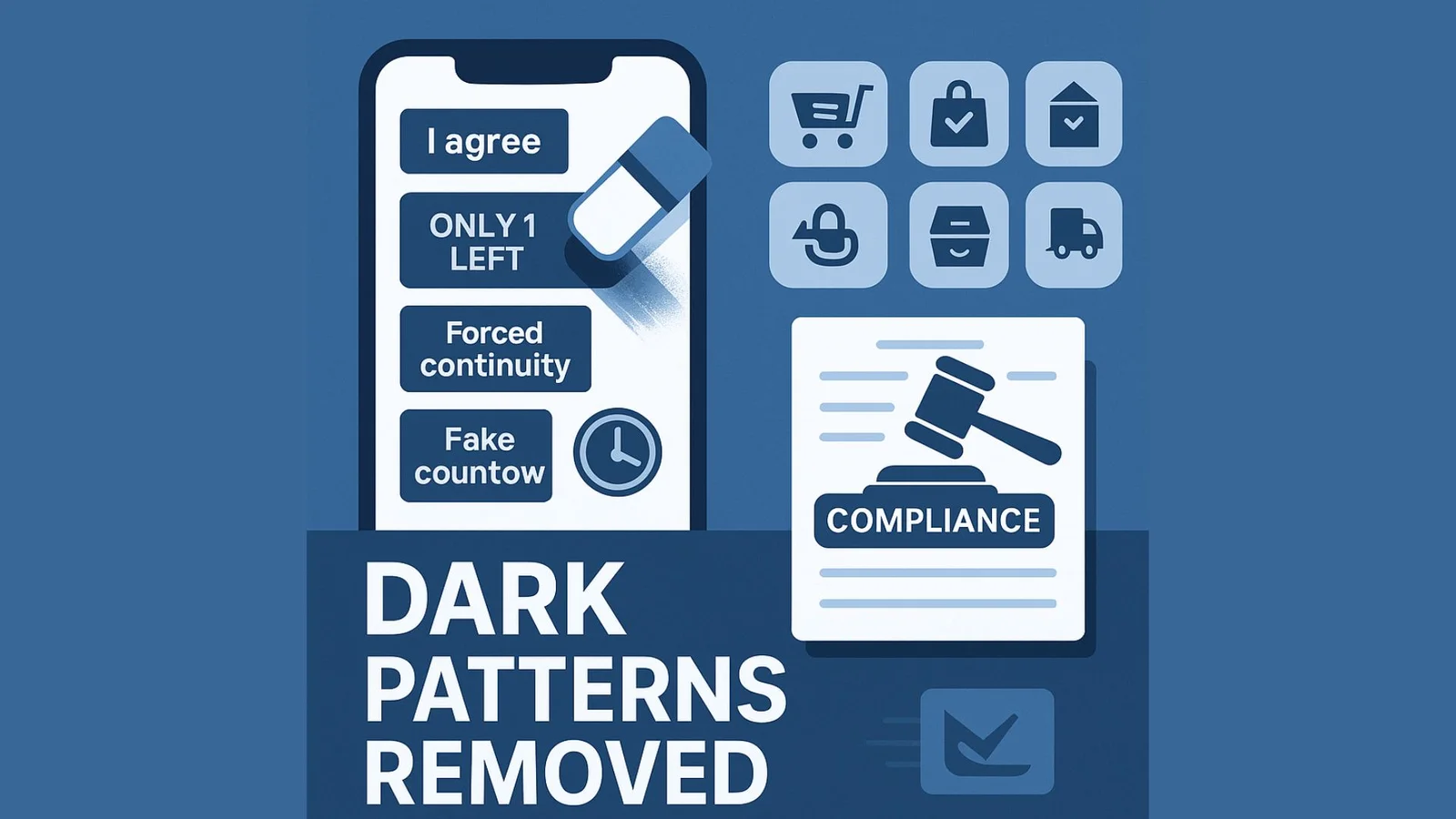
New Delhi | November 21, 2025 — In a landmark move to safeguard digital consumers, India’s Ministry of Consumer Affairs has confirmed that 26 major e-commerce and online service platforms have eliminated misleading design practices—commonly known as dark patterns—from their websites and mobile apps.
This enforcement marks a significant turning point in how digital commerce platforms operate across retail, grocery, food delivery, and subscription-based services.
Companies that submitted compliance statements include Blinkit, Zepto, Flipkart, Amazon, Nykaa, Zomato, Swiggy, Tata Neu, and several other top platforms.
What Are Dark Patterns?
Dark patterns are intentionally deceptive design choices used to push users toward decisions they would not normally make. These tactics have long been criticized for manipulating online behavior.
Common examples include:
- Hidden or automatically added charges
- Forced subscriptions and auto-renewals
- Pre-selected paid options
- Fake scarcity alerts like “Only 1 left!”
- Fake countdown timers
- Complicated or hidden cancellation processes
Last year, the Central Consumer Protection Authority (CCPA) officially categorized these practices as misleading and unfair under consumer protection laws.
Companies Confirm Compliance as Government Tightens Oversight
The Ministry reported that all 26 platforms have provided formal assurance that they have removed dark pattern elements from their interfaces. Many have redesigned pricing structures, simplified subscription flows, and deleted deceptive prompts.
Some companies have gone a step further by implementing third-party audits and continuous compliance monitoring.
Consumer Affairs Secretary Nidhi Khare noted:
“Digital platforms must operate transparently. Misleading consumers will not be tolerated. We appreciate the companies that complied, but any future violations will invite strict legal action.”
Enhanced Monitoring and Enforcement to Follow
The CCPA announced that the compliance phase will now shift toward active enforcement. The next steps include:
- Surprise audits of platform interfaces
- Review of customer complaints
- AI-based detection of manipulative UI patterns
- Scrutiny of subscription and renewal flows
Authorities warned that penalties, platform restrictions, and mandatory compensation orders may follow in cases of non-compliance.
How Consumers Stand to Benefit
Analysts say India’s updated digital governance mirrors international standards seen in Europe and the U.S. and strengthens consumer protection in online transactions.
Consumers can expect:
- More transparent pricing and terms
- Reduction in hidden charges and surprise renewals
- Fairer and more informed buying decisions
- Improved trust in online platforms
Digital policy expert Apoorv Tripathi remarked:
“India is positioning itself as a global benchmark for ethical digital commerce. This move brings the country closer to global compliance norms.”
Conclusion
With major e-commerce and service platforms now aligning with regulatory requirements, India has entered a new phase where ethical digital practices and consumer rights take center stage.
The coming months will reveal how consistently platforms uphold these standards as enforcement intensifies.
-

 Business3 years ago
Pot Odor Does Not Justify Probable Cause for Vehicle Searches, Minnesota Court Affirms
-

 Business3 years ago
New Mexico cannabis operator fined, loses license for alleged BioTrack fraud
-

 Business3 years ago
Alabama to make another attempt Dec. 1 to award medical cannabis licenses
-

 Business3 years ago
Washington State Pays Out $9.4 Million in Refunds Relating to Drug Convictions
-

 Business3 years ago
Marijuana companies suing US attorney general in federal prohibition challenge
-

 Business3 years ago
Legal Marijuana Handed A Nothing Burger From NY State
-

 Business3 years ago
Can Cannabis Help Seasonal Depression
-

 Blogs3 years ago
Cannabis Art Is Flourishing On Etsy