
Crime
Cyber Fraud Network Busted: Five Arrested for Opening Bank Accounts in Students’ Names


Gadag: Authorities in Karnataka have dismantled a cyber fraud network accused of exploiting students by opening bank accounts in their names and using them to channel illicit funds. Five individuals have been arrested in connection with the case, police confirmed.
The operation, uncovered in Gadag district, involved the seizure of 11 mobile phones and eight “bank kits,” including passbooks, ATM cards, SIM cards, and online banking credentials.
Students Targeted With Scholarship Promise
Investigators revealed that the accused allegedly targeted students by offering assistance in securing government scholarships. Under this pretext, they persuaded students—particularly those staying in hostels—to open bank accounts.
Once the accounts were created, the suspects reportedly took control of all associated banking materials, including login details and SIM cards, effectively gaining full access.
Small Deposits Used to Build Trust
To avoid suspicion, the accused allegedly deposited around ₹2,000 into each account during the setup phase. This initial transaction was used to create legitimacy and reassure victims before the accounts were misused.
Police believe these accounts were later used as “mule accounts” to route money obtained from cyber fraud operations conducted across multiple regions.
Arrests Made During Goa Operation
The investigation began earlier this month and quickly led authorities to track the suspects’ movements to Goa. Police intercepted the group while they were allegedly attempting to hand over collected bank kits to other members of the network.
The main accused—identified as Raja (23) and Vakdoth Vakeel (24)—are residents of the Vijayanagara district. During interrogation, they reportedly admitted to coordinating with other associates for commission-based transactions.
Additional Suspects and Seizures
Further arrests included individuals working and residing in Goa, such as a hotel employee and a DJ. Authorities also seized multiple bank kits linked to accounts opened in different districts, including Haveri and Gadag, primarily in branches of Bank of Maharashtra.
One key suspect remains absconding, and efforts are ongoing to track additional members of the network.
Larger Network Under Investigation
Officials suspect the operation may be part of a wider, multi-state cybercrime network. Forensic analysis of seized devices and bank transactions is underway to determine the scale of the fraud and identify links to other cases.
Cybersecurity experts note that the use of mule accounts has become a widespread tactic in financial fraud schemes. By using accounts opened in the names of unsuspecting individuals, criminals can obscure money trails and evade detection.
Rising Concern Over Student Exploitation
The case highlights a growing trend where students and vulnerable individuals are manipulated into unknowingly participating in financial crimes. Authorities have urged the public to remain cautious and avoid sharing banking details or opening accounts on behalf of others without full understanding.
Investigations are ongoing, and more arrests are expected as police continue to unravel the network.

AICybercrime
ED Accuses IAS Officer Gyanendra Kumar Gangwar of Taking ₹1.30 Crore Bribe in KPSC Paper Leak
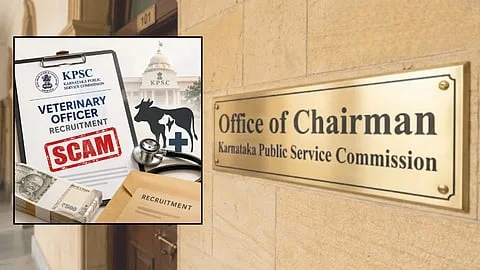
The Enforcement Directorate has alleged that suspended IAS officer Gyanendra Kumar Gangwar received ₹1.30 crore in cash from an alleged middleman in connection with the leakage of a Karnataka Public Service Commission (KPSC) Veterinary Officer recruitment examination paper.
The allegations were presented before a Bengaluru special court as the ED sought custody of Gangwar in a money-laundering investigation under the Prevention of Money Laundering Act (PMLA).
The court subsequently remanded Gangwar to six days of ED custody, until September 26, according to court reporting. The allegations remain subject to investigation and judicial proceedings.
ED Claims ₹1.50 Crore Was Collected From Candidates
According to the ED’s remand application, alleged middleman Basavaraj Kannale collected around ₹1.50 crore from candidates who were seeking access to the leaked examination material.
The agency alleges that approximately ₹1.30 crore of that amount was subsequently handed over to Gangwar in cash.
The ED is investigating the alleged flow of funds as part of its money-laundering probe and has sought to determine how the proceeds were collected, transferred and potentially converted into other assets.
Question Paper Allegedly Handed Over Before Examination
The ED has alleged that Gangwar provided the Veterinary Officer recruitment examination question paper, along with its answers, to Kannale through an HP pen drive on January 7, 2026.
The examination was scheduled for January 9.
Investigators allege that candidates who had paid money were subsequently given access to the examination material before the test. Earlier CID investigations have also examined allegations that selected candidates were taken to a resort and coached using leaked questions.
The recruitment examination was conducted for 400 Veterinary Officer posts in Karnataka.
Jewellery and Other Financial Transactions Under Investigation
The alleged financial trail also includes purchases of jewellery.
The ED told the court that approximately ₹23 lakh was spent on gold jewellery using funds connected to the alleged recruitment racket. Separate CID proceedings have examined additional jewellery purchases and other expenditures allegedly linked to the money collected from candidates.
Investigators are also examining financial transactions and other records to establish the full extent of the alleged money trail.
Gangwar Served as KPSC Examination Controller
Gangwar served as the Controller of Examinations at KPSC from 2024 until March 2026.
His role has brought particular attention to the alleged paper leak because investigators are examining how examination material could have been accessed and transferred before the test.
The ED is also investigating whether alleged proceeds from other recruitment examinations conducted during his tenure could be connected to the wider financial network.
Investigation Expands to Other KPSC Officials
The investigation is not limited to Gangwar and Kannale.
Authorities are examining the possible involvement of other individuals associated with the recruitment process, including suspended KPSC chairman Sahukar S. Shivashankarappa.
Investigators are looking into alleged communications, financial transactions and relationships between individuals involved in the recruitment process. The allegations against other officials remain under investigation and should not be treated as established findings.
Recruitment Process Came Under Scrutiny After Complaints
The alleged irregularities emerged after concerns were raised over the Veterinary Officer recruitment examination and selection process.
The CID investigation has examined allegations involving question-paper leakage, payments by candidates and the use of leaked material to prepare candidates before the examination. Earlier reporting said 329 candidates were selected from the recruitment process, while investigators were examining allegations involving candidates who allegedly paid money for selection.
The financial investigation by the ED is now focused on identifying the alleged proceeds of crime and tracing their movement.
High Court Orders Fresh Investigation
The wider KPSC controversy has also resulted in judicial intervention.
Recent reporting indicates that the Karnataka High Court constituted a Special Investigation Team (SIT) to conduct a fresh investigation into alleged irregularities connected with KPSC recruitment, including the Veterinary Officer examination.
The developments have expanded the case beyond the alleged paper leak to broader questions about recruitment procedures, financial transactions and the functioning of the commission.
ED Probe Continues
The six-day ED custody of Gangwar is intended to allow investigators to question him about the alleged financial transactions, identify other participants and trace the suspected proceeds of crime.
The case remains at the investigation stage. Allegations made by the ED or CID will ultimately have to be tested through the judicial process.
The KPSC controversy has meanwhile triggered wider scrutiny of recruitment examinations in Karnataka, with investigators continuing to examine whether the alleged network extended beyond the Veterinary Officer recruitment test.
Business News
What Happened to the Power Plant Funds? ED Probes ₹290 Crore Loan Diversion in Kolkata
The Enforcement Directorate (ED) on Thursday conducted searches at 11 premises in Kolkata linked to Kohinoor Power as part of a money laundering investigation into an alleged ₹290 crore bank loan fraud. The searches were carried out under the Prevention of Money Laundering Act (PMLA) and covered premises linked to the company’s promoters, Prashant Bothra and Vijay Bothra, as well as other directors and auditors.
The agency has alleged that loans obtained from banks to establish a 66 MW power plant in Jharkhand were diverted to other group entities and for personal use instead of being used for the intended project.
How Was the ₹290 Crore Loan Allegedly Diverted?
According to the ED, Kohinoor Power had secured bank financing for setting up the power project in Jharkhand. The funds were meant to be used for establishing the plant and meeting expenses related to the project.
However, the agency has alleged that a portion of the loan amount was transferred to other group companies, while some of the funds were allegedly used for personal purposes.
The ED is now examining the flow of the loan proceeds, including the bank accounts into which the funds were transferred, the companies involved in the transactions and the stated purpose of these financial movements.
Investigators are also trying to determine whether borrowed funds were moved to entities that had no direct connection with the proposed power project.
Why Was Only Around ₹7 Crore Recovered?
Kohinoor Power subsequently faced financial difficulties and entered insolvency proceedings before the National Company Law Tribunal.
Liquidation proceedings were later initiated with the aim of recovering dues from the company’s available assets and resources.
However, according to officials, only around ₹7 crore could be recovered during liquidation, significantly lower than the outstanding bank exposure.
The ED is now examining how the company’s financial position deteriorated, what assets were available before insolvency proceedings began and how much of the borrowed money was allegedly diverted away from the power project.
What Is the ED Looking for in the Kolkata Searches?
Thursday’s searches form part of the agency’s investigation into the alleged diversion of loan proceeds and their subsequent laundering.
Officials are examining financial records, bank documents, business records and other material connected with the transactions. The evidence is expected to help investigators reconstruct the movement of funds and identify financial links between various group entities.
The ED has also searched premises linked to the company’s directors and auditors. Investigators are examining whether other individuals associated with Kohinoor Power played any role in the alleged financial irregularities.
Are Promoters, Directors and Auditors Also Under Scrutiny?
The searches covered premises linked to promoters Prashant Bothra and Vijay Bothra, along with other directors and auditors associated with the company.
Investigators are examining transactions through which the loan proceeds were allegedly transferred to other entities and whether those movements had any legitimate connection with the power project.
The role of individuals involved in the company’s financial management, accounting and movement of funds is also expected to be examined as part of the broader money laundering investigation.
What Happens Next in the ₹290 Crore Loan Probe?
The investigation is now focused on determining how much of the ₹290 crore borrowed from banks was actually used for the 66 MW power project, how much was transferred to other group entities and how much was allegedly used for personal purposes.
The agency is also examining why only around ₹7 crore could eventually be recovered during liquidation despite the much larger loan exposure.
The ED will analyse documents and other evidence gathered during the searches before deciding on further action. If investigators establish evidence of deliberate diversion of loan proceeds and attempts to disguise such transactions as legitimate financial dealings, further proceedings under the PMLA could follow against the individuals and entities concerned.
For now, the probe remains centred on the alleged misuse of the ₹290 crore bank loan, the movement of funds between different entities and the circumstances that resulted in only a fraction of the outstanding amount being recovered during liquidation.

Mumbai, July 27, 2026: Mumbai Cyber Police have initiated legal action against a telecom point-of-sale (POS) operator accused of supplying fraudulently activated SIM cards to cybercriminal networks. Investigators allege that the operator used forged or misused identity documents to obtain mobile connections, which were later circulated among organized cyber fraud groups operating across multiple states.
FIR Registered Following Cyber Fraud Investigation
The West Region Cyber Police registered a First Information Report (FIR) on July 21 after examining several cybercrime cases linked to suspicious mobile numbers. According to investigators, the accused, identified as Prathamesh Chorat, allegedly activated SIM cards using identity documents belonging to unsuspecting individuals between January 2025 and May 2026.
Authorities believe many of these documents may have originally been submitted by citizens for legitimate purposes such as banking or other verification processes before being misused to obtain unauthorized mobile connections.
‘Ghost SIMs’ Allegedly Used in Financial Scams
Police say the illegally activated mobile connections, commonly referred to as “ghost SIMs,” are frequently exploited by cybercriminals to conceal their identities while carrying out online fraud. These SIM cards are allegedly used to contact victims, bypass verification procedures, operate fraudulent bank accounts, and facilitate digital financial crimes.
Investigators stated that fraudsters used these numbers to communicate with potential victims through online platforms, gain their trust through deceptive tactics or intimidation, and ultimately persuade them to transfer money into multiple bank accounts controlled by criminal networks.
NCRP Database Helped Identify Suspected Links
The investigation was supported by data collected through the National Cybercrime Reporting Portal (NCRP) and information provided by the Indian Cybercrime Coordination Centre (I4C) under the Ministry of Home Affairs.
Officials analyzed records of cyber fraud complaints, including mobile numbers, bank accounts, and transaction details reported through the national cybercrime helpline and online complaint system. During the review, investigators reportedly discovered that several mobile numbers connected to cybercrime cases had been issued by specific telecom point-of-sale operators in the Mumbai Metropolitan Region.
Further verification with telecom service providers allegedly linked multiple suspicious SIM cards to the accused operator. Police also found complaints associated with these numbers from Maharashtra and West Bengal, indicating a wider geographical spread of the suspected operation.
Probe Suggests Organized Cybercrime Network
According to the FIR, organized cybercrime syndicates allegedly employ field agents to collect bank accounts and SIM cards registered in the names of unsuspecting individuals from different parts of the country. These resources are then reportedly used to facilitate various forms of online financial fraud, including investment scams, stock market frauds, digital arrest scams, and other cyber-enabled crimes.
Investigators suspect that the accused supplied multiple mule SIM cards to these criminal groups during the period under investigation. Authorities are now working to identify other individuals involved in the network, including those responsible for collecting identity documents, arranging bank accounts, and distributing illegally obtained mobile connections.
The investigation remains ongoing, and police are examining whether additional operators or intermediaries were involved in the alleged racket.c
-

 Business3 years ago
Pot Odor Does Not Justify Probable Cause for Vehicle Searches, Minnesota Court Affirms
-

 Business3 years ago
New Mexico cannabis operator fined, loses license for alleged BioTrack fraud
-

 Business3 years ago
Alabama to make another attempt Dec. 1 to award medical cannabis licenses
-

 Business3 years ago
Washington State Pays Out $9.4 Million in Refunds Relating to Drug Convictions
-

 Business3 years ago
Marijuana companies suing US attorney general in federal prohibition challenge
-

 Business3 years ago
Legal Marijuana Handed A Nothing Burger From NY State
-

 Business3 years ago
Can Cannabis Help Seasonal Depression
-

 Blogs3 years ago
Cannabis Art Is Flourishing On Etsy