
Business
Cro-Mags Show No Mercy!

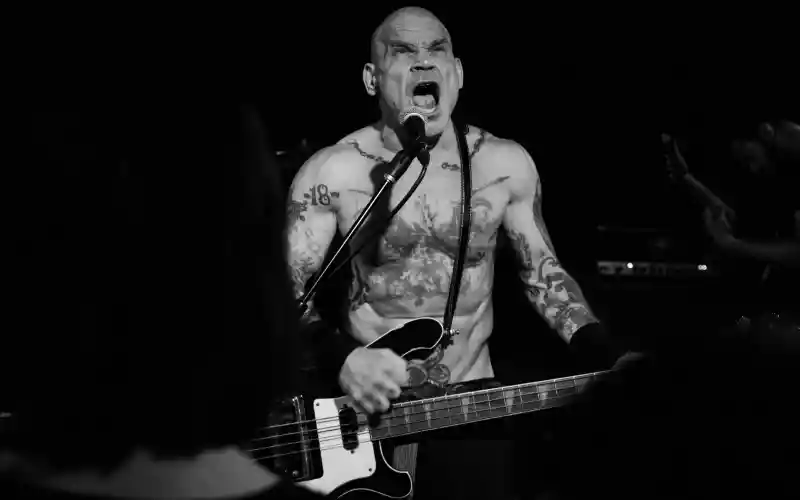
“All you hippies better face reality…world peace can’t be done.” – Cro-Mags
It was nowhere near show time, and it was readily apparent that trouble was brewing. An Instagram post made by Harley Flanagan, founder of Cro-Mags, inarguably the forefathers of American hardcore, suggested that he had just entered the stinky ole brown eye of cultural division in the United States of America, landing smack dab in a gas station where chicken livers and confederate flags are such hot pieces of redneck commerce that they often receive top billing. It’s not every day that New Yorkers get slapped in the face with racism at the retail level, one as unapologetic and greasy as the fowl organ fare these joints are frying up in the back. Most of us lingering anywhere near the hemorrhoidal itch of the South are, at times, callused to these passive-aggressive tokens of imbecility, but not this multi-racial band from the East coast. If there was an underlying sentiment oozing from Flanagan’s fingertips it was, “We’re not in Kansas anymore.”
Sheeeeiiiit! Conflict was in the air. I could smell it. One wrong move from the chaw-spitting locals and Flannagan, a black belt in Brazilian jiu-jitsu, would surely snap one of their limbs—a leg perhaps—and have them crying for their mommy in a puddle of urine and axle grease. I just knew by the time they got to Evansville, Indiana to play their show at StageTwo, that bald bastard would be carrying around some hillbilly’s foot on a keychain. The only possible redemption surging from this southern cesspool serving up chitlins to the average fowl-eating fascist, at least judging from the photos Flanagan included in the post, was a Ramones and Led Zeppelin flag flying next to a couple of dreamcatchers near the cash register. Perhaps it was a sign that America’s divisiveness was beginning to narrow, and Flanagan and crew would arrive to their show without incident. It was maybe even just about as promising an omen this nation has seen in a while suggesting that we, as a collective people, might just get along in the end. Sure, the specter of unlicensed band merch wasn’t exactly the hallmark of equality, but it was a start.
Cro-Mags, I was certain, could handle themselves. I, on the other hand, had problems of my own. At the same time Flanagan was staring down a line of ethnocentric wares in one of Tennessee’s seediest pump and dumps, I was in the middle of a pre-show meeting with my photographer and partner, Holly, making sure that she had everything she needed to properly shoot the band’s performance later that night. The conversation, as many of them tend to happen, entailed one of my incessant, borderline lunatic ramblings of logistics and how we needed to enter a transcendental mindset where hack jobs be damned! Meanwhile, Netflix was passively playing in the background. I have a theory that Holly likes to keep some form of noise on at all times just to tune me out during the paranoid madness that rendezvouses at the 11th hour. It’s when I’m most inclined to rag anyone’s nerves—even those who love me. Running interference this time around was YOU—the series about an obsessive bookselling serial killer doing his best to carve out, and quite literally, some semblance of an American family. I wouldn’t even mention such an unimportant detail of what happens in the hours prior to attending a show for the purpose of penning a few words, if not for looking up at one point during our discussion and seeing the lengthy member of a corpse dangling on the goddamned TV.
“What the fu…”
The dead dick quickly caught my attention, not because of the sheer size of it under morgue-frigid conditions, but because it wasn’t at all realistic. “That’s not what a dead dick looks like,” I declared. My spontaneous revelation about the continuity of the corpse cock was welcomed with utter disregard. Holly didn’t bat an eye. It seems not even my dark knowledge of human anatomy could detour her focus of the business at hand. What would, however, I would later find out, is her pre-teen and his borderline criminal aversion to doing homework. Although we were scheduled to meet at 7 p.m. to ride to the venue together—after I, of course, got myself into the appropriate mindset to mingle with a few IPAs and a pull or two of Blue Dream—a missing science assignment would test the permanence of our professionalism. “You’re going to have to go without me,” she texted at 7:30, knowing damn well that such a short notice change of plans, one quite possibly leaving me without a photographer, could cause me to suffer an aneurysm and leave me for dead. “I’ll meet you there, later, though,” read a second text, giving me at least some reassurance that I wouldn’t have to resort to shooting the damn thing with my iPhone.

Having no other choice but to suck it up and go it alone, for a while anyway, I summoned an Uber and made my way, ever-so-anxiously, to the venue without a lensman. No way I was risking the chance of missing a second of the Cro-Mags. This show, for me, was an important one.
Scan the archives of punk rock history and Harley Flanagan, now 56, is there. He’s fucking everywhere.
From the time he was barely old enough to wipe his own ass, Flanagan was rubbing elbows with the elite of New York’s wild and weird. Look, there he is with Andy Warhol and Joe Strummer. Wait, there he is now with Debbie Harry. Flanagan almost ensured his place in the well-chronicled narrative of New York punk, a scene many of us only got to witness thanks to shutterbug documentarians like Bob Gruen, just by refusing to leave. In a lot of ways, his story of hanging out in popular NYC haunts from CBGB’s to Max’s Kansas City at 12-years-old playing drums for his band The Stimulators reads like the script for Forrest Gump. As outsiders, we’re all just that sweet, old lady sitting on the park bench, listening intently, yet skeptical of whether he actually shook hands with President Kennedy or if he’s just making that shit up.
Yet, in Flanagan’s case, it’s all real, every last tale. He was fucking there. Although he’ll be the first to tell you that it all seems like a dream. Albeit one where some of his heroes were there to guide the way. “Not only did [The Clash] play some of the best live shows I ever saw but it’s the reason why I always try to give a moment to every fan I meet,” Flanagan told High Times. “Because I know how much it means to be a young fan and to meet somebody that matters to you. And that is the difference between them treating you with respect, like a human or them being a total rockstar asshole and fucking you off. [The Clash] were so good to me, and I always try to pay that forward. It meant a lot, they were really cool guys, and I will always respect them.”
Yep, there from the days when the first generation of New York punk was captured in black and white, making the transition to the color snapshots of the 80s and 90s, showing up alongside legends such as Henry Rollins, Jeff Hanneman, and halle-fucking-lujah, God himself—Lemmy Kilmister from Motörhead. Perhaps part of Flanagan’s longevity over the course of rock ‘n roll history can be credited, at least in part, to his ability to concede to the trumpets when they start to roar. “One time I asked Lemmy how he keeps going with the amount of bullshit you have to eat in this business,” Flanagan recalls. “His response was ‘would you rather be slicing bacon for a living?’ which I remember all the time when I’m not feeling it. The kicker is that he knew I was a vegetarian as well, so it was like ‘would you rather be doing something you really hate to survive?’”
Forgive me if I remember this wrong.
The first time I saw anything about Flanagan and Cro-Mags I think I had just hit puberty. As a young turd growing up in one of those diminutive chicken liver-slinging towns of Southern Indiana, I, like most snot-nose adolescents just learning to jerk off, was still listening to stuff like AC-DC, Hank Williams Jr. and Quiet Riot. Wait, Hank? Yep, even us young metalheads had a little shitkicker in us! We didn’t have any real record stores nearby, so if K-Mart didn’t carry an album in their limited music department, I didn’t have it in my collection. I did, however, regularly loiter in the magazine aisle at my local grocery store, flipping through the latest issues of Hit Parader, Circus, and every other now-defunct music publication trying to find new, up-and-coming bands to devour. In the back pages of one, amidst the typical features on the Motley’s and Ozzie’s, that’s where I first spotted Flanagan. I’d never seen anything like him. Branded with a massive tattoo of a gnarly, fire-breathing Devil across the whole of his chest, his head shaved, scowling like a methed-out madman in front of his less-intimidating bandmates, Flanagan looked like Charles Manson’s younger, meaner brother who had just killed 40 people busting out of a mental institution to start a band. He wasn’t the typical malnourished rockstar that regularly appeared in those pages—scrawny with no muscle definition whatsoever, yet posing like they could whup some serious ass. This dude seemed fit and legitimately unhinged enough to back it up. While the rest of those spandex-wearing wusses were busy cleaning out their parent’s retirement savings trying to make it with their shitty band, Flanagan’s attitude resonated a certain gutter authenticity—starving yet always wired up enough to take it on—whatever that may be. “Holy shit,” I said to a friend of mine who was with me at the time. “Look at this dude.”
The band’s inclusion, if memory serves me correctly, was more or less a blurb about the rise of New York hardcore, and there was no more fitting of a poster child for the movement than Flanagan, I was sure of it. I had no idea what hardcore was at the time. I’d never even heard of Cro-Mags or any other band for that matter, where the buzz-cut, military-style coiffure was part of the official garb. I’m not saying they started bald club, but Cro-Mags was the first band in my purview where they skinned it on back. All the dudes in Metallica, the heaviest, angriest band I had found (and unapologetically worshiped), had unkempt pompadours nearly down to their ass, and to me, a pastoral pipsqueak from Indiana with maybe three pubes swinging from his nuts, they seemed like the kind of guys you’d want in your corner if the shit hit the fan. But the hyperbole of their winces and clenched fisted posture paled in comparison to the probity of Flanagan’s grit and machismo.
He was the real deal.

My best assessment of all this hardcore business was that it meant actually having the cojones to back up whatever piss and vinegar was being sprayed from the stage. Don’t write a check your lyrics can’t cash. Are you going to bark all day little doggy or are you going to dive headfirst into the pit and take an elbow to the jaw? Not just anyone could take the plunge from passivity to pandemonium and make it out alive. Perhaps it was a metaphor for the life that manifested this genre. Maybe that’s how this seemingly deranged skinhead managed to slip through the editorial gatekeepers of a music rag typically catering to glam and hard rock, and his mug, all intense, gnashing teeth, a man who’d inevitably eat your grandmother if she got too close—soul, colostomy bag and all—came to be burned into my impressionable, idiot brain. The Bon Jovi’s and whatever other ineffectual cock rock crooners of the time were forever doomed, in my opinion, and their pouty-lip regime was about to die. It was good riddance as far as I was concerned.
In the following weeks, I made every attempt to get The Age of Quarrel, the band’s debut record, but, as you might have guessed, it was not to be found among K-Mart’s stock. None of my friends owned it either or even knew who the fuck Cro-Mags were, so getting my hands on a shoddy reproduction proved a daunting task. I even tried to convince my mom, who had totally bought in to the scripture according to the PMRC’s satanic panic suicidal revival, to drive me to the nearest city to see if it could be procured from a real record store, but she was hellbent on offering no further contributions to my life of degeneracy. It wasn’t until a few years later (yes, years) that I ran into this guy, all decked out in black wearing a leather jacket with Ed Gein painted on one sleeve and Joey Ramone on the other, who happened to have a copy in his extensive tape collection. “Play this one, play this one,” I demanded. “Oh man, Cro-Mags is a scary band,” he replied.
That’s precisely what I wanted to hear.
From note one, Cro-Mags was the antithesis of what I had come to know as rock ‘n roll, far different than what those heavy drinking, down-picking, chunk-chunkers from the Bay Area were putting out. And the lyrics were more personal, too, like an intimate warning scrawled on the shithouse walls of a sleazy dive bar, letting all of those with piss on their zippers know that they’d better not fuck around. “What does it take to prove you were a fake. I thought so anyway. Won’t show you no mercy today!” Coming from a podunk town where I never fit in, made to feel, oftentimes, as though there was something wrong with me for not subscribing to the livestock-porking life of small-town America, this was deliverance. Not only was the band staffed with an apparent ruffian, a dude who looked a hell of a lot like I felt, but the overall message, in my eyes at least, was one of strength, not taking shit from the feeble hierarchy of imperialistic pecker weeds, never bowing down, and always fighting back, win or lose. Show no mercy at all!
Flannagan, long ago, infiltrated the systemics of a drug-addled rock ‘n roll lineage—one that often claimed to be influenced by punk—respectfully punching his idols in the throat, if for no other reason than to prove it wasn’t enough to get mad for the sake of politics, but you also needed to pick up a tire iron on occasion to get your point across. Cro-Mags was one of the first bands, alongside maybe Black Flag, to inspire a cult of young born-losers to cut their hair, get off the couch and fight—for something, anything that wasn’t complacence. Those who bought in became dangerous to the sheep-lapping from the societal trough. Anyone who didn’t show the kid any respect back in the day would meet the ire of the man—and they’d lose, real fucking bad.
Fast forward to now and all the pseudo tough guys to emerge from Flanagan’s influence in the realm of hardcore and heavy music, many now with beer guts, all bloated relics of a philosophy they were never strong enough to uphold, got squishy. But Flanagan is still hard as nails. He just keeps getting better with age. If you’ve ever found yourself asking why this man is still around, duking it out onstage night after night, it’s because the true primogenitor remains the steeple of his church. And while Flanagan may have partaken in the same narco-lunacy that downed many hags of heavy metal in his formative years, all this iconic monstrosity leans on now for levity is the casual beer and cannabis.
“I don’t drink it every day,” he told me, when asked how he can still enjoy brew and maintain his chiseled physique. “But [cannabis] helps me medicinally and also helps me a little with my head, but I find that smoking fucks my lungs up, so I do take breaks,” he added. “I think the plant itself is amazing. It has so many benefits and can be used in so many ways. I’m glad it is being explored more and more. And I’m glad that people are starting to recognize its value as more than just some stoner hippie drug. I do think too much of anything is not a good thing. But I am definitely a fan. I used to grow. It’s a beautiful plant. It should be respected not demonized.”

At the show…
“Look out!” I shouted, as some scrawny dude came flying at us from the mosh pit over to where we were standing on an upper tier of the venue, knocking Holly, who was too busy adjusting the settings on her camera to see it coming, right to the floor. I saw the impending collision just seconds before impact but there wasn’t anything I could do about it. Given the modest task of holding Holly’s beer (so she could fool with the camera) and two of my own, well, my hands were too full to shield her much from the body hurtling at full speed. Not without the two of us wearing enough beer to end up hyperthermal before the end of the night. Not that it mattered in the end. Smaaaaack! As the three soft boys in front of us went down on top of her like a sack of potatoes, so did their beer. Although my photographer had finally arrived it appeared that more trouble was in the wings. The camera was now covered in brew, the lens smudged, maybe even scratched and Cro-Mags were up next. A weaker journalist would have packed it up, sent a scathing message to his editor telling him to ‘fuck the fuck off’ and never spoke of this night again. However, what’s that they say? The show must go on. Shit, and we needed more beer too!
By the time Cro-Mags came out, it appeared as though the stars of rock journalism had finally aligned—if you believe in all that hippie-dippy, cosmotheistic crap. All I know is the man-made camera was finally in working order and my photographer, the trooper that she is, presumably sans concussion yet reeking of overpriced beer, was in the thick of the performance and on a quest to document whatever hairy hell may come. I couldn’t be bothered with logistics anymore, my job would come later. It was out of my hands now—I’d already given it up to whatever snaggletoothed goblin was haunting me from within the ether. Let that bastard sort it out.
The rebellion of my teen years, however, had been unleashed, left to swim in a nostalgic sea of testosterone with that new brute smell. Although I’d been steeped in societal contempt from a young age, Flanagan’s presence suggested that I hadn’t throttled the system hard enough in a long time and, well, that was something that needed to change. I thought about that as I watched him from the sidelines owning the stage, belting out with more conviction than any howling stripling twice his junior. Fuck the new heavy, the glam, modern hardcore and every other genre moving in the direction of the American pussification. It was nights like these, those reminiscent of a day less sensitive, when we on occasion got our noses broken by our friends and laughed about it, that we must ask ourselves: Why can’t we take it back to when we frothed at the mouth like animals? Or was it too late for such sentimentalities? Was this gritting state of ruminatiation everyone’s swan song at this point in time, no matter how heavy the cross they bear?
Cro-Mags mowed through their hour-long set, complete with fan favorites “Hard Times” and “Apocalypse Now”, as though their pre-show ritual included gnawing on an electric fence before bitch slapping it with their wieners. As an official representative of an aging punk culture, one left with only a series of faded tattoos and a certain look in our eyes that tells the tale of the so-called born-losers, those who’ve seen some shit and resolved a long time ago to taking no more, this show was perhaps one of the most monumental I had witnessed in many years. My generation, some fallen to the sag as the decades wane while others discover a rebirth in the second act, is one consisting of diehard fans, and its devotion is worn on our sleeves. We had come up when music was the presence of power, and now we, the same as Flanagan, were proof that not only was old man strength real, but we were going to need it too. Sure, it’s like Flanagan said from the stage in the middle of the show that night, perhaps getting honest with the crowd as penance for a young life gone, at times, unpleasantly awry. We can’t change the past, the violence, our despicable acts, but we can lead today better than the last, and do it with kindness and love. “Life is amazing. It’s absolutely great. I would’ve never guessed I would be alive this long, never mind that I would be living my best life, married to an amazing woman, two grown sons, a killer band, and I’m feeling great,” Flanagan told me. “What else can I possibly want? Life is great. I’m living the dream and enjoying the ride. And whether I’m playing in front of a few hundred people, 50 people or 100,000 or I’m training or whatever else it is I’m doing, I’m loving every minute of it and giving it my all every single time. That’s how I live my life.”
Source: https://hightimes.com/culture/cro-mags-show-no-mercy/












Reliance Jio has crossed a significant milestone in its space connectivity ambitions after its proposal to deploy a Low Earth Orbit (LEO) satellite constellation of around 1,600 satellites received a positive technical assessment from the Indian National Space Promotion and Authorisation Centre (IN-SPACe).
The evaluation, conducted jointly by IN-SPACe, the Indian Space Research Organisation (ISRO), and the Wireless Planning and Coordination (WPC) wing of the Department of Telecommunications, reportedly concluded that Jio’s proposed system meets the required technical standards and is comparable to leading global satellite broadband networks.
India’s Indigenous LEO Satellite Vision
Under the proposal, Reliance Jio plans to deploy between 1,600 and 1,650 satellites in Low Earth Orbit at an altitude of around 650 kilometres.
The planned constellation is expected to provide high-speed satellite connectivity across India, with approximately 32 satellites visible from any location at a given time. The company aims to roll out the network within the next two to three years, subject to regulatory approvals.
According to industry estimates, the satellite system could deliver 4.5 to 5 terabits per second (Tbps) of total data capacity, making it one of the largest satellite broadband projects proposed in India.
The project is expected to require an investment of $10–15 billion (approximately ₹95,000 crore to ₹1.42 lakh crore), reflecting the scale of infrastructure needed for satellite manufacturing, launches, ground stations, and user terminals.
Regulatory Process Moves Forward
Following the successful technical review, the proposal is expected to move into the next phase of regulatory approvals.
The government may now assist Jio in securing orbital slots, coordinating spectrum usage, and filing applications with the International Telecommunication Union (ITU), the global body responsible for managing satellite orbit and frequency allocations.
Obtaining orbital rights remains a critical step, as Low Earth Orbit has become increasingly competitive due to the growing number of satellite broadband projects being planned worldwide.
Officials also indicated that the proposed satellite architecture has been designed to coexist with future Indian LEO constellations, allowing multiple domestic operators to share orbital resources efficiently.
Broadband, Mobile Connectivity, and Strategic Applications
Jio plans to use the satellite network to provide a range of communication services, including satellite broadband, mobile backhaul, enterprise connectivity, and direct-to-device (D2D) satellite communication, particularly in remote and underserved regions where conventional telecom infrastructure is limited.
The company also intends to establish 20 to 22 ground stations across India to support network operations.
Apart from commercial telecommunications, officials have highlighted the project’s potential strategic importance. A domestically developed satellite constellation could strengthen India’s communication infrastructure, reduce dependence on foreign satellite operators, and support national security requirements.
Reports suggest preliminary discussions are underway regarding the possibility of integrating defence-related payloads into some satellites, enabling both civilian and strategic use.
Major Step for India’s Space and Telecom Sectors
Industry analysts view the technical clearance as an important milestone in India’s expanding private space ecosystem. If Jio secures the remaining regulatory approvals and international orbital clearances, the project could become the country’s first large-scale indigenous LEO satellite broadband network.
The initiative also aligns with India’s broader efforts to expand digital connectivity while strengthening its presence in the global satellite communications market.

After evading law enforcement for nearly 13 years, an accused linked to a large-scale pharmaceutical fraud case has been arrested by Delhi Police from Surat, Gujarat. The suspect is alleged to have orchestrated a series of financial scams involving fake identities, forged documents, and dishonoured cheques used to procure high-value pharmaceutical raw materials.
Authorities say the accused, identified as Himmat Singh Lodha, is believed to have defrauded multiple pharmaceutical companies in Delhi of goods worth approximately ₹98 lakh before disappearing and remaining underground for years.
Fake Business Deals and Dishonoured Cheques Used in Fraud
Investigators claim the accused posed as a legitimate pharmaceutical trader and placed bulk orders for expensive drug ingredients, offering post-dated cheques as payment security.
In one documented case from 2013, he allegedly obtained around 550 kilograms of Gliclazide, a diabetes-related pharmaceutical ingredient, valued at over ₹26 lakh. When suppliers attempted to encash the cheques, they were reportedly returned with the remark “account closed.”
Following the transaction, the accused allegedly vacated his office and rented residence and disappeared without settling payments. He was later declared a proclaimed offender in 2016 after repeatedly failing to appear before court proceedings. Authorities had also issued a reward for information leading to his arrest.
Multiple Identities and Repeated Fraud Pattern
Police investigations further link the accused to another cheating case dating back to 2012, where he allegedly used a fake identity, “Kailash Jain,” to obtain a large consignment of Ambroxol HCL, a pharmaceutical compound used in cough medications. The value of that consignment was estimated at around ₹72 lakh.
Officials believe the accused followed a consistent modus operandi—posing as a credible businessman, securing high-value goods on deferred payment terms, and then disappearing after delivery while shutting down business operations.
Investigators suspect that forged business records, fake company credentials, and fabricated financial histories were used to build trust with suppliers and gain access to expensive raw materials.
Multi-State Surveillance Leads to Arrest in Surat
A special Crime Branch team tracked the accused through coordinated surveillance efforts across multiple cities, including Mumbai, Ahmedabad, and Surat. After nearly a month of technical monitoring and intelligence gathering, officials located and arrested him from a residential area in Surat.
Authorities also revealed that the accused had been involved in property-related activities while staying under the radar to avoid detection.
Growing Threat of Corporate Identity Fraud
The case highlights a rising trend of organised financial fraud targeting industries that rely heavily on trust-based transactions and deferred payments. Experts note that criminals increasingly exploit gaps in corporate verification systems by using fake GST registrations, temporary offices, and forged documentation to appear legitimate.
Cybercrime and financial fraud specialists warn that such schemes are becoming more complex with the widespread availability of digital business tools, making it easier to create convincing but fraudulent corporate identities.
Experts Urge Stronger Due Diligence in High-Value Transactions
Experts, including former IPS officer and cybercrime specialist Prof. Triveni Singh, emphasize the need for stricter verification procedures in commercial dealings. He noted that relying solely on paperwork or digital business profiles can expose companies to significant financial risk.
Authorities and industry experts recommend physical verification of business operations, bank account validation, and detailed background checks before engaging in high-value or deferred-payment transactions—particularly in sectors like pharmaceuticals, where single consignments can involve transactions worth crores.
Business
EU Pressure Builds on Google as Regulators Face Calls for Massive Fine Over Search Practices


A growing coalition of European industry groups is intensifying pressure on regulators to take decisive action against Google over allegations of unfair search practices that could reshape competition rules across the region’s digital economy.
Investigation Under Digital Markets Act Gains Momentum
The case is being examined by the European Commission under the European Union’s landmark Digital Markets Act (DMA), introduced to curb the dominance of major technology platforms and ensure fair competition.
Launched in March 2024, the investigation focuses on whether Google has been prioritising its own services in search results, potentially disadvantaging rival businesses that rely on online visibility to reach customers.
Industry Groups Demand Swift Action
Several prominent European organizations have jointly urged regulators to conclude the probe without further delay. They argue that prolonged investigations allow alleged anti-competitive practices to continue, putting European companies—especially startups—at a disadvantage.
Signatories include the European Publishers Council, the European Magazine Media Association, the European Tech Alliance, and EU Travel Tech.
In a joint statement, these groups warned that delays in enforcement are affecting innovation, profitability, and growth prospects for regional businesses competing in digital markets.
Google Denies Allegations
Google has rejected claims of bias, stating that its search algorithms are designed to deliver the most relevant and useful results to users. The company has also proposed adjustments to address regulatory concerns.
However, critics argue that these changes are insufficient and fail to address the core issue of market dominance.
Potential Billion-Euro Penalties
If found in violation of the DMA, Google could face significant financial penalties. Under EU rules, fines can reach a substantial percentage of a company’s global turnover, potentially amounting to billions of euros.
Regulators may also impose corrective measures requiring changes to business practices, which could have long-term implications for how digital platforms operate in Europe.
Wider Implications for Big Tech
The case highlights ongoing tensions between European regulators and major U.S. technology firms. In recent years, the EU has taken a more aggressive stance in enforcing competition laws, aiming to create a level playing field for local businesses.
A final ruling against Google could set a major precedent, influencing future enforcement actions and shaping the regulatory landscape for global tech companies operating within Europe.
As scrutiny intensifies, the outcome of the investigation is expected to play a critical role in defining the future of digital competition across the European Union.
-

 Business3 years ago
Pot Odor Does Not Justify Probable Cause for Vehicle Searches, Minnesota Court Affirms
-

 Business3 years ago
New Mexico cannabis operator fined, loses license for alleged BioTrack fraud
-

 Business3 years ago
Alabama to make another attempt Dec. 1 to award medical cannabis licenses
-

 Business3 years ago
Washington State Pays Out $9.4 Million in Refunds Relating to Drug Convictions
-

 Business3 years ago
Marijuana companies suing US attorney general in federal prohibition challenge
-

 Business3 years ago
Legal Marijuana Handed A Nothing Burger From NY State
-

 Business3 years ago
Can Cannabis Help Seasonal Depression
-

 Blogs3 years ago
Cannabis Art Is Flourishing On Etsy