
International News
18-Hour Work Torture: International Human Trafficking Ring Exposed On Volatile Thai-Myanmar Border


Authorities in Maharashtra’s Beed district have escalated a major human trafficking case to India’s Ministry of External Affairs (MEA) after uncovering a suspected cross-border racket that allegedly lured hundreds of Indian nationals into forced labour and cyber fraud operations along the Thailand-Myanmar border.
Investigators estimate that around 800 Indian citizens—among them several youths from rural Maharashtra—may be trapped inside heavily fortified compounds operating in the conflict-prone Myawaddy region, often referred to as part of the wider “Golden Triangle” area. The victims are believed to be held under strict surveillance and forced into long hours of illegal online activity.
Job Offers Used as Bait for Overseas Recruitment
According to initial findings, the network operated through fake recruitment channels posing as legitimate overseas employment agencies. Victims were reportedly promised well-paid jobs in fields such as data entry, office administration, and construction roles in Thailand, along with accommodation and legal work permits.
However, after arrival at transit points, many individuals allegedly had their passports and mobile devices confiscated. Instead of being taken to formal workplaces, they were transported deep into remote border zones where they were confined in guarded compounds controlled by criminal groups.
Forced Participation in Cyber Fraud Operations
Once inside the facilities, victims were allegedly coerced into participating in large-scale online scams. These operations reportedly included fake investment schemes, cryptocurrency fraud, and digital impersonation scams targeting individuals across Europe and North America.
Reports suggest that workers were forced to operate under extreme pressure, with shifts extending up to 18 hours per day. Those who resisted instructions or attempted to seek help were allegedly subjected to harsh punishments, including physical abuse, food deprivation, and intimidation tactics designed to prevent escape.
Some victims are believed to have managed to send distress messages to their families in India, alerting authorities to their situation and triggering emergency investigations.
Multi-Agency Rescue and Investigation Efforts Underway
Following the revelations, Beed police have forwarded detailed intelligence inputs to central agencies in New Delhi to trace recruitment agents and financial intermediaries involved in the trafficking chain. Investigators are also working to identify domestic facilitators who allegedly received commissions for sending workers abroad under false pretences.
The Indian Embassy in Yangon is reportedly coordinating with local authorities in Myanmar, along with regional security forces, to verify the location of the camps and explore possible rescue operations.
Government Issues Warning on Foreign Job Scams
The Ministry of External Affairs has reiterated warnings about fraudulent overseas job offers, particularly in Southeast Asian regions where illegal recruitment networks are active. Officials have urged job seekers to verify all international employment opportunities through authorised government channels before travelling abroad.
Authorities have also assured families of the affected individuals that coordinated efforts are ongoing to ensure their safe return.







Courts & Legal Affairs
Targeting The Networks: US DOJ Demands Prioritized Prosecution Of Organized Birth Tourism Syndicates
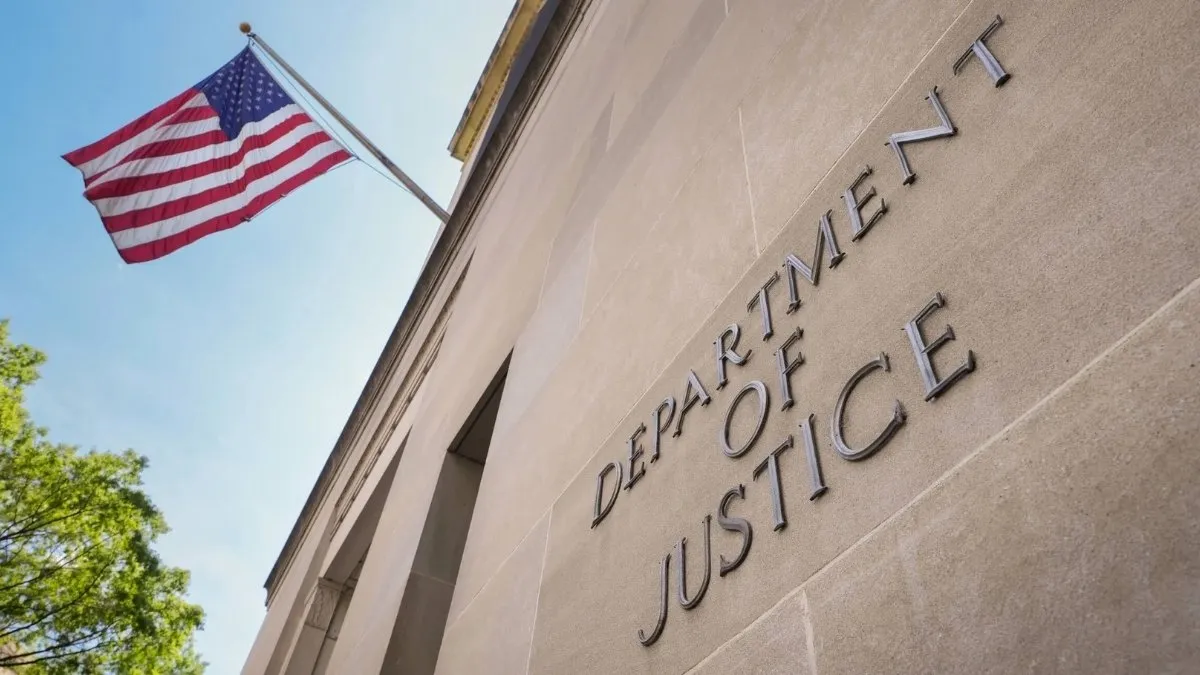
The United States Department of Justice (DOJ) has escalated its enforcement strategy against organized birth tourism operations, directing federal prosecutors nationwide to prioritize investigations and criminal prosecutions targeting structured networks allegedly facilitating such activities.
The directive comes in the wake of a recent 6–3 ruling by the U.S. Supreme Court reaffirming the constitutional protection of birthright citizenship under the 14th Amendment, effectively limiting executive efforts to alter citizenship rules through administrative orders.
DOJ Shifts Focus to Criminal Networks Behind Birth Tourism
Following the court’s ruling, federal authorities are now concentrating on dismantling the organized infrastructure supporting birth tourism schemes rather than focusing solely on individual cases of immigration misuse.
According to the DOJ directive, prosecutors are being instructed to pursue a broader range of federal offenses against suspected operators and facilitators, including wire fraud, visa fraud, identity theft, and international money laundering.
Officials say the strategy is designed to disrupt coordinated systems that allegedly assist foreign nationals in securing U.S. citizenship for their children through deceptive or unlawful means.
Multi-Agency Task Force Expands Enforcement Reach
The DOJ is reportedly coordinating with the Department of Homeland Security (DHS) through a specialized enforcement initiative focused on identifying and dismantling birth tourism networks.
The joint approach emphasizes tracing financial transactions, travel arrangements, and digital communication trails tied to agencies suspected of organizing end-to-end travel and hospital arrangements for expectant mothers entering the United States.
Authorities believe this coordinated model will allow investigators to target entire syndicates rather than isolated participants.
Rise of Commercial Birth Tourism Services Under Scrutiny
Federal investigators have also raised concerns about the emergence of commercial agencies offering structured “birth tourism packages,” which allegedly include visa assistance, travel logistics, accommodation arrangements, and hospital coordination services.
These agencies are believed to operate as profit-driven networks charging substantial fees for facilitating childbirth in the United States, often marketed as a pathway to securing long-term citizenship benefits for children.
Authorities say such operations have created challenges for immigration enforcement and healthcare systems, particularly where medical costs remain unpaid or are shifted to public institutions.
Legal Landscape Reinforced by Supreme Court Ruling
The DOJ’s renewed enforcement focus follows the Supreme Court’s decision reaffirming that individuals born on U.S. soil are entitled to citizenship under the Constitution.
With the executive branch unable to alter this legal framework through administrative action, federal authorities are now pursuing alternative enforcement pathways focused on fraud, deception, and financial crimes linked to organized facilitation networks.
Legislative Push and Policy Debate Continue
In parallel with enforcement actions, policymakers are reportedly exploring legislative options aimed at addressing perceived loopholes in immigration and citizenship-related processes.
While the administration continues to advocate for stronger statutory controls, legal experts note that any major change to birthright citizenship would ultimately require significant constitutional or legislative action.
Conclusion: Focus Turns to Organized Facilitation Networks
The DOJ’s latest move signals a strategic shift from individual enforcement to targeting organized systems allegedly enabling birth tourism at scale. Authorities emphasize that future prosecutions will focus on financial trails, corporate facilitators, and coordinated fraud mechanisms rather than isolated travelers.
Cyber Crime
From Nepal Casinos to Cyber Crime Networks: Indian Visitors’ Personal Data Allegedly Exploited

Indian law enforcement agencies are investigating an alleged cross-border cybercrime operation that reportedly exploits personal information collected from Indian visitors to casinos in Nepal. The probe has raised concerns about identity theft, financial fraud, and organized cybercrime networks operating beyond national boundaries.
Investigators claim that sensitive personal information belonging to tourists from several Indian states, including Delhi, Maharashtra, Bihar, and Rajasthan, may have been unlawfully accessed and later used in a range of cyber fraud schemes.
Personal Documents Allegedly Targeted
According to preliminary findings, cybercriminal groups are suspected of obtaining identity documents such as Aadhaar cards, passports, mobile numbers, and other Know Your Customer (KYC) records from Indian visitors. Authorities believe the data may have been collected through a network involving local contacts and individuals with access to visitor information.
Officials are examining whether insiders connected to hospitality or casino-related operations played any role in facilitating unauthorized access to customer records.
Stolen Data Used for Sophisticated Scams
Investigators say the alleged operation extends far beyond simple identity theft. Once personal information is acquired, cybercriminals reportedly create detailed profiles of potential targets, enabling highly customized fraud attempts.
One of the major concerns highlighted by authorities is the growing use of so-called “digital arrest” scams. In these schemes, fraudsters allegedly impersonate officials from law enforcement or regulatory agencies and falsely accuse victims of involvement in financial crimes. Victims are then pressured into transferring money to avoid fabricated legal consequences.
The use of authentic personal information reportedly makes these scams more convincing and difficult for victims to identify.
Fake Accounts and Money Laundering Concerns
Authorities are also investigating allegations that stolen identity documents have been used to open fraudulent bank accounts across multiple financial institutions. These accounts may have served as channels for moving and concealing proceeds generated through cyber fraud activities.
Investigators are tracing banking records and transaction patterns to determine whether the network has links to larger money laundering operations spanning multiple jurisdictions.
Blackmail and Extortion Tactics Emerge
Another aspect of the investigation involves allegations of blackmail targeting individuals who visited casinos and preferred to keep their travel activities private. Officials suspect that criminals gathered information about visitors and later threatened to disclose sensitive details to family members or associates unless payments were made.
Cybercrime experts note that such extortion methods combine social engineering techniques with personal data exploitation, increasing pressure on victims to comply with demands.
Border Operation Reveals Suspicious Documents
Security agencies recently reported the recovery of numerous suspicious identity documents during an operation near the Raxaul border. Officials believe the discovery may provide important leads regarding the movement of personal data and the creation of false identities used in cybercrime activities.
The findings have strengthened suspicions that the network operates across borders and may involve multiple individuals engaged in identity fraud, financial crime, and digital deception.
Investigation Expands Into International Links
Authorities are currently analyzing digital evidence, financial records, communication channels, and potential overseas connections linked to the suspected network. The objective is to identify those responsible and determine the full scale of the operation.
Officials say the investigation remains active and could uncover additional individuals, financial routes, and cybercrime cells connected to the alleged scheme.
The case highlights the growing threat posed by international cybercriminal networks and underscores the importance of protecting personal information while traveling abroad.

In a significant step to strengthen examination integrity, authorities have introduced a redesigned, high-security logistics system for the NEET-UG 2026 re-examination scheduled for June 21. The revised framework places the entire question paper movement under government-controlled transport channels, reducing reliance on private agencies amid heightened concerns over past paper leak incidents.
The overhaul introduces a multi-layered security model combining defence aviation support, postal delivery systems, and real-time monitoring to safeguard the examination process from preparation to final distribution.
Defence-Backed Air Transport for Question Papers
Under the new arrangement, question papers will be transported to approximately 18 regional hubs using air logistics supported by defence-related aviation resources. Officials said the use of secured air corridors is aimed at minimizing transit risks and ensuring faster, controlled delivery across states.
Once delivered to regional hubs, the responsibility for onward distribution has been assigned to the postal department, which will operate through a secured and trackable network.
Postal Department to Handle Final Distribution
From regional centres, question papers will be dispatched to district-level units and then forwarded to examination centres nationwide. Authorities emphasized that every stage of movement will be digitally tracked and monitored to ensure transparency and prevent unauthorized access.
Officials confirmed that private logistics providers have been completely removed from the supply chain for this examination cycle.
Three-Tier Security Framework Activated
A structured three-layer security system has been implemented to secure the entire examination process:
- Transport Security Layer: Overseen by specialized security personnel during movement of question papers.
- Administrative Monitoring Layer: Responsible for continuous supervision and coordination between agencies.
- Local Security Layer: Involving police and district administration deployed at examination centres.
This coordinated framework aims to eliminate vulnerabilities at every stage of handling.
Technology-Driven Tracking System Introduced
Authorities have also integrated a real-time tracking mechanism to monitor question paper movement from dispatch to delivery. The system enables centralized visibility of logistics operations and helps detect any irregularities instantly.
Strict protocols will also govern the opening and handling of question papers at examination centres, ensuring standardized procedures across all locations.
National Rollout Across Hundreds of Cities
The NEET-UG 2026 re-exam is expected to be conducted in around 552 cities in India, along with select international centres. Officials said security arrangements at each venue have been significantly upgraded, with enhanced surveillance and tighter administrative controls.
Focus on Restoring Exam Credibility
The decision to overhaul the logistics system follows previous controversies related to examination security. Education sector experts believe the introduction of defence-backed transport and centralized monitoring could help restore public confidence in competitive examinations.
Authorities have also indicated that examination security is now being treated as a matter of national-level coordination, involving multiple government institutions.
Stricter Controls Ahead of Exam Day
As the examination date approaches, state-level preparations have intensified. Each centre is being reviewed under strict compliance guidelines to ensure standardized security measures.
Officials reiterated that the goal of the new system is to eliminate malpractice risks and ensure a transparent and secure examination process for all candidates.
-

 Business3 years ago
Pot Odor Does Not Justify Probable Cause for Vehicle Searches, Minnesota Court Affirms
-

 Business3 years ago
New Mexico cannabis operator fined, loses license for alleged BioTrack fraud
-

 Business3 years ago
Alabama to make another attempt Dec. 1 to award medical cannabis licenses
-

 Business3 years ago
Washington State Pays Out $9.4 Million in Refunds Relating to Drug Convictions
-

 Business3 years ago
Marijuana companies suing US attorney general in federal prohibition challenge
-

 Business3 years ago
Legal Marijuana Handed A Nothing Burger From NY State
-

 Business3 years ago
Can Cannabis Help Seasonal Depression
-

 Blogs3 years ago
Cannabis Art Is Flourishing On Etsy