
Banking Crime
₹40 Crore Loan Fraud Probe Examines Suspected Bank Official Nexus in Kochi

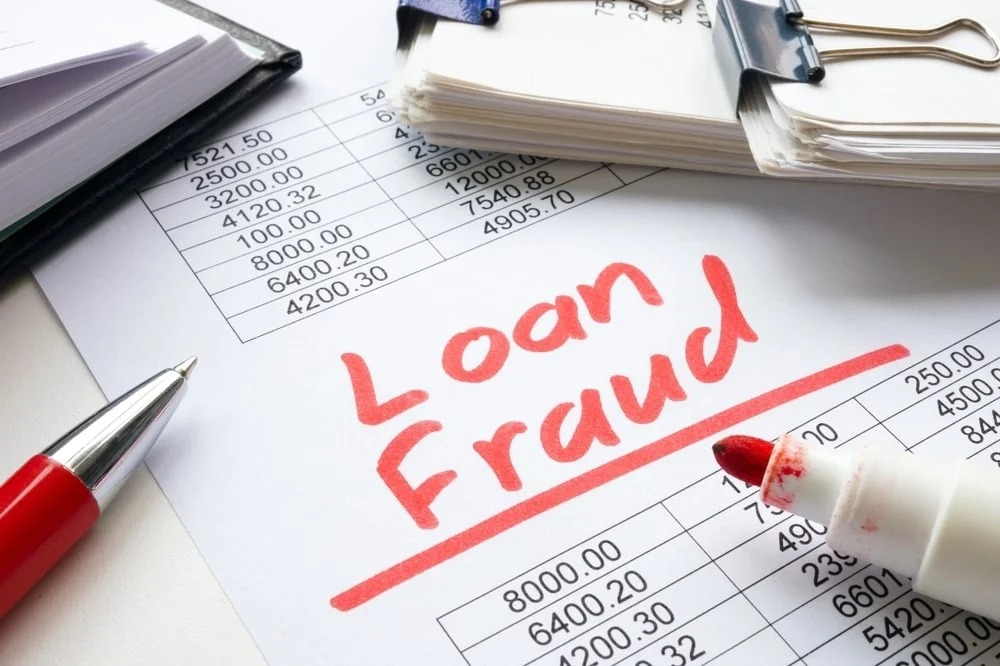
Kochi: Authorities in Kerala have expanded an investigation into an alleged ₹40 crore bank loan fraud case in Kochi, where documents belonging to individuals with poor credit histories were allegedly misused to secure large business loans.
The probe is focused on allegations that accused Jenny Varghese obtained high-value loans through forged documents and that certain banking processes may have been improperly influenced. The Bank of Maharashtra has also launched an internal review to examine whether any employees had a role in the suspected irregularities.
Investigation Focuses on Misuse of Personal Documents
According to investigators, the accused allegedly approached financially vulnerable individuals or those with weak CIBIL scores and collected their documents by offering financial assistance or other benefits.
Police suspect that these documents were later used for processing business loan applications involving significant amounts. Investigators are now examining how the documents were acquired, how loan applications were approved and who ultimately benefited from the funds.
The probe is also reviewing banking records, loan files, financial transactions and digital evidence to reconstruct the movement of money and identify all parties involved.
Complaint Leads to FIR Against Multiple Accused
The case began after a complaint was filed by Eldo Paul, a Congress leader from Kolenchery. Following directions from a court, Puthencruz Police registered an FIR naming Jenny Varghese as the main accused and Bank of Maharashtra manager Shibu Jacob as a co-accused.
Police told the court that the complainant was allegedly convinced to sign stamp papers and blank cheques after being promised a ₹1 crore loan. Investigators further alleged that forged signatures and fabricated guarantee documents were later used to obtain a loan of nearly ₹30 crore without the complainant’s knowledge.
Authorities are investigating how the alleged documents were prepared and whether the approval process involved procedural violations.
Bank Association Under Investigation
During the inquiry, investigators examined material suggesting a connection between the accused and banking officials.
A photograph showing Jenny Varghese inaugurating a Bank of Maharashtra branch has also come under scrutiny. Reports indicate that a bank official described him as a major customer and said his presence at the event was due to that relationship.
Investigators are now assessing whether the association was limited to normal banking interactions or whether it influenced loan approvals and financial dealings.
Accused Makes Counter-Allegations
Jenny Varghese has denied wrongdoing and has made counter-allegations regarding the transactions under investigation.
He has claimed that guarantors and bank officials involved in the loan arrangements were aware of the financial dealings. He has also alleged that employees of some banks in Kochi accepted illegal payments connected with loan transactions.
The allegations have not been independently confirmed, and investigators are examining all claims as part of the ongoing inquiry.
The accused has further stated that his total loan liability is around ₹350 crore and claimed that more than ₹200 crore is recoverable from individuals involved in various financial arrangements with him.
Police are verifying these claims through account statements, loan documents and fund-transfer records.
Experts Highlight Need for Stronger Loan Verification
Financial fraud investigations often reveal weaknesses in document verification and lending procedures. Experts have stressed that banks need stronger safeguards while approving high-value loans.
Former IPS officer and cybercrime expert Prof. Triveni Singh said financial fraud networks often exploit gaps in identity verification, documentation checks and internal controls. He recommended stronger authentication processes, independent risk assessments, regular audits and continuous monitoring of suspicious loan activity.
According to experts, digital verification systems and better accountability mechanisms can help reduce the risk of fraudulent loan approvals.
Probe Continues Into Financial Trail
Investigators are continuing to examine the role of bank officials, the authenticity of loan documents and the final use of the sanctioned funds.
Authorities believe that further analysis of financial records and digital evidence may reveal additional individuals connected to the alleged fraud. The investigation remains ongoing.



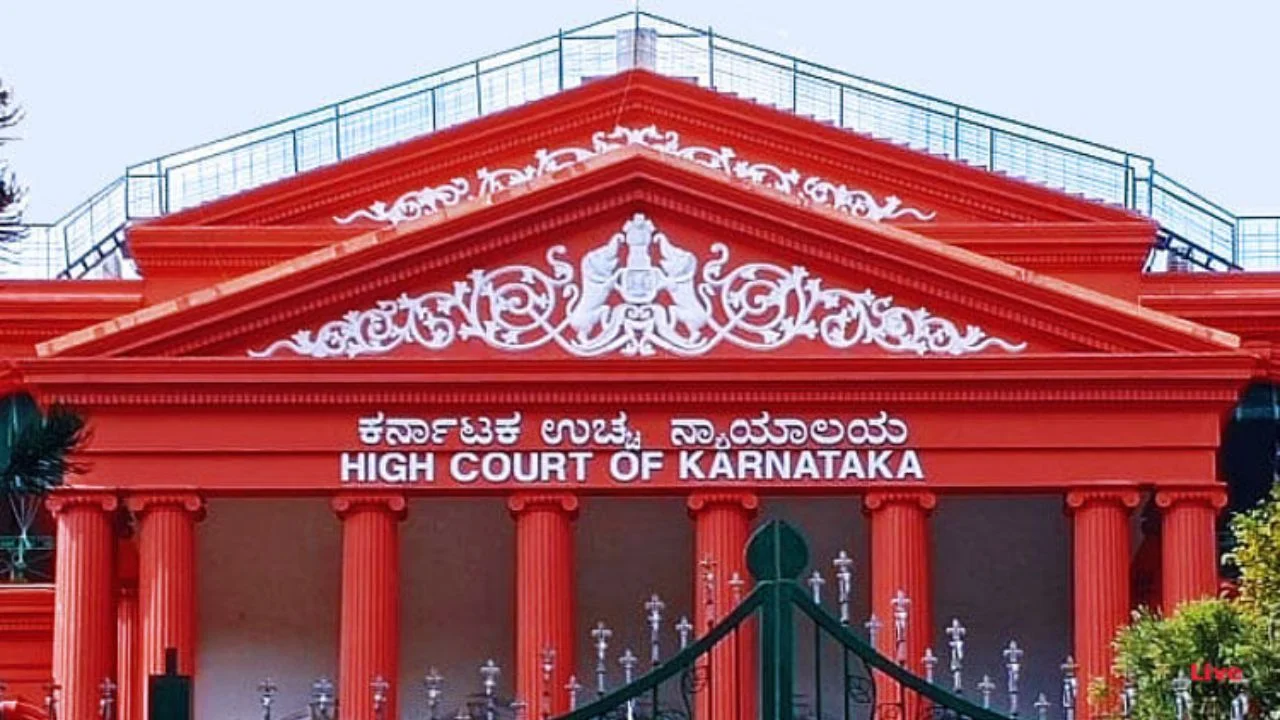
BENGALURU: The Karnataka High Court has declined to quash a criminal case against a man accused of falsely presenting himself as an advocate and allegedly collecting more than ₹21 lakh from a widow while promising to help resolve her property dispute.
Justice Suraj Govindaraj, hearing the petition, held that the allegations in the complaint, if taken at face value at this preliminary stage, disclosed circumstances warranting a criminal investigation. The court rejected the argument that the matter was purely civil because it arose from a property dispute.
Woman Allegedly Paid More Than ₹21 Lakh
The case arose from a complaint filed by a widow who was involved in a dispute concerning property and was looking for assistance in resolving related litigation.
According to the allegations before the court, one of the accused allegedly introduced himself as a lawyer and claimed that he could assist the woman in dealing with the pending legal matter. She allegedly relied on those representations and subsequently paid the accused more than ₹21 lakh.
The complaint further alleges that the accused did not possess the legal credentials he represented himself as having. The exact circumstances surrounding the payments and the representations made to the woman remain matters for investigation.
Accused Sought Cancellation of FIR
The accused approached the Karnataka High Court seeking to have the FIR and subsequent proceedings quashed.
His argument was that the dispute essentially concerned property and money and should therefore be treated as a civil matter. On that basis, the petitioner contended that allowing a criminal case to continue was inappropriate.
The High Court did not accept that submission at the stage of investigation.
The court examined whether the allegations, on their face, disclosed ingredients of a criminal offence. It concluded that the complaint contained allegations that went beyond a simple disagreement over property or repayment of money.
Civil Dispute Can Also Involve Criminal Offences
A central point in the court’s decision was the distinction between civil and criminal proceedings.
The existence of a civil dispute does not automatically prevent criminal action where the allegations also disclose conduct that may constitute an offence. If a complaint alleges that a person obtained money by making a false representation or by deliberately inducing another person to rely on that representation, the matter may warrant investigation under criminal law.
In this case, the allegation that the accused allegedly posed as an advocate was particularly relevant because the woman was reportedly seeking legal assistance in connection with ongoing property litigation.
The court therefore found that the criminal investigation should not be stopped merely because the underlying dispute involved property.
Alleged False Legal Credentials Under Investigation
The allegation concerning the accused’s identity as a lawyer forms an important part of the complaint.
According to the case placed before the High Court, the woman allegedly believed that the accused possessed the necessary legal credentials and could help resolve her dispute. The alleged representation was followed by the transfer of more than ₹21 lakh.
Whether the accused actually made the alleged representations, whether he falsely claimed to be an advocate and whether the payments were obtained through deception are factual questions that remain to be established through investigation and evidence.
High Court Says Investigation Should Continue
The High Court’s refusal to quash the FIR means that investigators can continue examining the allegations.
AICybercrime
ED Accuses IAS Officer Gyanendra Kumar Gangwar of Taking ₹1.30 Crore Bribe in KPSC Paper Leak
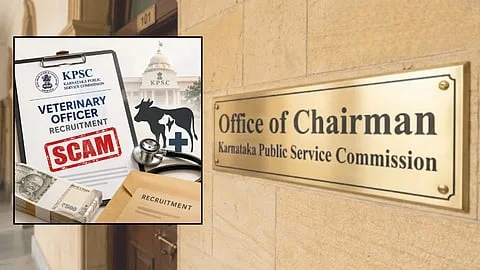
The Enforcement Directorate has alleged that suspended IAS officer Gyanendra Kumar Gangwar received ₹1.30 crore in cash from an alleged middleman in connection with the leakage of a Karnataka Public Service Commission (KPSC) Veterinary Officer recruitment examination paper.
The allegations were presented before a Bengaluru special court as the ED sought custody of Gangwar in a money-laundering investigation under the Prevention of Money Laundering Act (PMLA).
The court subsequently remanded Gangwar to six days of ED custody, until September 26, according to court reporting. The allegations remain subject to investigation and judicial proceedings.
ED Claims ₹1.50 Crore Was Collected From Candidates
According to the ED’s remand application, alleged middleman Basavaraj Kannale collected around ₹1.50 crore from candidates who were seeking access to the leaked examination material.
The agency alleges that approximately ₹1.30 crore of that amount was subsequently handed over to Gangwar in cash.
The ED is investigating the alleged flow of funds as part of its money-laundering probe and has sought to determine how the proceeds were collected, transferred and potentially converted into other assets.
Question Paper Allegedly Handed Over Before Examination
The ED has alleged that Gangwar provided the Veterinary Officer recruitment examination question paper, along with its answers, to Kannale through an HP pen drive on January 7, 2026.
The examination was scheduled for January 9.
Investigators allege that candidates who had paid money were subsequently given access to the examination material before the test. Earlier CID investigations have also examined allegations that selected candidates were taken to a resort and coached using leaked questions.
The recruitment examination was conducted for 400 Veterinary Officer posts in Karnataka.
Jewellery and Other Financial Transactions Under Investigation
The alleged financial trail also includes purchases of jewellery.
The ED told the court that approximately ₹23 lakh was spent on gold jewellery using funds connected to the alleged recruitment racket. Separate CID proceedings have examined additional jewellery purchases and other expenditures allegedly linked to the money collected from candidates.
Investigators are also examining financial transactions and other records to establish the full extent of the alleged money trail.
Gangwar Served as KPSC Examination Controller
Gangwar served as the Controller of Examinations at KPSC from 2024 until March 2026.
His role has brought particular attention to the alleged paper leak because investigators are examining how examination material could have been accessed and transferred before the test.
The ED is also investigating whether alleged proceeds from other recruitment examinations conducted during his tenure could be connected to the wider financial network.
Investigation Expands to Other KPSC Officials
The investigation is not limited to Gangwar and Kannale.
Authorities are examining the possible involvement of other individuals associated with the recruitment process, including suspended KPSC chairman Sahukar S. Shivashankarappa.
Investigators are looking into alleged communications, financial transactions and relationships between individuals involved in the recruitment process. The allegations against other officials remain under investigation and should not be treated as established findings.
Recruitment Process Came Under Scrutiny After Complaints
The alleged irregularities emerged after concerns were raised over the Veterinary Officer recruitment examination and selection process.
The CID investigation has examined allegations involving question-paper leakage, payments by candidates and the use of leaked material to prepare candidates before the examination. Earlier reporting said 329 candidates were selected from the recruitment process, while investigators were examining allegations involving candidates who allegedly paid money for selection.
The financial investigation by the ED is now focused on identifying the alleged proceeds of crime and tracing their movement.
High Court Orders Fresh Investigation
The wider KPSC controversy has also resulted in judicial intervention.
Recent reporting indicates that the Karnataka High Court constituted a Special Investigation Team (SIT) to conduct a fresh investigation into alleged irregularities connected with KPSC recruitment, including the Veterinary Officer examination.
The developments have expanded the case beyond the alleged paper leak to broader questions about recruitment procedures, financial transactions and the functioning of the commission.
ED Probe Continues
The six-day ED custody of Gangwar is intended to allow investigators to question him about the alleged financial transactions, identify other participants and trace the suspected proceeds of crime.
The case remains at the investigation stage. Allegations made by the ED or CID will ultimately have to be tested through the judicial process.
The KPSC controversy has meanwhile triggered wider scrutiny of recruitment examinations in Karnataka, with investigators continuing to examine whether the alleged network extended beyond the Veterinary Officer recruitment test.
-

 Business3 years ago
Pot Odor Does Not Justify Probable Cause for Vehicle Searches, Minnesota Court Affirms
-

 Business3 years ago
New Mexico cannabis operator fined, loses license for alleged BioTrack fraud
-

 Business3 years ago
Alabama to make another attempt Dec. 1 to award medical cannabis licenses
-

 Business3 years ago
Washington State Pays Out $9.4 Million in Refunds Relating to Drug Convictions
-

 Business3 years ago
Marijuana companies suing US attorney general in federal prohibition challenge
-

 Business3 years ago
Legal Marijuana Handed A Nothing Burger From NY State
-

 Business3 years ago
Can Cannabis Help Seasonal Depression
-

 Blogs3 years ago
Cannabis Art Is Flourishing On Etsy